Voisin Pierre, Bouchaud Véronique, Merle Michel, Diolez Philippe, Duffy Laura, Flint Kristian, Franconi Jean-Michel, Bouzier-Sore Anne-Karine
RMSB Center, Centre National de la Recherche Scientifique/Université Victor Segalen Bordeaux 2 Bordeaux, France.
Front Neuroenergetics. 2010 Oct 12;2:131. doi: 10.3389/fnene.2010.00131. eCollection 2010.
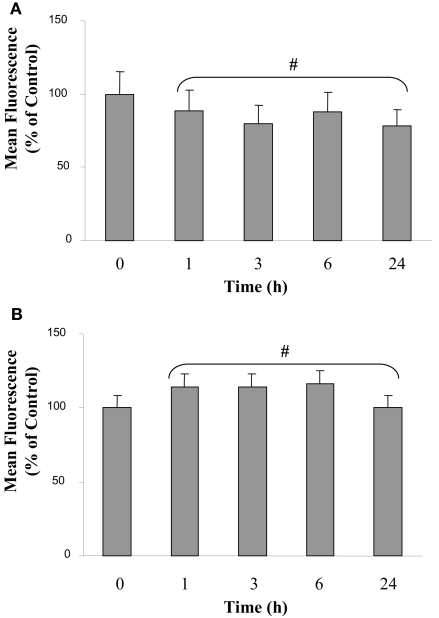
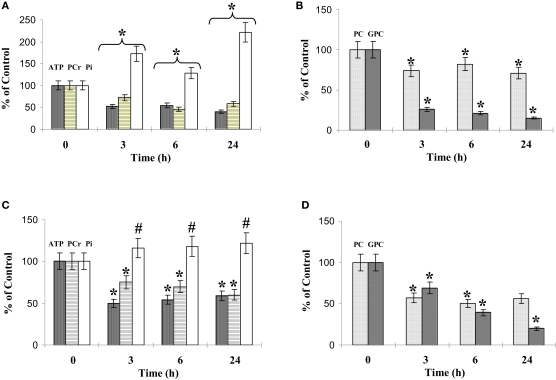
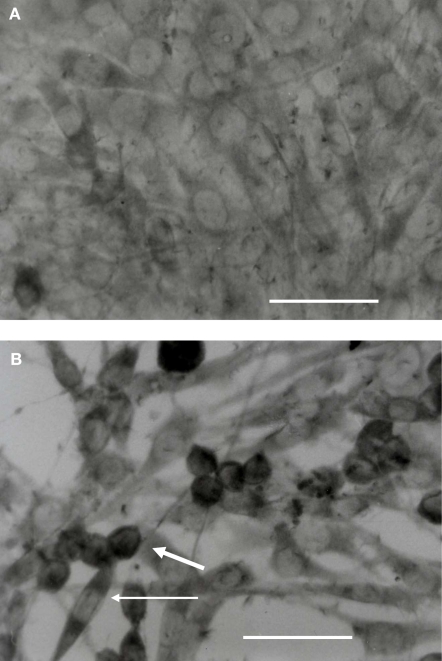
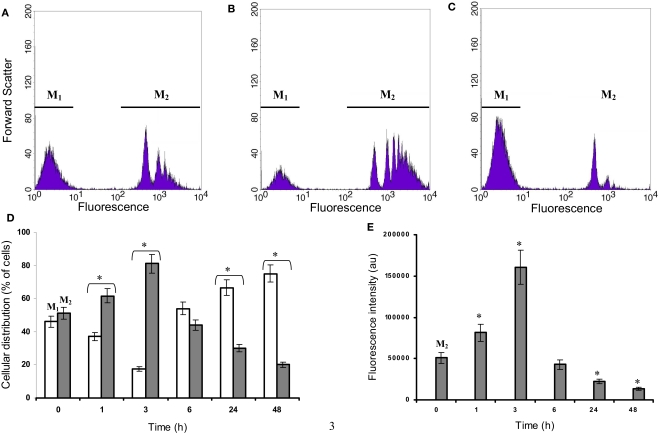
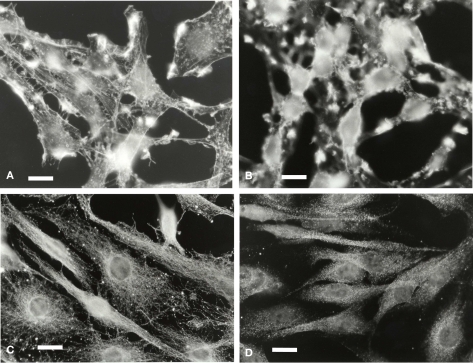
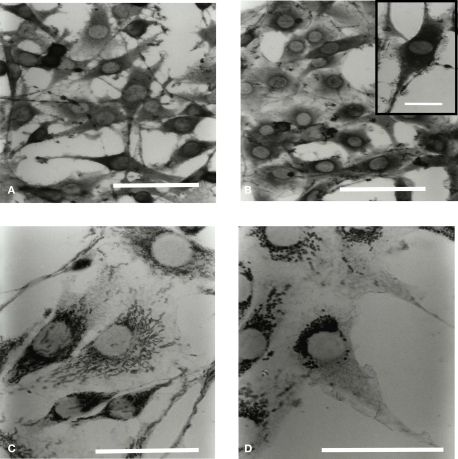
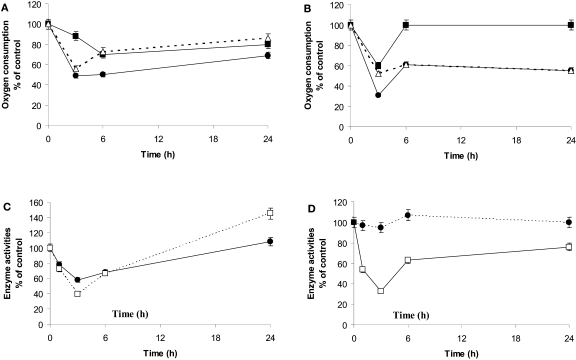
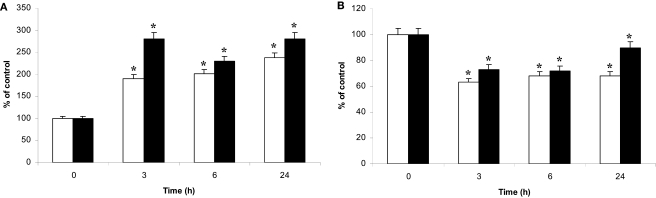
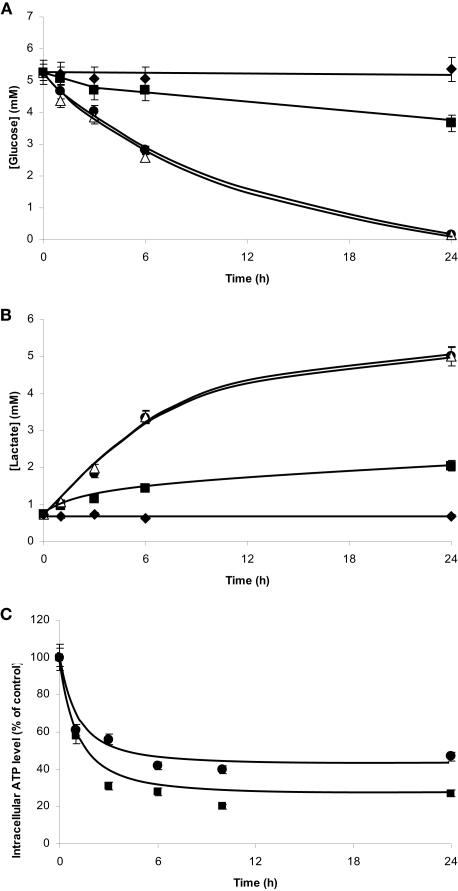
Microglia are immune cells within the central nervous system. In brain-developing tumors, gliomas are able to silence the defense and immune functions of microglia, a phenomenon which strongly contributes to tumor progression and treatment resistance. Being activated and highly motile, microglia infiltrate tumors and secrete macrophagic chemoattractant factors. Thereafter, the tumor cells shut down their immune properties and stimulate the microglia to release tumor growth-promoting factors. The result of such modulation is that a kind of symbiosis occurs between microglia and tumor cells, in favor of tumor growth. However, little is known about microglial phenotype and metabolic modifications in a tumoral environment. Co-cultures were performed using CHME5 microglia cells grown on collagen beads or on coverslips and placed on monolayer of C6 cells, limiting cell/cell contacts. Phagocytic behavior and expression of macrophagic and cytoskeleton markers were monitored. Respiratory properties and energetic metabolism were also studied with regard to the activated phenotype of microglia. In co-cultures, transitory modifications of microglial morphology and metabolism were observed linked to a concomitant transitory increase of phagocytic properties. Therefore, after 1 h of co-culture, microglia were activated but when longer in contact with tumor cells, phagocytic properties appear silenced. Like the behavior of the phenotype, microglial respiration showed a transitory readjustment although the mitochondria maintained their perinuclear relocation. Nevertheless, the energetic metabolism of the microglia was altered, suggesting a new energetic steady state. The results clearly indicate that like the depressed immune properties, the macrophagic and metabolic status of the microglia is quickly driven by the glioma environment, despite short initial phagocytic activation. Such findings question the possible contribution of diffusible tumor factors to the microglial metabolism.
小胶质细胞是中枢神经系统内的免疫细胞。在脑发育肿瘤中,胶质瘤能够使小胶质细胞的防御和免疫功能沉默,这一现象极大地促进了肿瘤进展和治疗抗性。被激活且具有高度运动性的小胶质细胞浸润肿瘤并分泌巨噬细胞趋化因子。此后,肿瘤细胞关闭其免疫特性并刺激小胶质细胞释放促进肿瘤生长的因子。这种调节的结果是小胶质细胞与肿瘤细胞之间发生一种共生关系,有利于肿瘤生长。然而,对于肿瘤环境中小胶质细胞的表型和代谢改变知之甚少。使用生长在胶原珠或盖玻片上并置于C6细胞单层上的CHME5小胶质细胞进行共培养,限制细胞/细胞接触。监测吞噬行为以及巨噬细胞和细胞骨架标志物的表达。还针对小胶质细胞的激活表型研究了呼吸特性和能量代谢。在共培养中,观察到小胶质细胞形态和代谢的短暂改变与吞噬特性的伴随短暂增加有关。因此,共培养1小时后,小胶质细胞被激活,但与肿瘤细胞接触时间更长时,吞噬特性似乎被沉默。与表型行为一样,小胶质细胞呼吸显示出短暂的重新调整,尽管线粒体保持其核周定位。然而,小胶质细胞的能量代谢发生了改变,表明存在一种新的能量稳态。结果清楚地表明,与免疫特性降低一样,尽管最初有短暂的吞噬激活,但小胶质细胞的巨噬细胞和代谢状态很快受到胶质瘤环境的驱动。这些发现质疑了可扩散肿瘤因子对小胶质细胞代谢的可能贡献。