Agriculture and Agri-Food Canada, 5403 1st Avenue South, T1J 4B1, Lethbridge, AB, Canada.
Gut Pathog. 2010 Nov 1;2:14. doi: 10.1186/1757-4749-2-14.
Recent epidemiological analyses have implicated acute Campylobacter enteritis as a factor that may incite or exacerbate inflammatory bowel disease (IBD) in susceptible individuals. We have demonstrated previously that C. jejuni disrupts the intestinal barrier function by rapidly inducing epithelial translocation of non-invasive commensal bacteria via a transcellular lipid raft-mediated mechanism ('transcytosis'). To further characterize this mechanism, the aim of this current study was to elucidate whether C. jejuni utilizes M cells to facilitate transcytosis of commensal intestinal bacteria.
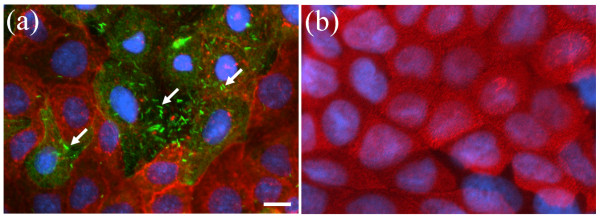
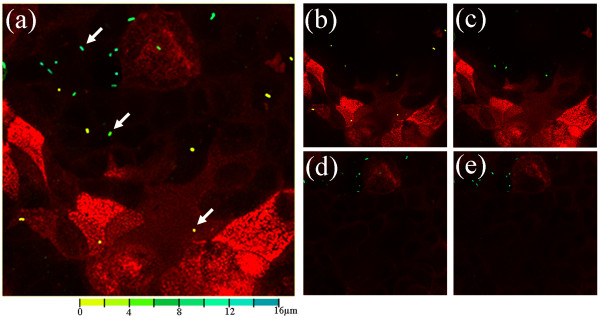
C. jejuni induced translocation of non-invasive E. coli across confluent Caco-2 epithelial monolayers in the absence of disrupted transepithelial electrical resistance or increased permeability to a 3 kDa dextran probe. C. jejuni-infected monolayers displayed increased numbers of cells expressing the M cell-specific marker, galectin-9, reduced numbers of enterocytes that stained with the absorptive enterocyte marker, Ulex europaeus agglutinin-1, and reduced activities of enzymes typically associated with absorptive enterocytes (namely alkaline phosphatase, lactase, and sucrase). Furthermore, in Campylobacter-infected monolayers, E. coli were observed to be internalized specifically within epithelial cells displaying M-like cell characteristics.
These data indicate that C. jejuni may utilize M cells to promote transcytosis of non-invasive bacteria across the intact intestinal epithelial barrier. This mechanism may contribute to the inflammatory immune responses against commensal intestinal bacteria commonly observed in IBD patients.
最近的流行病学分析表明,急性弯曲杆菌肠炎可能是易患个体中引发或加重炎症性肠病(IBD)的一个因素。我们之前已经证明,空肠弯曲菌通过一种跨细胞脂筏介导的机制(“转胞吞作用”)快速诱导上皮细胞内非侵入性共生菌的易位,从而破坏肠道屏障功能。为了进一步阐明这种机制,本研究旨在阐明空肠弯曲菌是否利用 M 细胞来促进共生肠道细菌的转胞吞作用。
空肠弯曲菌在没有破坏跨上皮电阻或增加对 3 kDa 葡聚糖探针通透性的情况下,诱导非侵入性大肠杆菌穿过紧密连接的 Caco-2 上皮单层的易位。空肠弯曲菌感染的单层显示出表达 M 细胞特异性标志物半乳糖凝集素-9 的细胞数量增加,对吸收性肠细胞标志物 Ulex europaeus 凝集素-1 染色的肠细胞数量减少,以及与吸收性肠细胞相关的酶活性降低(即碱性磷酸酶、乳糖酶和蔗糖酶)。此外,在弯曲杆菌感染的单层中,观察到大肠杆菌被特异性地内化到表现出 M 样细胞特征的上皮细胞内。
这些数据表明,空肠弯曲菌可能利用 M 细胞促进非侵入性细菌穿过完整的肠道上皮屏障的转胞吞作用。这种机制可能有助于解释 IBD 患者中常见的对共生肠道细菌的炎症免疫反应。