Fischell Department of Bioengineering, School of Engineering, University of Maryland College Park, College Park, MD 20742, USA.
J Control Release. 2011 Feb 10;149(3):323-31. doi: 10.1016/j.jconrel.2010.10.031. Epub 2010 Nov 1.
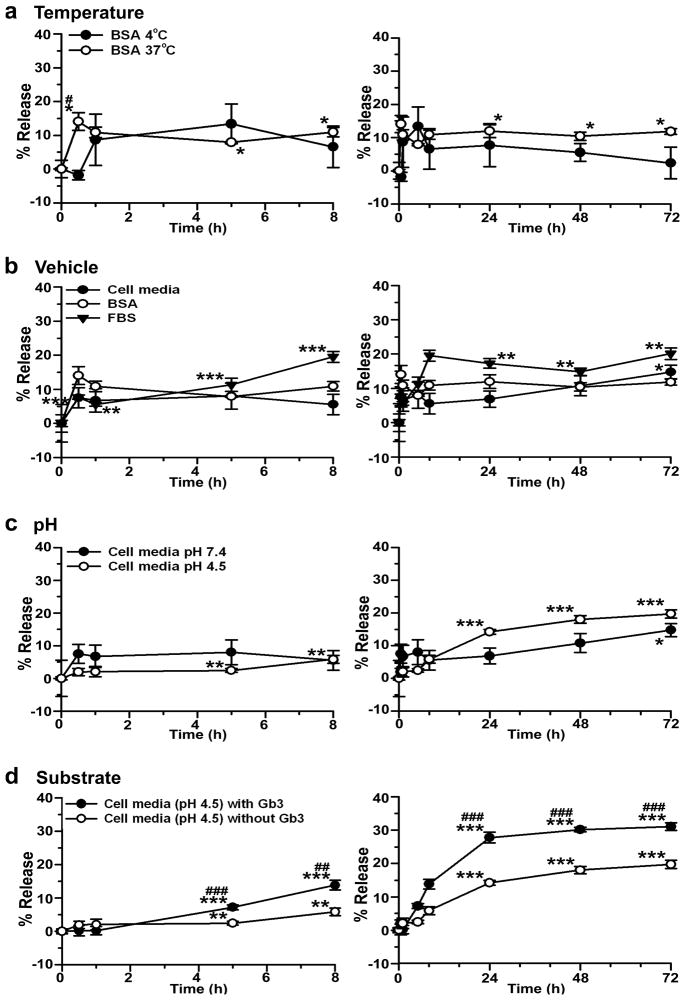
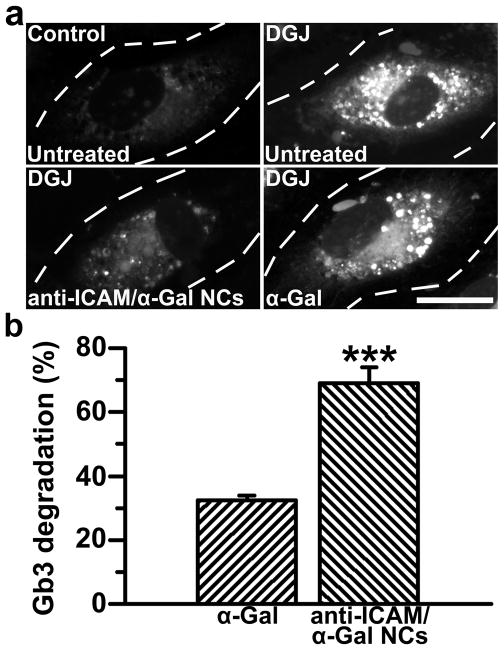
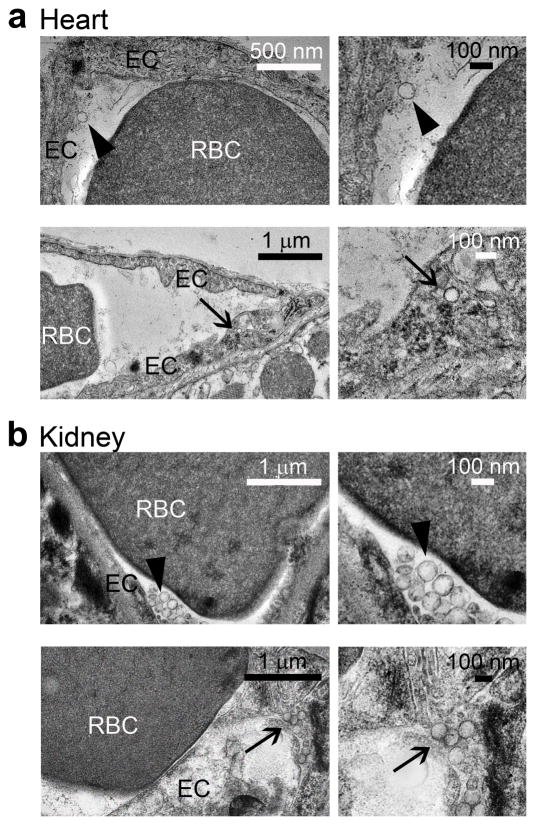
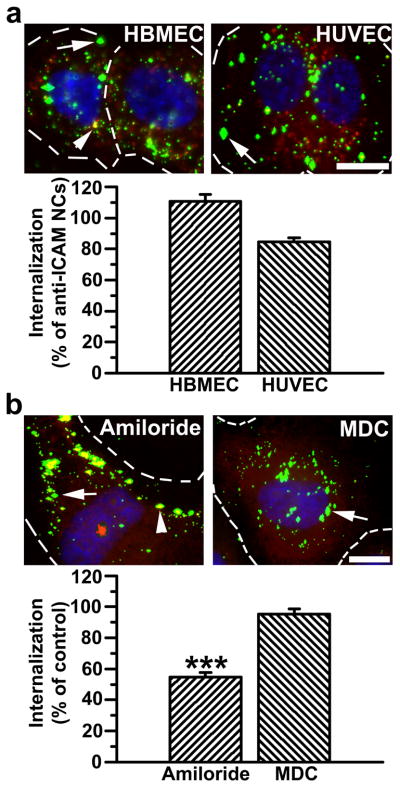
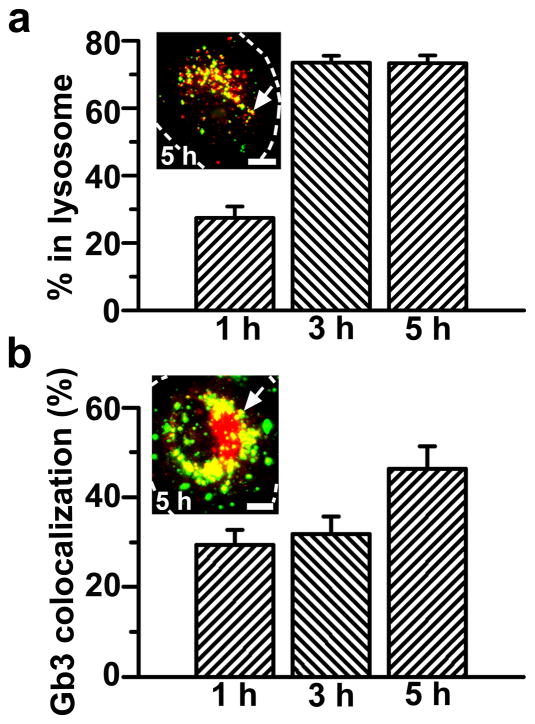
Fabry disease, due to the deficiency of α-galactosidase A (α-Gal), causes lysosomal accumulation of globotriaosylceramide (Gb3) in multiple tissues and prominently in the vascular endothelium. Although enzyme replacement therapy (ERT) by injection of recombinant α-Gal improves the disease outcome, the effects on the vasculopathy associated with life-threatening cerebrovascular, cardiac and renal complications are still limited. We designed a strategy to enhance the delivery of α-Gal to organs and endothelial cells (ECs). We targeted α-Gal to intercellular adhesion molecule 1 (ICAM-1), a protein expressed on ECs throughout the vasculature, by loading this enzyme on nanocarriers coated with anti-ICAM (anti-ICAM/α-Gal NCs). In vitro radioisotope tracing showed efficient loading of α-Gal on anti-ICAM NCs, stability of this formulation under storage and in model physiological fluids, and enzyme release in response to lysosome environmental conditions. In mice, the delivery of (125)I-α-Gal was markedly enhanced by anti-ICAM/(125)I-α-Gal NCs in brain, kidney, heart, liver, lung, and spleen, and transmission electron microscopy showed anti-ICAM/α-Gal NCs attached to and internalized into the vascular endothelium. Fluorescence microscopy proved targeting, endocytosis and lysosomal transport of anti-ICAM/α-Gal NCs in macro- and micro-vascular ECs and a marked enhancement of Gb3 degradation. Therefore, this ICAM-1-targeting strategy may help improve the efficacy of therapeutic enzymes for Fabry disease.
法布瑞氏病是由于α-半乳糖苷酶 A(α-Gal)的缺乏,导致糖鞘脂类(Gb3)在多种组织中积累,特别是在血管内皮细胞中积累。尽管通过注射重组α-Gal 进行酶替代疗法(ERT)可以改善疾病预后,但对与危及生命的脑血管、心脏和肾脏并发症相关的血管病变的影响仍然有限。我们设计了一种策略来增强 α-Gal 向器官和内皮细胞(ECs)的传递。我们通过将这种酶加载到涂有抗细胞间黏附分子 1(anti-ICAM)的纳米载体上,将 α-Gal 靶向到细胞间黏附分子 1(ICAM-1),ICAM-1 是一种在整个血管系统中表达的内皮细胞蛋白。体外放射性同位素示踪显示,α-Gal 可以有效地加载到 anti-ICAM NCs 上,这种制剂在储存和模型生理液中的稳定性,以及对溶酶体环境条件的酶释放。在小鼠中,anti-ICAM/(125)I-α-Gal NCs 明显增强了(125)I-α-Gal 的脑、肾、心、肝、肺和脾内传递,透射电子显微镜显示 anti-ICAM/α-Gal NCs 附着并内化到血管内皮细胞中。荧光显微镜证明了 anti-ICAM/α-Gal NCs 在大血管和微血管内皮细胞中的靶向、内吞和溶酶体转运,以及 Gb3 降解的显著增强。因此,这种 ICAM-1 靶向策略可能有助于提高治疗法布瑞氏病的酶的疗效。