Laboratory of Viral Diseases, National Institute of Allergy and Infectious Diseases, Bethesda, MD 20892, USA.
J Immunol. 2010 Dec 1;185(11):6728-33. doi: 10.4049/jimmunol.1002543. Epub 2010 Nov 3.
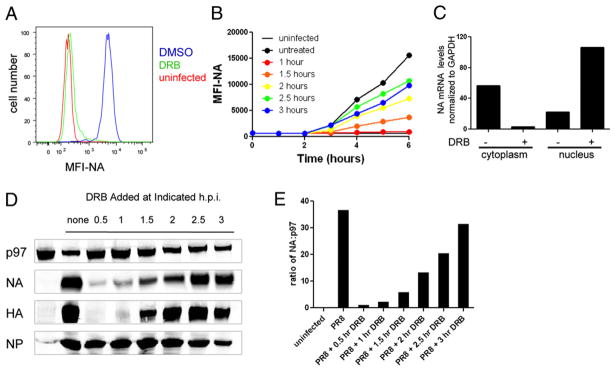
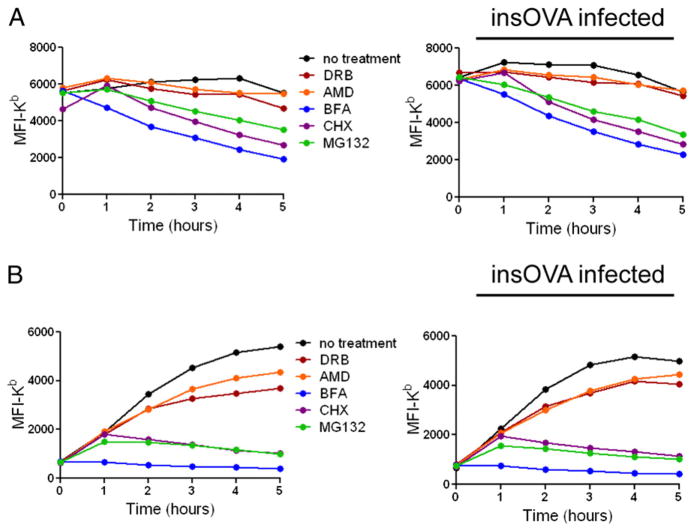
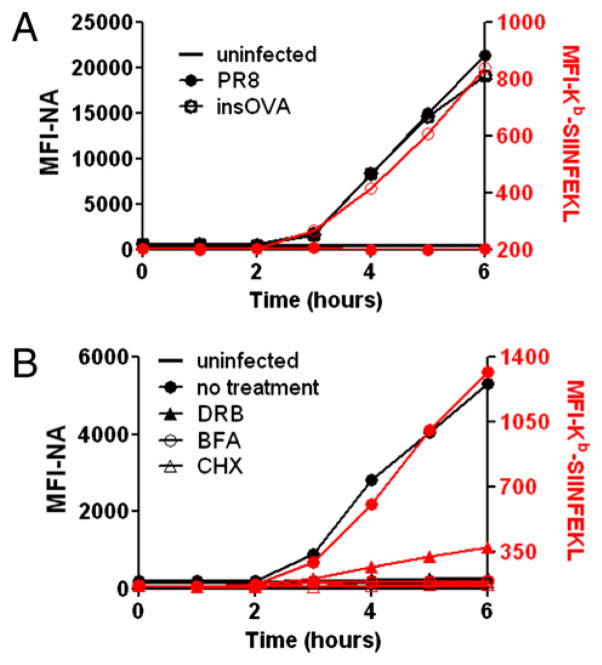
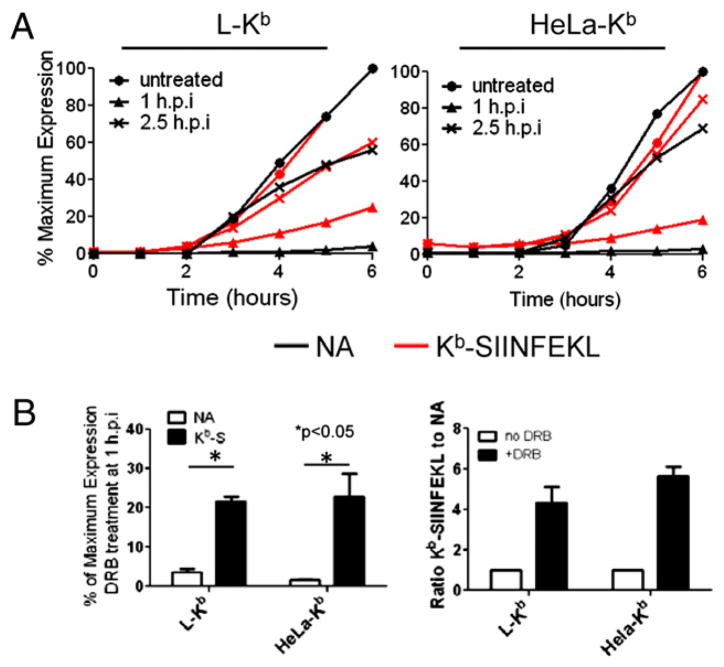
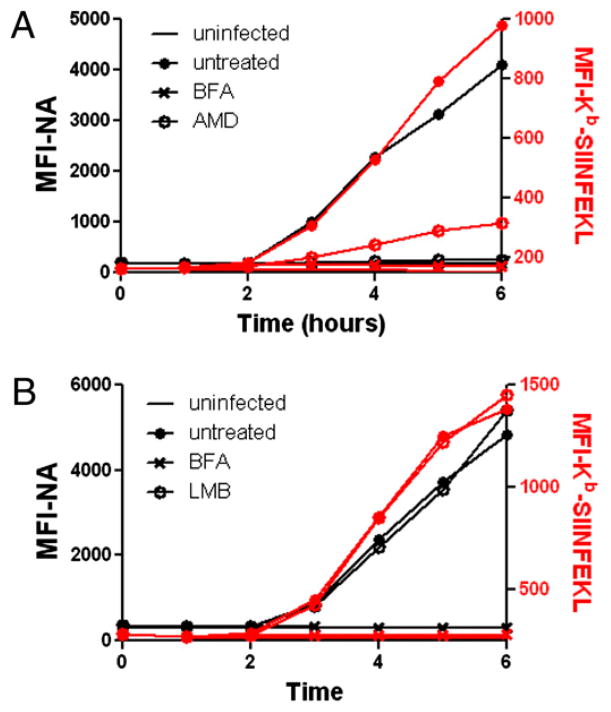
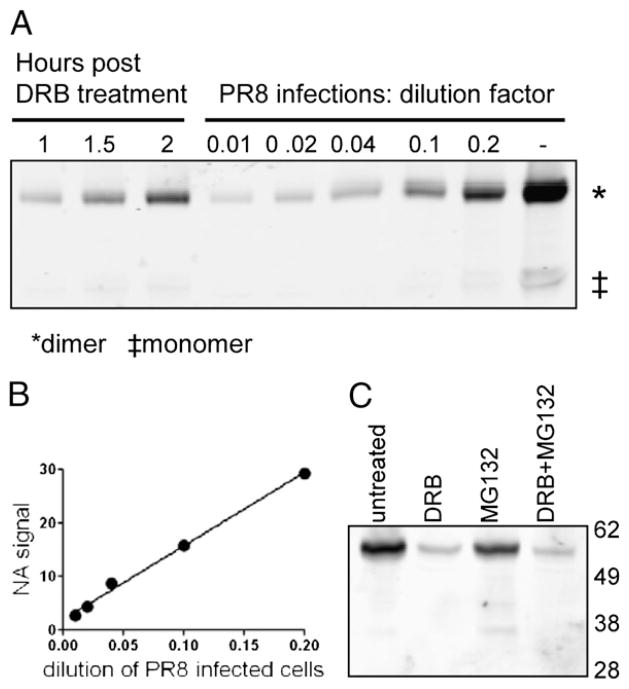
Following viral infection, cells rapidly present peptides from newly synthesized viral proteins on MHC class I molecules, likely from rapidly degraded forms of nascent proteins. The nature of these defective ribosomal products (DRiPs) remains largely undefined. Using inhibitors of RNA polymerase II that block influenza A virus neuraminidase (NA) mRNA export from the nucleus and inhibit cytoplasmic NA translation, we demonstrate a surprising disconnect between levels of NA translation and generation of SIINFEKL peptide genetically inserted into the NA stalk. A 33-fold reduction in NA expression is accompanied by only a 5-fold reduction in K(b)-SIINFEKL complex cell-surface expression, resulting in a net 6-fold increase in the overall efficiency of Ag presentation. Although the proteasome inhibitor MG132 completely blocked K(b)-SIINFEKL complex generation, we were unable to biochemically detect a MG132-dependent cohort of NA DRiPs relevant for Ag processing, suggesting that a minute population of DRiPs is a highly efficient source of antigenic peptides. These data support the idea that Ag processing uses compartmentalized translation, perhaps even in the nucleus itself, to increase the efficiency of the generation of class I peptide ligands.
病毒感染后,细胞迅速将新合成的病毒蛋白的肽段呈递到 MHC I 类分子上,可能来自新生蛋白的快速降解形式。这些缺陷核糖体产物(DRiPs)的性质在很大程度上还没有确定。我们使用 RNA 聚合酶 II 的抑制剂来阻断甲型流感病毒神经氨酸酶(NA)mRNA 从核内输出并抑制细胞质内 NA 的翻译,从而在插入 NA 茎部的 SIINFEKL 肽的基因水平上,发现 NA 翻译水平与 SIINFEKL 肽的生成之间存在惊人的脱节。NA 表达降低了 33 倍,而 K(b)-SIINFEKL 复合物在细胞表面的表达仅降低了 5 倍,导致 Ag 呈递的总体效率净增加了 6 倍。尽管蛋白酶体抑制剂 MG132 完全阻断了 K(b)-SIINFEKL 复合物的生成,但我们无法在生化上检测到与 Ag 加工相关的、依赖 MG132 的 NA DRiPs 群体,这表明 DRiPs 的一小部分是抗原肽的高效来源。这些数据支持了这样一种观点,即 Ag 加工使用分隔的翻译,甚至可能在细胞核本身,来提高 I 类肽配体生成的效率。