Masonic Cancer Center and Department of Pharmacology, University of Minnesota, Minneapolis, Minnesota 55455, USA.
Chem Res Toxicol. 2011 Jan 14;24(1):73-80. doi: 10.1021/tx100287n. Epub 2010 Nov 4.
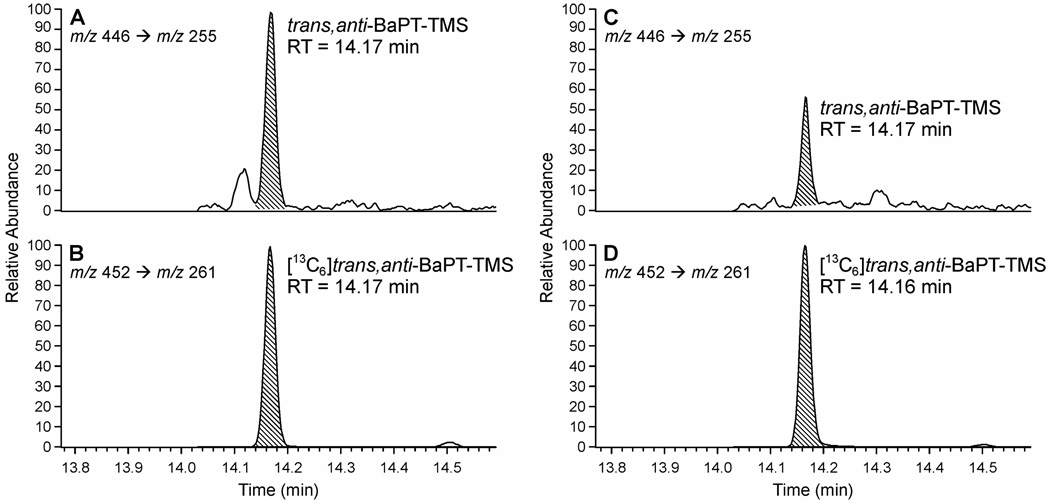
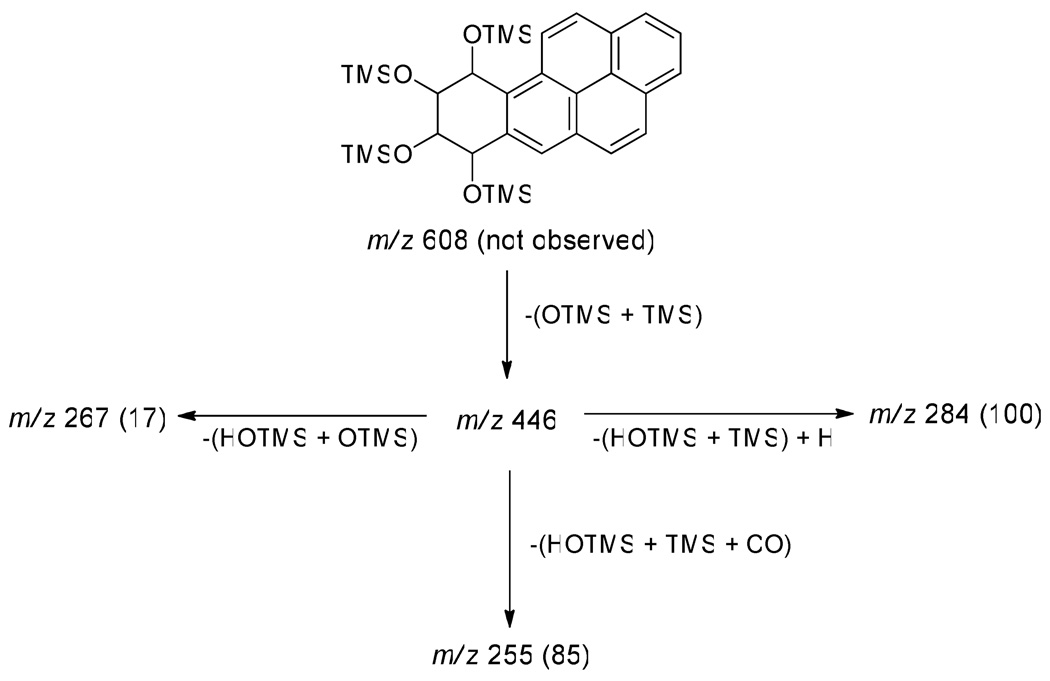
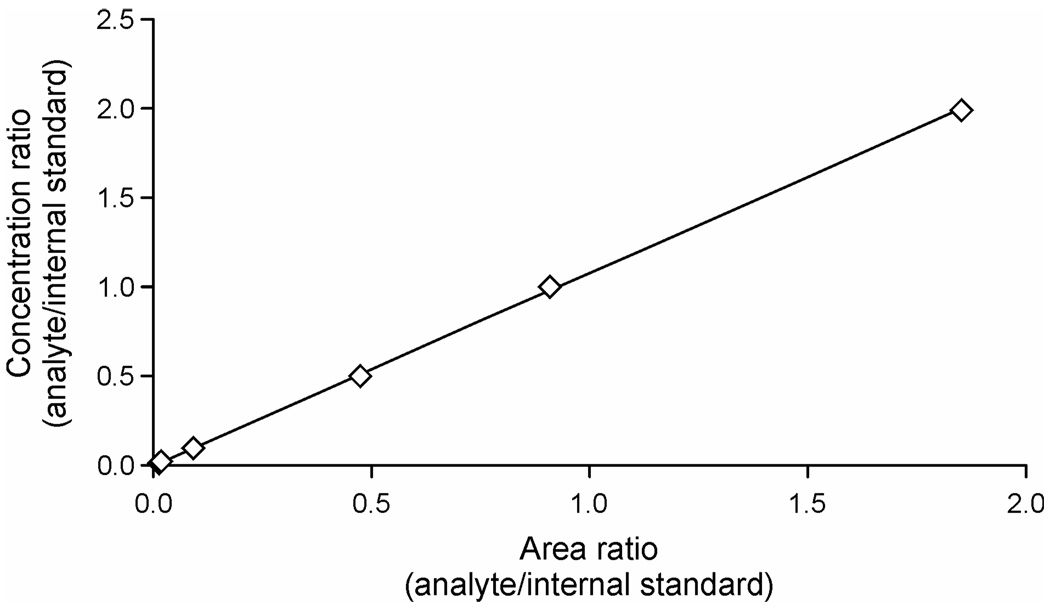
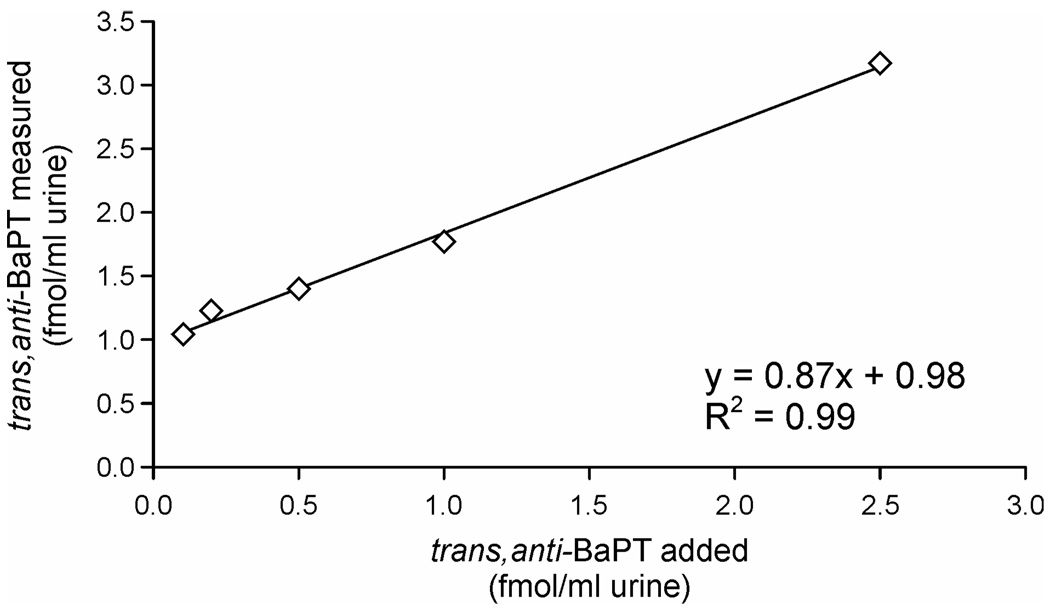
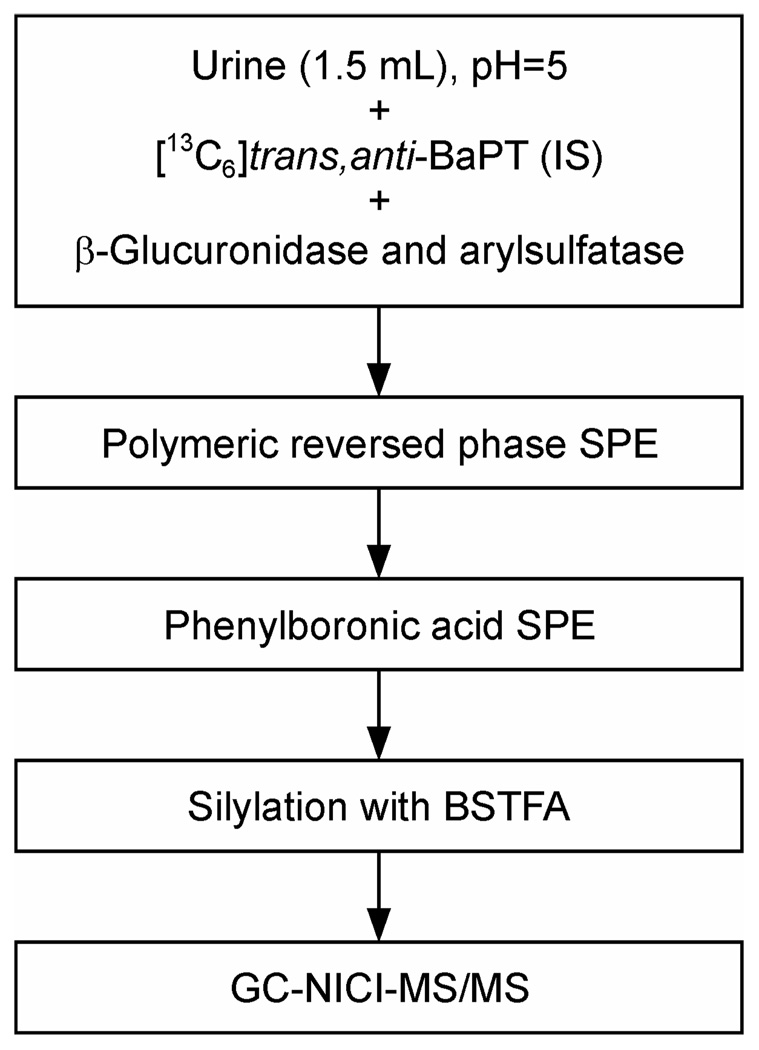
Polycyclic aromatic hydrocarbons (PAH) are believed to be causative agents for various types of cancers in humans. Benzo[a]pyrene (BaP) is a prototypic carcinogenic PAH, which requires metabolic activation to elicit its detrimental effects. The major end product of its diol epoxide metabolic activation pathway is r-7,t-8,9,c-10-tetrahydroxy-7,8,9,10-tetrahydrobenzo[a]pyrene (trans, anti-BaPT). Individual differences in exposure to, and metabolic activation of, carcinogenic PAH may influence cancer risk. Measurement of PAH metabolites in human urine could provide a direct way to assess individual differences in susceptibility to PAH-related cancer. In this article, we describe a sensitive and reliable method for the quantitation of trans, anti-BaPT in human urine using gas chromatography-negative ion chemical ionization-tandem mass spectrometry (GC-NICI-MS/MS). [(13)C(6)] trans, anti-BaPT was used as the internal standard. The urine was treated with β-glucuronidase and sulfatase, and then trans, anti-BaPT was enriched by solid-phase extraction with polymeric reversed phase and phenylboronic acid cartridges. The sample was silylated and analyzed by GC-NICI-MS/MS with selected reaction monitoring (SRM) for the trimethylsilyl (TMS) derivatives of trans, anti-BaPT (m/z 446 → m/z 255) and [(13)C(6)]trans, anti-BaPT (m/z 452 → m/z 261). The mean assay recovery was 44%. The instrumental on-column detection limit was about 20 amol of trans, anti-BaPT (as BaPT-TMS). trans, anti-BaPT was readily detected in all urine samples analyzed including those of 30 smokers (0.71 ± 0.64 fmol/mg creatinine) and 30 nonsmokers (0.34 ± 0.2 fmol/mg creatinine) (P = 0.0036). The results of this study demonstrate a highly sensitive and selective method for the quantitation of trans, anti-BaPT in human urine. This is to our knowledge the first study to show that smokers have significantly higher levels of trans, anti-BaPT in their urine than do nonsmokers. This method may be useful as a direct phenotyping approach to assess individual differences in uptake and metabolic activation of carcinogenic PAH.
多环芳烃(PAH)被认为是人类多种癌症的致病因素。苯并[a]芘(BaP)是一种典型的致癌性 PAH,需要代谢激活才能发挥其有害作用。其二醇环氧化物代谢激活途径的主要终产物是 r-7,t-8,9,c-10-四羟基-7,8,9,10-四氢苯并[a]芘(反式,反式-BaPT)。个体对致癌性 PAH 的暴露和代谢激活的差异可能会影响癌症风险。测量人尿中的 PAH 代谢物可以直接评估个体对 PAH 相关癌症的易感性差异。在本文中,我们描述了一种使用气相色谱-负化学电离-串联质谱(GC-NICI-MS/MS)定量测定人尿中反式,反式-BaPT 的灵敏可靠方法。[(13)C(6)]反式,反式-BaPT 被用作内标。尿液用β-葡萄糖醛酸酶和硫酸酯酶处理,然后用聚合物反相和苯硼酸键合固相萃取柱富集反式,反式-BaPT。样品经硅烷化处理后,采用 GC-NICI-MS/MS 进行分析,采用选择反应监测(SRM)对反式,反式-BaPT(m/z 446→m/z 255)和[(13)C(6)]反式,反式-BaPT(m/z 452→m/z 261)的 TMS 衍生物进行分析。平均测定回收率为 44%。仪器的柱上检测限约为 20 个反式,反式-BaPT (作为 BaPT-TMS)的阿莫尔。所有分析的尿液样本中均能检测到反式,反式-BaPT(30 名吸烟者 0.71±0.64 fmol/mg 肌酐,30 名不吸烟者 0.34±0.2 fmol/mg 肌酐)(P=0.0036)。本研究结果表明,这是首次证明吸烟者尿液中反式,反式-BaPT 水平明显高于不吸烟者的研究。该方法可作为一种直接表型分析方法,用于评估个体对致癌性 PAH 的摄取和代谢激活的差异。