HIV Pathogenesis Programme, Doris Duke Medical Research Institute, Nelson R, Mandela School of Medicine, University of KwaZulu-Natal, Durban, South Africa.
Retrovirology. 2010 Nov 4;7:92. doi: 10.1186/1742-4690-7-92.
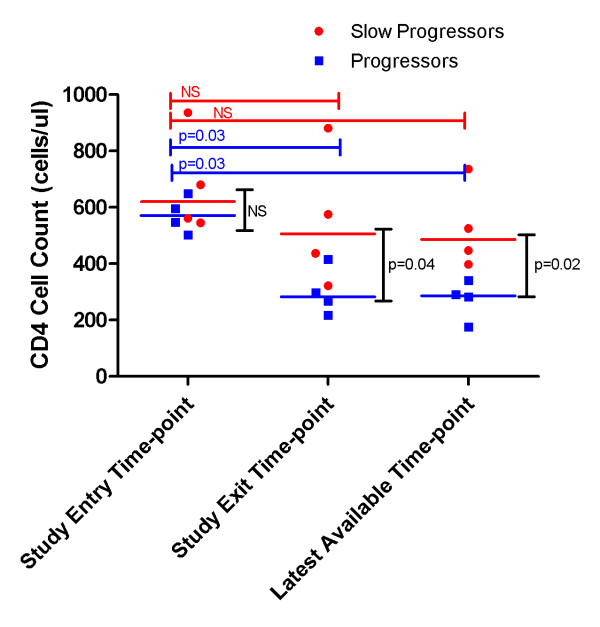
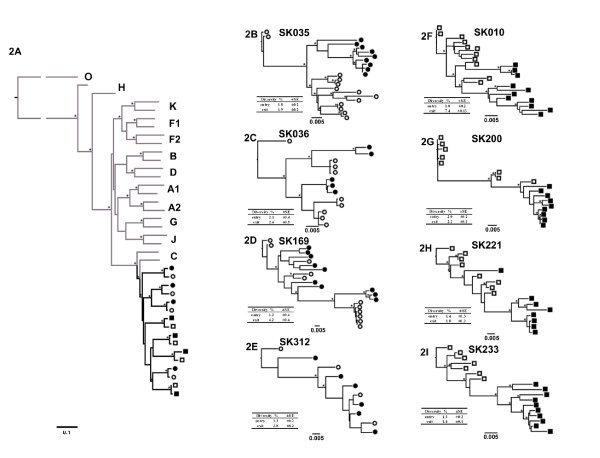
HIV-1 envelope diversity remains a significant challenge for the development of an efficacious vaccine. The evolutionary forces that shape the diversity of envelope are incompletely understood. HIV-1 subtype C envelope in particular shows significant differences and unique characteristics compared to its subtype B counterpart. Here we applied the single genome sequencing strategy of plasma derived virus from a cohort of therapy naïve chronically infected individuals in order to study diversity, divergence patterns and envelope characteristics across the entire HIV-1 subtype C gp160 in 4 slow progressors and 4 progressors over an average of 19.5 months.
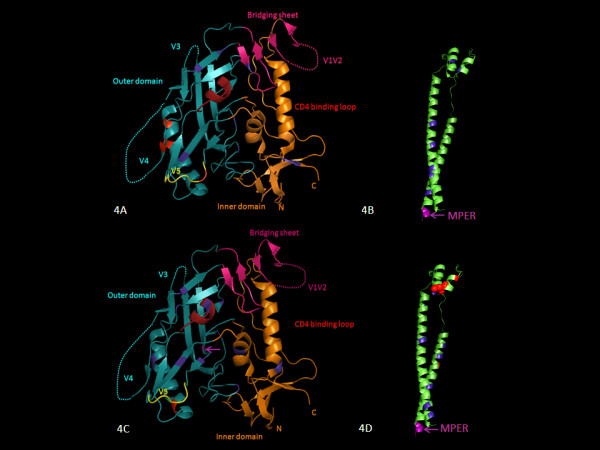
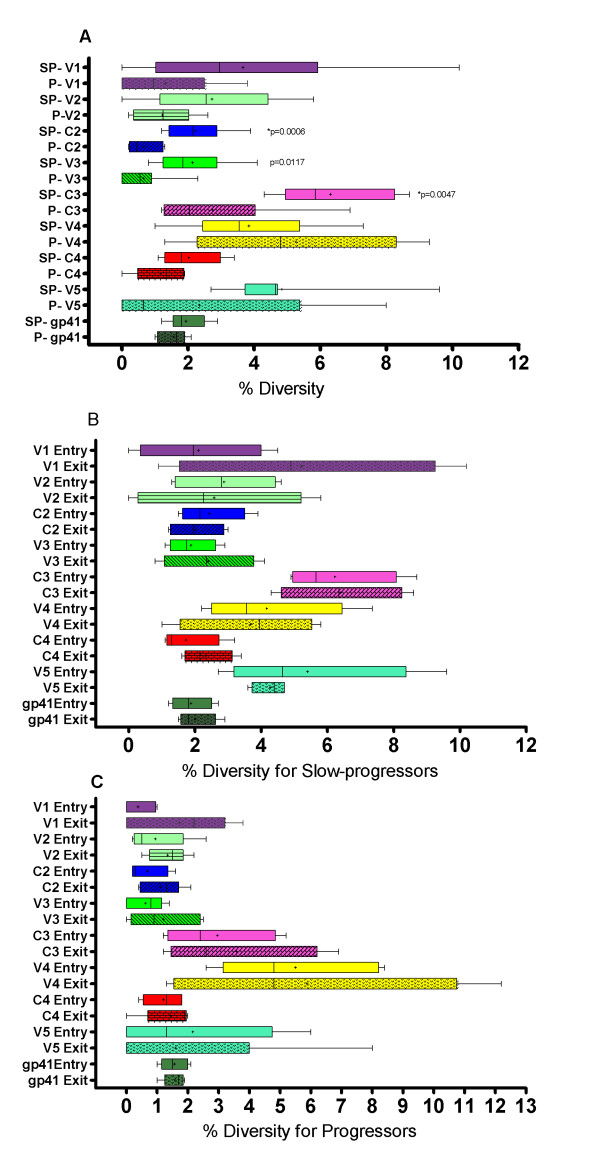
Sequence analysis indicated that intra-patient nucleotide diversity within the entire envelope was higher in slow progressors, but did not reach statistical significance (p = 0.07). However, intra-patient nucleotide diversity was significantly higher in slow progressors compared to progressors in the C2 (p = 0.0006), V3 (p = 0.01) and C3 (p = 0.005) regions. Increased amino acid length and fewer potential N-linked glycosylation sites (PNGs) were observed in the V1-V4 in slow progressors compared to progressors (p = 0.009 and p = 0.02 respectively). Similarly, gp41 in the progressors was significantly longer and had fewer PNGs compared to slow progressors (p = 0.02 and p = 0.02 respectively). Positive selection hotspots mapped mainly to V1, C3, V4, C4 and gp41 in slow progressors, whereas hotspots mapped mainly to gp41 in progressors. Signature consensus sequence differences between the groups occurred mainly in gp41.
These data suggest that separate regions of envelope are under differential selective forces, and that envelope evolution differs based on disease course. Differences between slow progressors and progressors may reflect differences in immunological pressure and immune evasion mechanisms. These data also indicate that the pattern of envelope evolution is an important correlate of disease progression in chronic HIV-1 subtype C infection.
HIV-1 包膜多样性仍然是开发有效疫苗的重大挑战。塑造包膜多样性的进化力量尚未完全被理解。与 B 亚型相比,HIV-1 亚型 C 的包膜表现出显著差异和独特特征。在此,我们应用来自一组未经治疗的慢性感染个体的血浆衍生病毒的单基因组测序策略,以研究整个 HIV-1 亚型 C gp160 中的多样性、分化模式和包膜特征,该研究纳入了 4 名缓慢进展者和 4 名进展者,平均随访时间为 19.5 个月。
序列分析表明,在整个包膜中,慢进展者的个体内核苷酸多样性较高,但未达到统计学意义(p = 0.07)。然而,与进展者相比,慢进展者的个体内核苷酸多样性在 C2(p = 0.0006)、V3(p = 0.01)和 C3(p = 0.005)区域显著更高。与进展者相比,慢进展者的 V1-V4 区观察到氨基酸长度增加和潜在的 N-连接糖基化位点(PNGs)减少(分别为 p = 0.009 和 p = 0.02)。同样,与慢进展者相比,进展者的 gp41 明显更长且 PNGs 更少(分别为 p = 0.02 和 p = 0.02)。在慢进展者中,主要在 V1、C3、V4、C4 和 gp41 中定位到正选择热点,而在进展者中主要在 gp41 中定位到正选择热点。组间特征性共识序列差异主要发生在 gp41 中。
这些数据表明,包膜的不同区域受到不同的选择压力,并且包膜的进化因疾病进程而异。慢进展者和进展者之间的差异可能反映了免疫压力和免疫逃逸机制的差异。这些数据还表明,包膜进化模式是慢性 HIV-1 亚型 C 感染疾病进展的重要相关因素。