Department of Neuroscience, SantaFe Health Alzheimer's Disease Center, McKnight Brain Institute, University of Florida, Gainesville, Florida, United States of America.
PLoS One. 2010 Oct 28;5(10):e13675. doi: 10.1371/journal.pone.0013675.
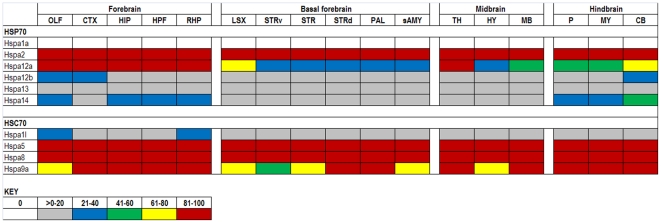
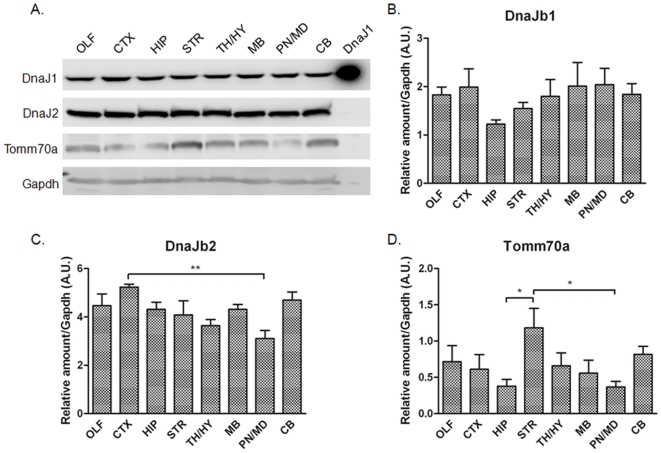
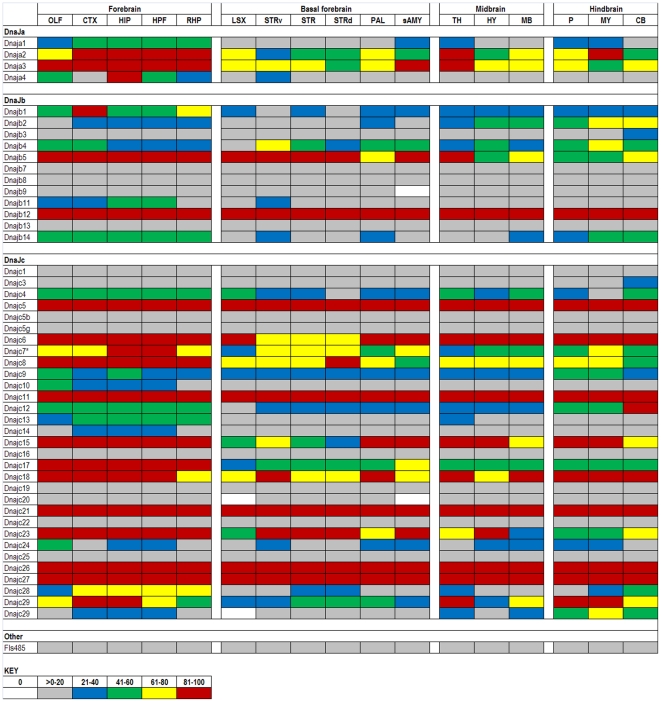
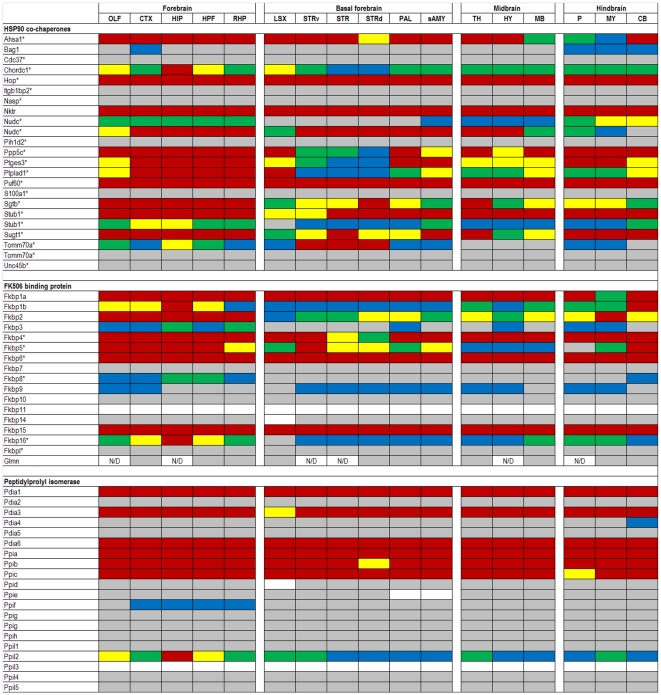
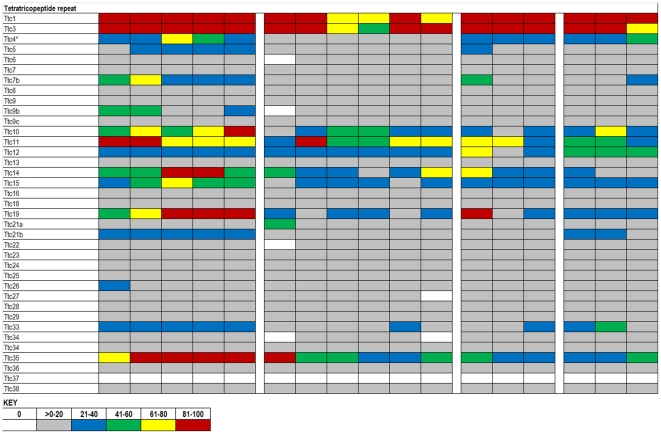
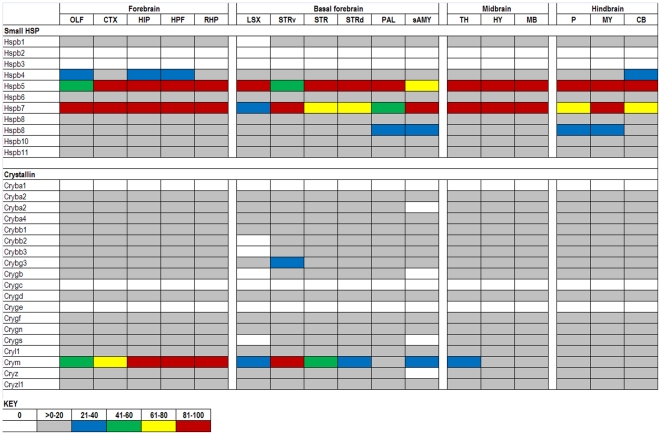
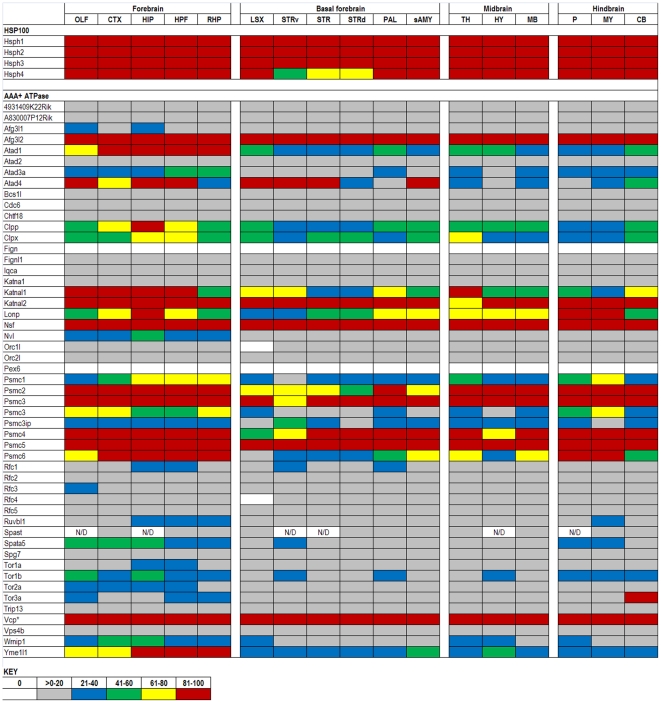
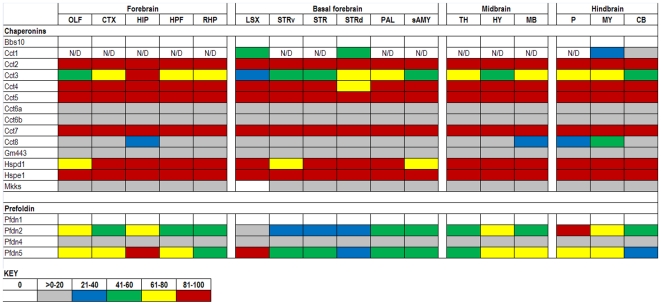
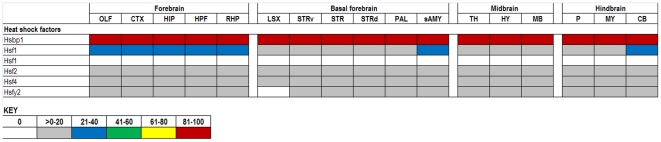
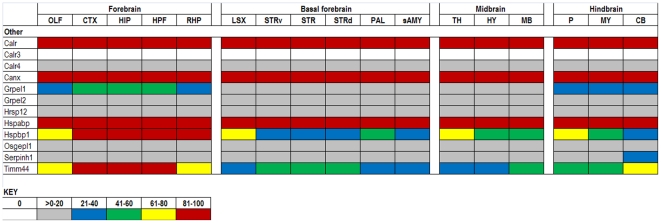
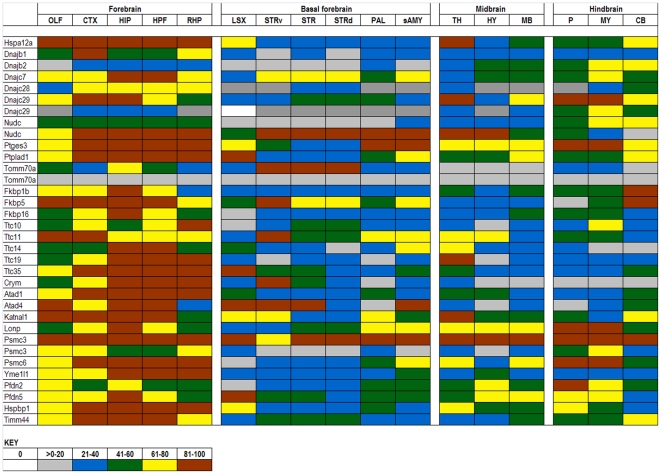
The pathology of many neurodegenerative diseases is characterized by the accumulation of misfolded and aggregated proteins in various cell types and regional substructures throughout the central and peripheral nervous systems. The accumulation of these aggregated proteins signals dysfunction of cellular protein homeostatic mechanisms such as the ubiquitin/proteasome system, autophagy, and the chaperone network. Although there are several published studies in which transcriptional profiling has been used to examine gene expression in various tissues, including tissues of neurodegenerative disease models, there has not been a report that focuses exclusively on expression of the chaperone network. In the present study, we used the Allen Brain Atlas online database to analyze chaperone expression levels. This database utilizes a quantitative in situ hybridization approach and provides data on 270 chaperone genes within many substructures of the adult mouse brain. We determined that 256 of these chaperone genes are expressed at some level. Surprisingly, relatively few genes, only 30, showed significant variations in levels of mRNA across different substructures of the brain. The greatest degree of variability was exhibited by genes of the DnaJ co-chaperone, Tetratricopeptide repeat, and the HSPH families. Our analysis provides a valuable resource towards determining how variations in chaperone gene expression may modulate the vulnerability of specific neuronal populations of mammalian brain.
许多神经退行性疾病的病理学特征是在中枢和外周神经系统的各种细胞类型和区域亚结构中积累错误折叠和聚集的蛋白质。这些聚集蛋白的积累表明细胞蛋白稳态机制(如泛素/蛋白酶体系统、自噬和伴侣网络)的功能障碍。尽管有几项已发表的研究使用转录谱分析来研究包括神经退行性疾病模型在内的各种组织中的基因表达,但尚未有专门关注伴侣网络表达的报告。在本研究中,我们使用 Allen 大脑图谱在线数据库来分析伴侣的表达水平。该数据库使用定量原位杂交方法,提供了成年小鼠大脑许多亚结构中 270 种伴侣基因的表达数据。我们确定其中 256 种伴侣基因在某种程度上有表达。令人惊讶的是,只有 30 个基因的 mRNA 水平在大脑的不同亚结构中表现出显著的差异。变化最大的是 DnaJ 共伴侣、四肽重复和 HSPH 家族的基因。我们的分析为确定伴侣基因表达的变化如何调节哺乳动物大脑特定神经元群体的易感性提供了有价值的资源。