Institute of Developmental Biology and Cancer, Centre National de la Recherche Scientifique UMR 6543, Université de Nice, Faculté des Sciences-Parc Valrose, Nice, France.
PLoS One. 2010 Oct 28;5(10):e15400. doi: 10.1371/journal.pone.0015400.
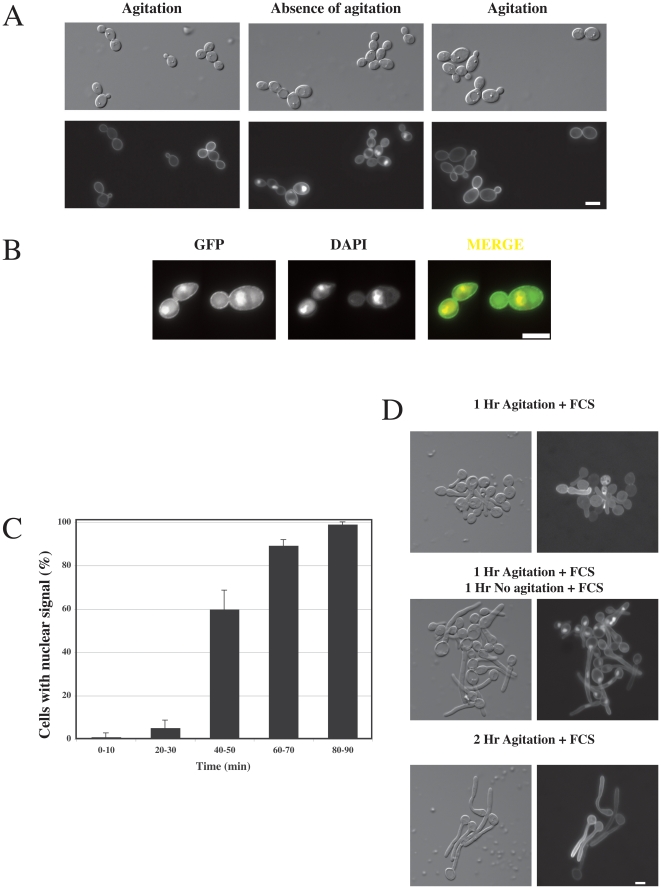
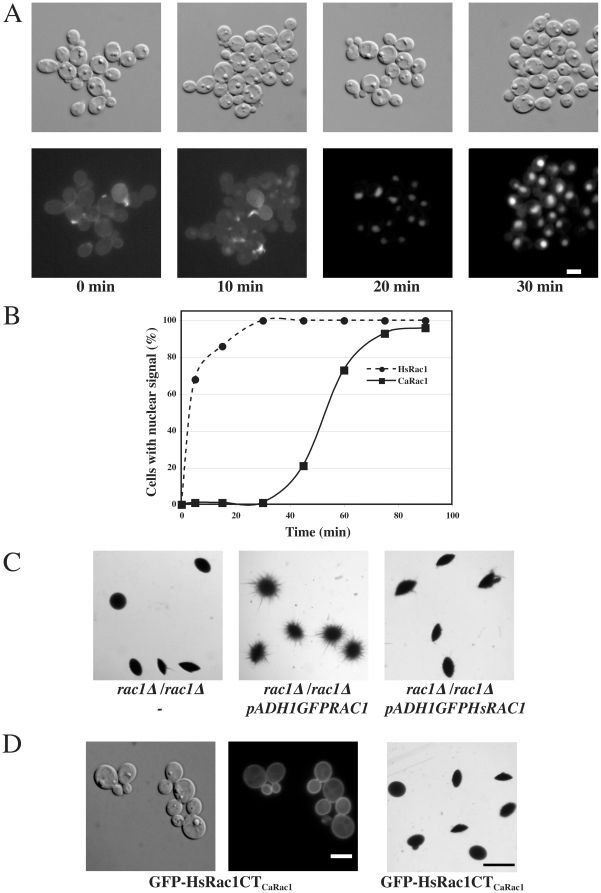
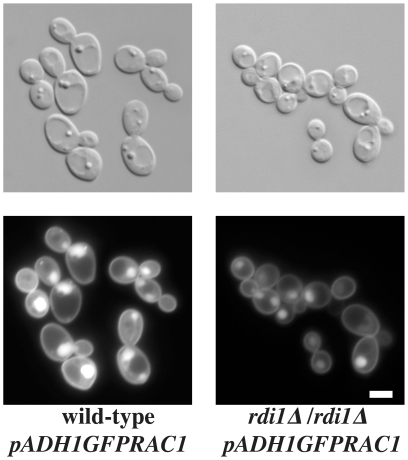
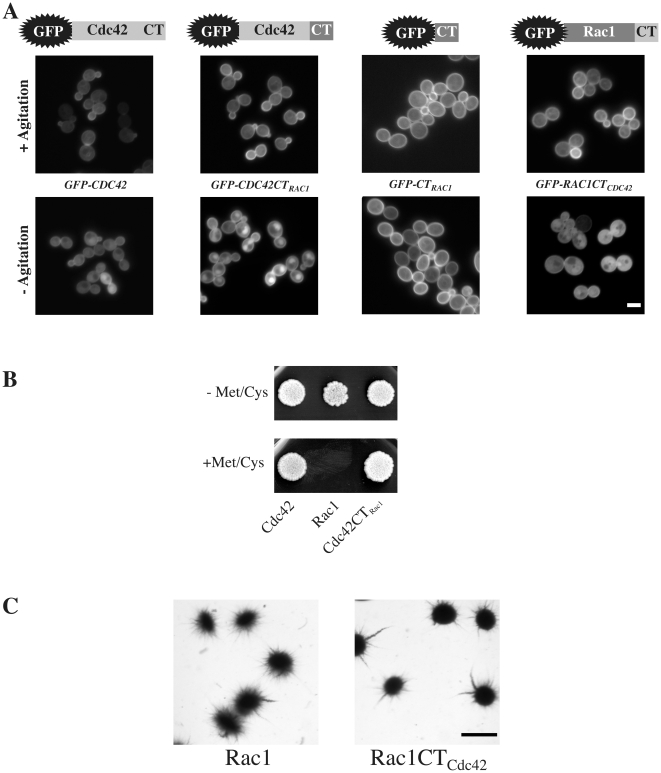
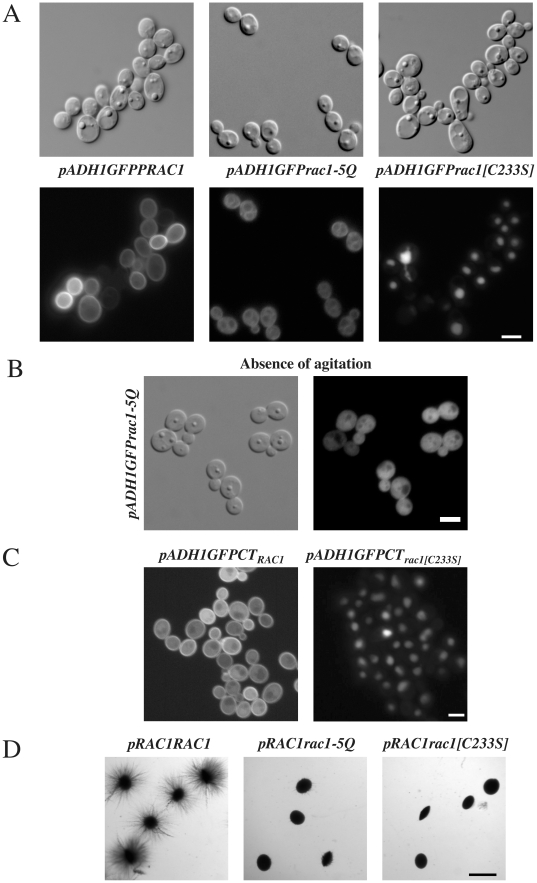
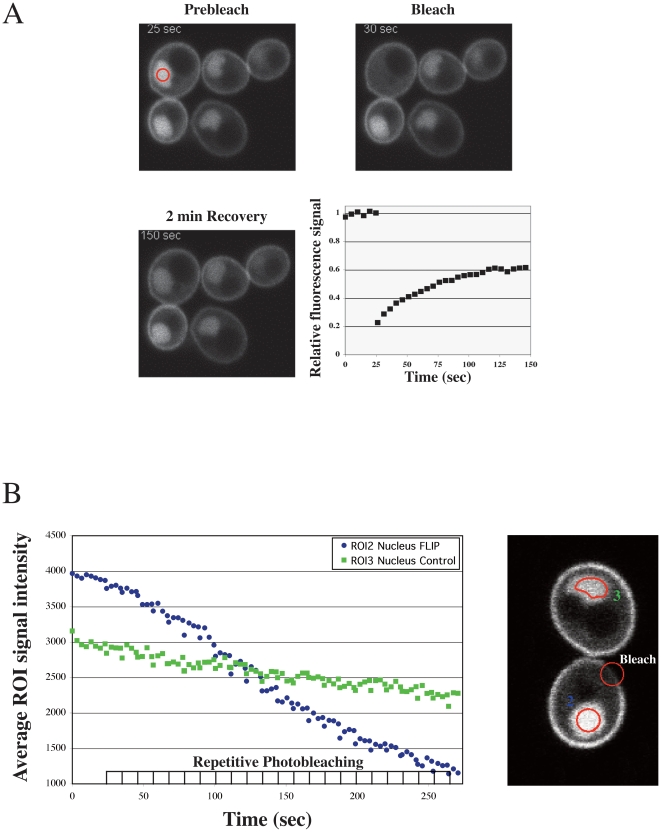
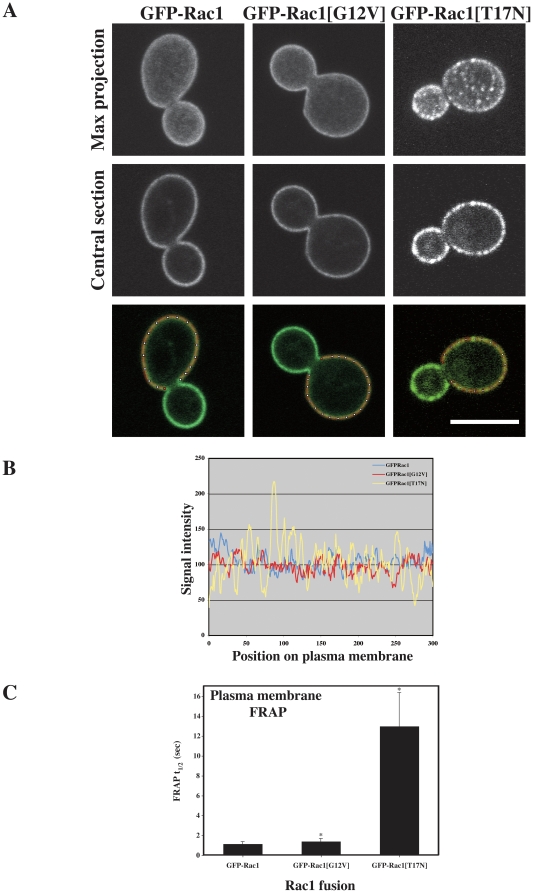
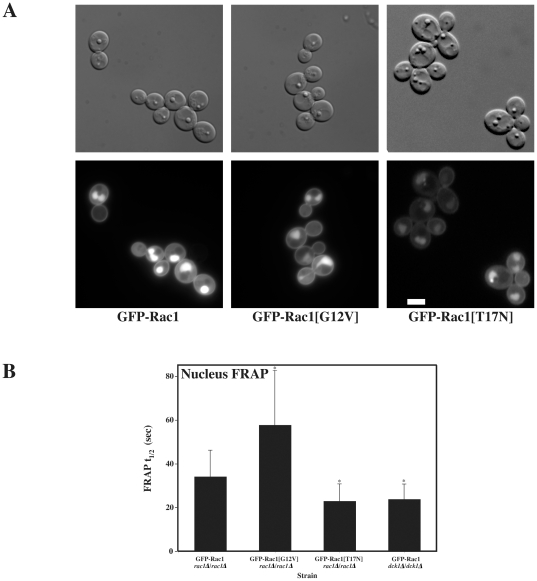
The small Rho G-protein Rac1 is highly conserved from fungi to humans, with approximately 65% overall sequence identity in Candida albicans. As observed with human Rac1, we show that C. albicans Rac1 can accumulate in the nucleus, and fluorescence recovery after photobleaching (FRAP) together with fluorescence loss in photobleaching (FLIP) studies indicate that this Rho G-protein undergoes nucleo-cytoplasmic shuttling. Analyses of different chimeras revealed that nuclear accumulation of C. albicans Rac1 requires the NLS-motifs at its carboxyl-terminus, which are blocked by prenylation of the adjacent cysteine residue. Furthermore, we show that C. albicans Rac1 dynamics, both at the plasma membrane and in the nucleus, are dependent on its activation state and in particular that the inactive form accumulates faster in the nucleus. Heterologous expression of human Rac1 in C. albicans also results in nuclear accumulation, yet accumulation is more rapid than that of C. albicans Rac1. Taken together our results indicate that Rac1 nuclear accumulation is an inherent property of this G-protein and suggest that the requirements for its nucleo-cytoplasmic shuttling are conserved from fungi to humans.
小分子 Rho G 蛋白 Rac1 在从真菌到人类的物种中高度保守,在白色念珠菌中约有 65%的整体序列同一性。与人类 Rac1 一样,我们发现白色念珠菌 Rac1 可以积累在核内,并且荧光恢复后光漂白(FRAP)和荧光损失光漂白(FLIP)研究表明,这种 Rho G 蛋白发生核质穿梭。对不同嵌合体的分析表明,白色念珠菌 Rac1 的核积累需要其羧基末端的NLS 基序,该基序被相邻半胱氨酸残基的 prenylation 所阻断。此外,我们还表明,白色念珠菌 Rac1 在质膜和核内的动力学都依赖于其激活状态,特别是无活性形式在核内更快地积累。人 Rac1 在白色念珠菌中的异源表达也导致核内积累,但积累速度比白色念珠菌 Rac1 更快。综上所述,我们的结果表明 Rac1 核内积累是该 G 蛋白的固有特性,并表明其核质穿梭的要求在真菌到人类中是保守的。