Université Côte d'Azur, CNRS, INSERM, Institute of Biology Valrose (iBV), Parc Valrose, Nice, France.
mBio. 2021 Oct 26;12(5):e0252821. doi: 10.1128/mBio.02528-21. Epub 2021 Oct 5.
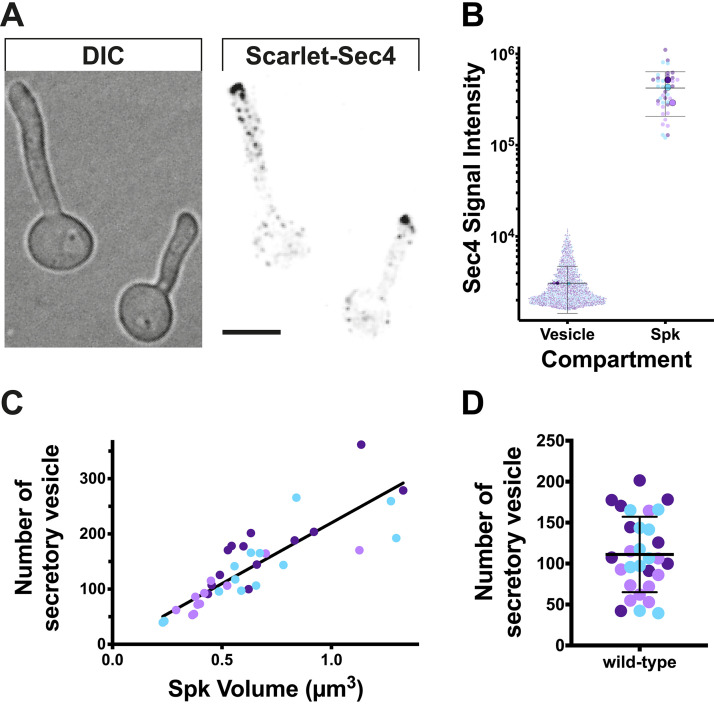
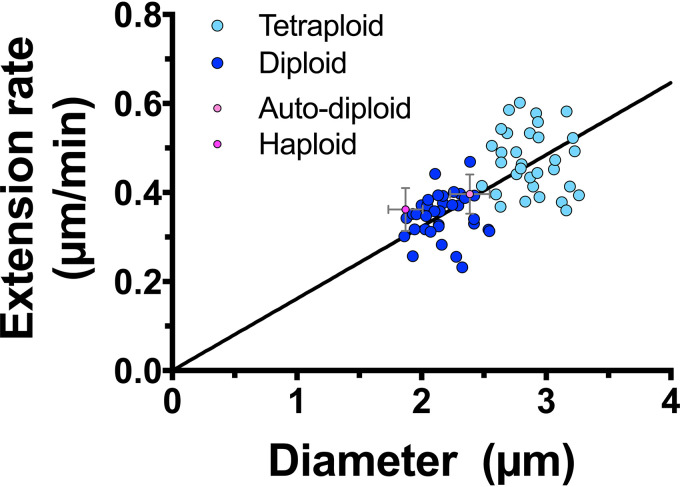
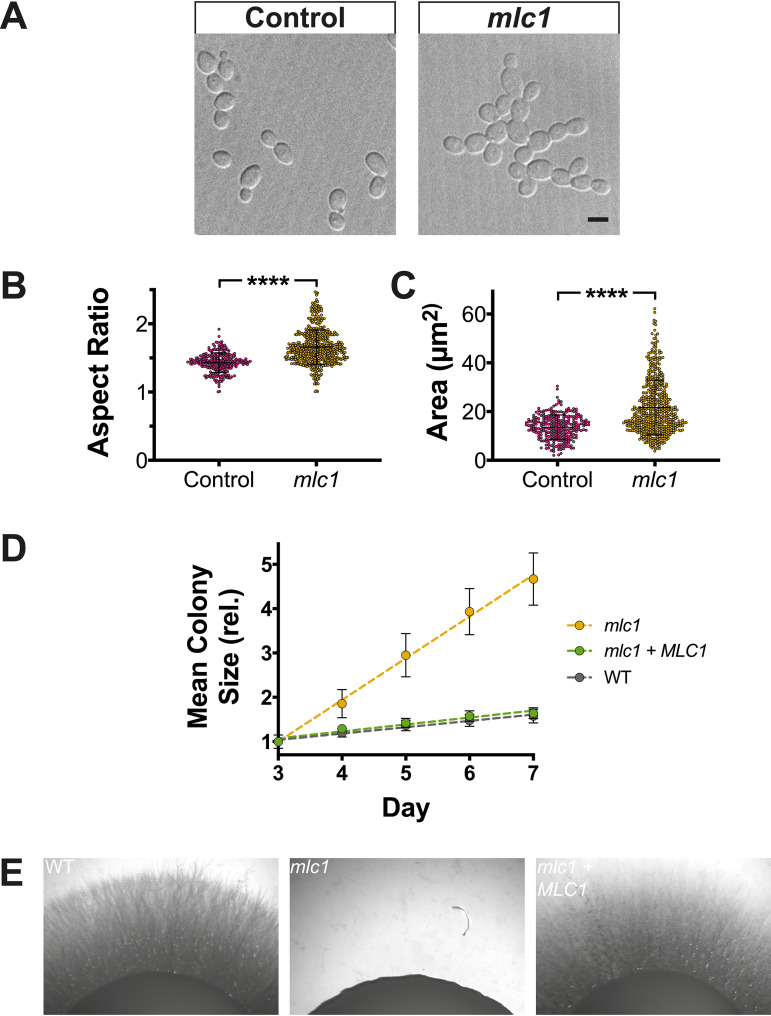
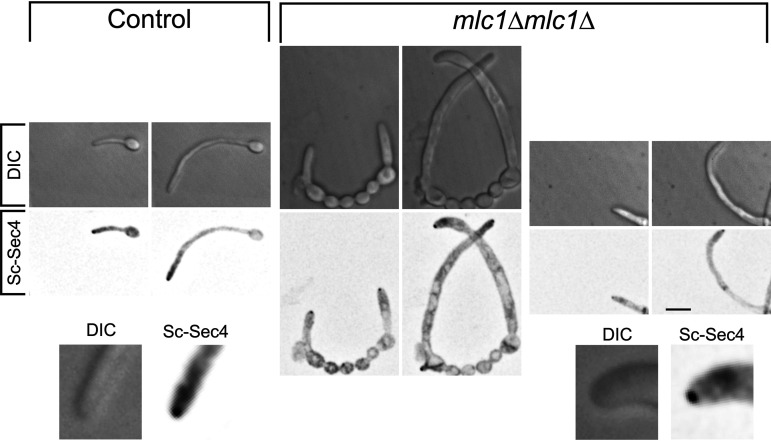
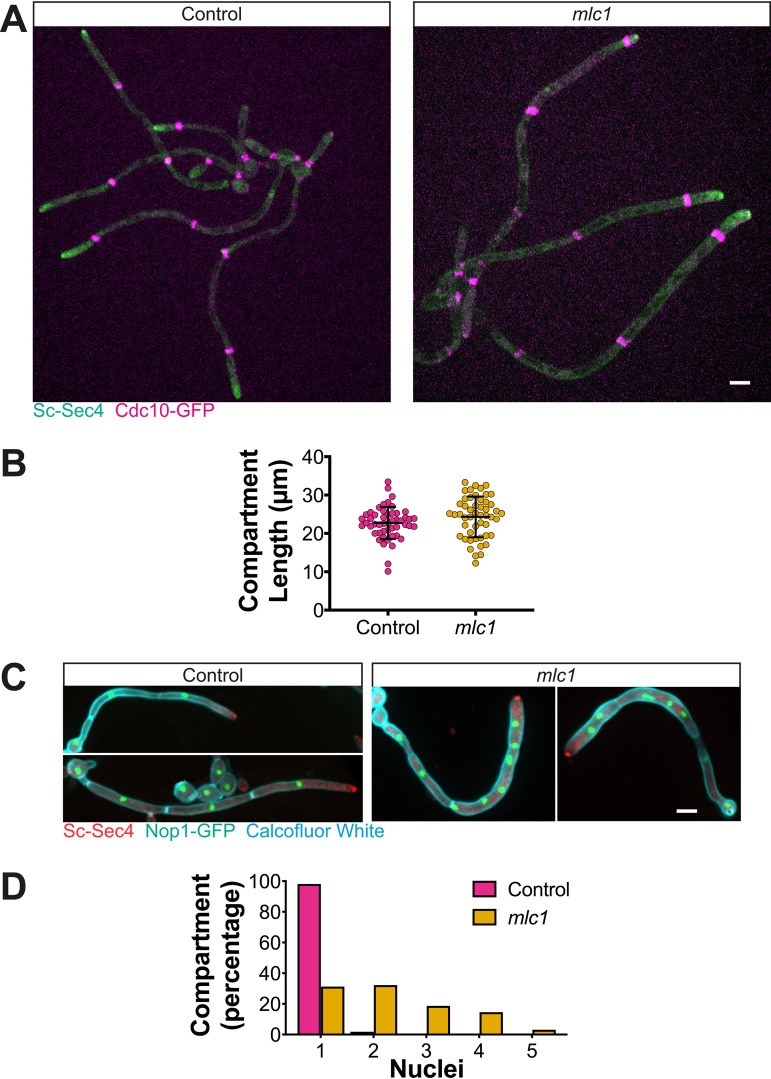
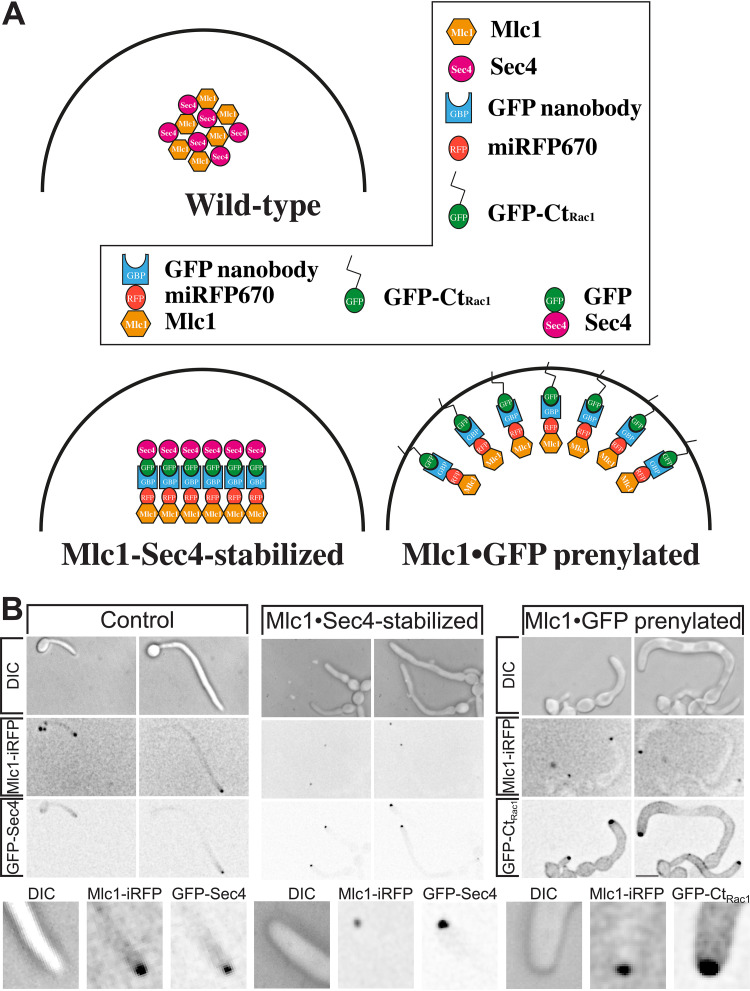
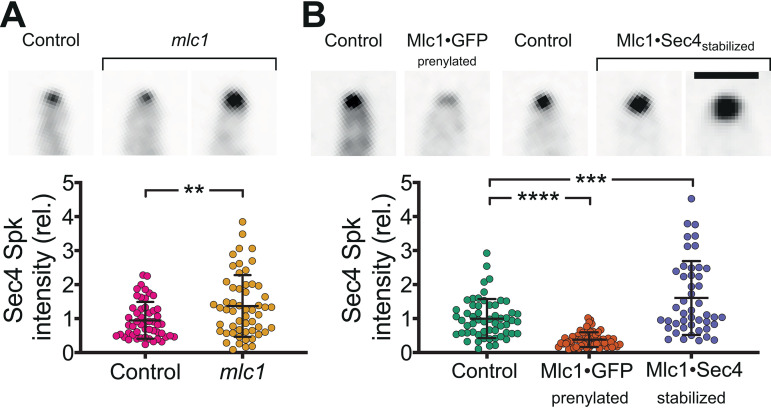
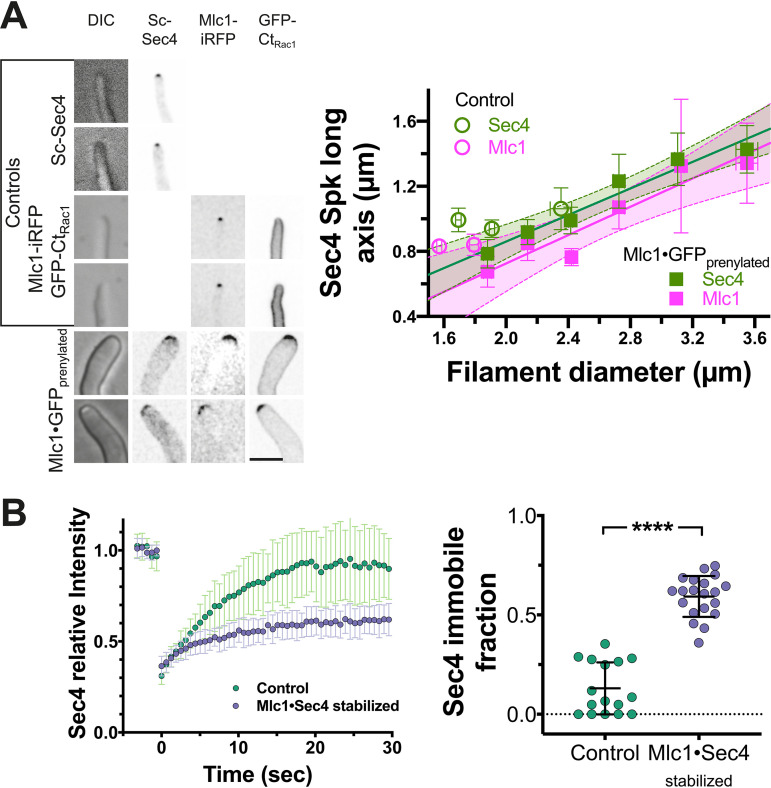
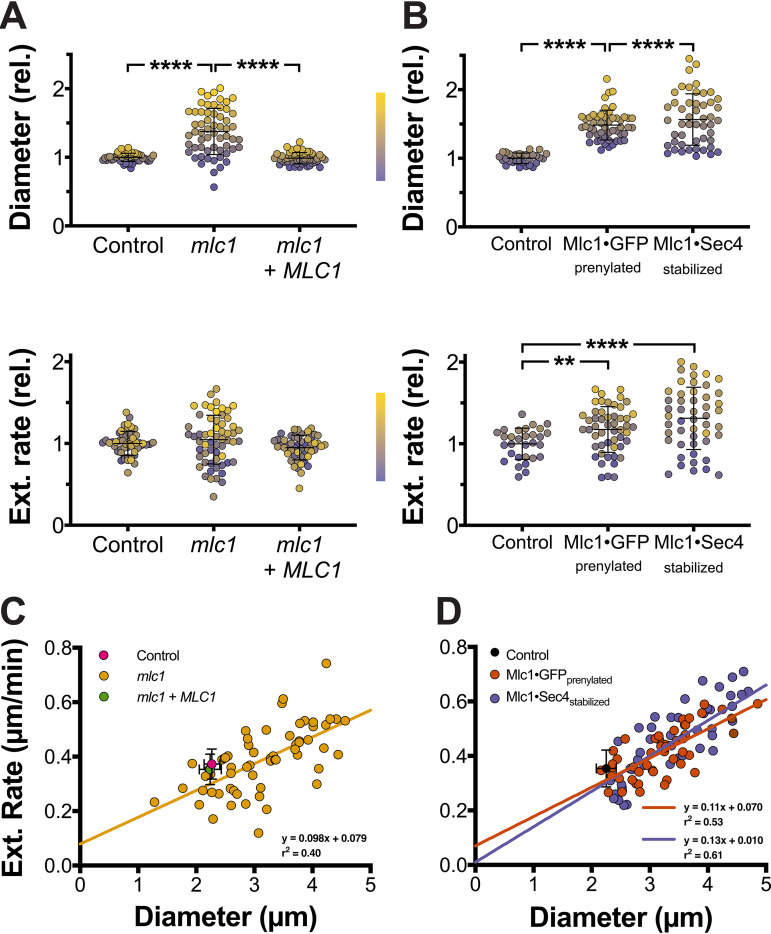
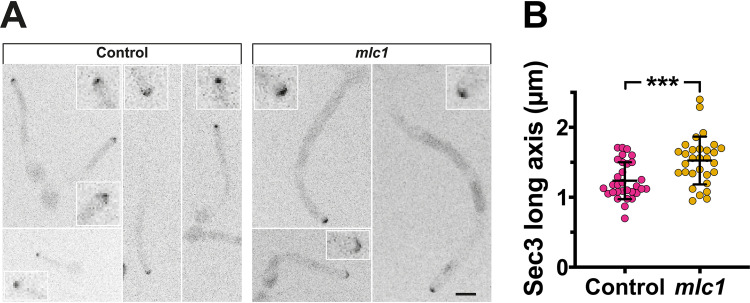
In a number of elongated cells, such as fungal hyphae, a vesicle cluster is observed at the growing tip. This cluster, called a Spitzenkörper, has been suggested to act as a vesicle supply center, yet analysis of its function is challenging, as a majority of components identified thus far are essential for growth. Here, we probe the function of the Spitzenkörper in the human fungal pathogen Candida albicans, using genetics and synthetic physical interactions (SPI). We show that the C. albicans Spitzenkörper is comprised principally of secretory vesicles. Mutant strains lacking the Spitzenkörper component myosin light chain 1 (Mlc1) or having a SPI between Mlc1 and either another Spitzenkörper component, the Rab GTPase Sec4, or prenylated green fluorescent protein (GFP), are viable and still exhibit a Spitzenkörper during filamentous growth. Strikingly, all of these mutants formed filaments with increased diameters and extension rates, indicating that Mlc1 negatively regulates myosin V, Myo2, activity. The results of our quantitative studies reveal a strong correlation between filament diameter and extension rate, which is consistent with the vesicle supply center model for fungal tip growth. Together, our results indicate that the Spitzenkörper protein Mlc1 is important for growth robustness and reveal a critical link between filament morphology and extension rate. Hyphal tip growth is critical in a range of fungal pathogens, in particular for invasion into animal and plant tissues. In Candida albicans, as in many filamentous fungi, a cluster of vesicles, called a Spitzenkörper, is observed at the tip of growing hyphae that is thought to function as a vesicle supply center. A central prediction of the vesicle supply center model is that the filament diameter is proportional to the extension rate. Here, we show that mutants lacking the Spitzenkörper component myosin light chain 1 (Mlc1) or having synthetic physical interactions between Mlc1 and either another Spitzenkörper component or prenylated GFP, are defective in filamentous growth regulation, exhibiting a range of growth rates and sizes, with a strong correlation between diameter and extension rate. These results suggest that the Spitzenkörper is important for growth robustness and reveal a critical link between filament morphology and extension rate.
在一些伸长的细胞中,如真菌菌丝,在生长尖端观察到一个囊泡簇。这个簇被称为 Spitzenkörper,被认为是囊泡供应中心,但对其功能的分析具有挑战性,因为迄今为止鉴定的大多数成分对于生长都是必不可少的。在这里,我们使用遗传学和合成物理相互作用(SPI)来探测人类真菌病原体白色念珠菌中 Spitzenkörper 的功能。我们表明,白色念珠菌 Spitzenkörper 主要由分泌囊泡组成。缺乏 Spitzenkörper 成分肌球蛋白轻链 1(Mlc1)的突变株或具有 Mlc1 与另一个 Spitzenkörper 成分 Rab GTPase Sec4 或 prenylated GFP 之间的 SPI 的突变株在丝状生长时仍然是可行的并且仍然表现出 Spitzenkörper。引人注目的是,所有这些突变体都形成了直径和延伸率增加的菌丝,表明 Mlc1 负调节肌球蛋白 V、Myo2 活性。我们的定量研究结果表明,丝状直径和延伸率之间存在很强的相关性,这与真菌尖端生长的囊泡供应中心模型一致。总之,我们的结果表明 Spitzenkörper 蛋白 Mlc1 对于生长稳健性很重要,并揭示了菌丝形态和延伸率之间的关键联系。菌丝尖端生长在一系列真菌病原体中至关重要,特别是对于侵入动物和植物组织。在白色念珠菌中,与许多丝状真菌一样,在生长菌丝的尖端观察到一个囊泡簇,称为 Spitzenkörper,被认为是囊泡供应中心。囊泡供应中心模型的一个中心预测是,丝状直径与延伸率成正比。在这里,我们表明缺乏 Spitzenkörper 成分肌球蛋白轻链 1(Mlc1)的突变体或具有 Mlc1 与另一个 Spitzenkörper 成分或 prenylated GFP 之间的合成物理相互作用的突变体在丝状生长调节中是有缺陷的,表现出一系列不同的生长速率和大小,直径和延伸率之间存在很强的相关性。这些结果表明 Spitzenkörper 对于生长稳健性很重要,并揭示了菌丝形态和延伸率之间的关键联系。