Inter-Country Support Team for East and Southern Africa, WHO Regional Office for Africa, Harare, Zimbabwe.
BMC Int Health Hum Rights. 2010 Nov 10;10:27. doi: 10.1186/1472-698X-10-27.
National health accounts provide useful information to understand the functioning of a health financing system. This article attempts to present a profile of the health system financing in Malawi using data from NHA. It specifically attempts to document the health financing situation in the country and proposes recommendations relevant for developing a comprehensive health financing policy and strategic plan.
Data from three rounds of national health accounts covering the Financial Years 1998/1999 to 2005/2006 was used to describe the flow of funds and their uses in the health system. Analysis was performed in line with the various NHA entities and health system financing functions.
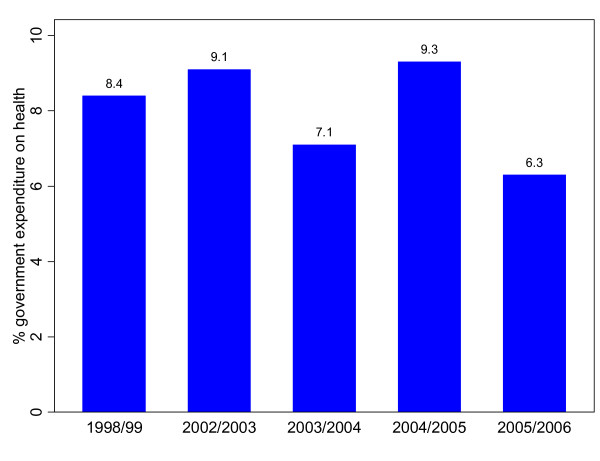
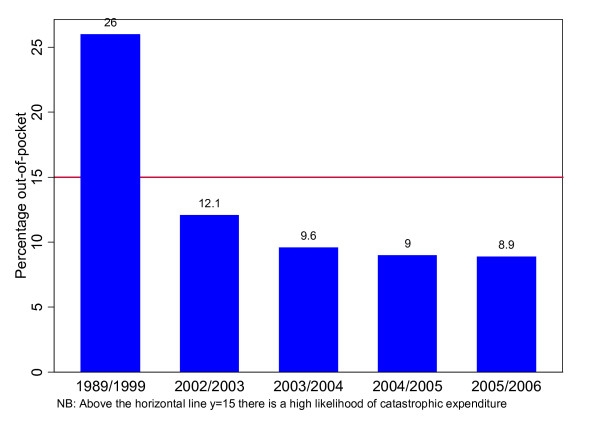
The total health expenditure per capita increased from US$ 12 in 1998/1999 to US$25 in 2005/2006. In 2005/2006 public, external and private contributions to the total health expenditure were 21.6%, 60.7% and 18.2% respectively. The country had not met the Abuja of allocating at least 15% of national budget on health. The percentage of total health expenditure from households' direct out-of-pocket payments decreased from 26% in 1998/99 to 12.1% in 2005/2006.
There is a need to increase government contribution to the total health expenditure to at least the levels of the Abuja Declaration of 15% of the national budget. In addition, the country urgently needs to develop and implement a prepaid health financing system within a comprehensive health financing policy and strategy with a view to assuring universal access to essential health services for all citizens.
国家卫生账户为了解卫生筹资系统的运作提供了有用的信息。本文试图利用来自国家卫生账户的数据来介绍马拉维卫生系统筹资状况。本文特别试图记录该国的卫生筹资情况,并提出制定全面卫生筹资政策和战略计划的相关建议。
使用涵盖 1998/1999 财政年度至 2005/2006 财政年度的三轮国家卫生账户数据,描述卫生系统资金流动及其用途。分析按照各种国家卫生账户实体和卫生系统筹资功能进行。
人均卫生支出从 1998/1999 年的 12 美元增加到 2005/2006 年的 25 美元。2005/2006 年,公共、外部和私人对总卫生支出的贡献分别为 21.6%、60.7%和 18.2%。该国尚未达到《阿布贾宣言》规定的将至少 15%的国家预算用于卫生保健的目标。家庭直接现金支付占总卫生支出的比例从 1998/99 年的 26%下降到 2005/2006 年的 12.1%。
需要将政府对总卫生支出的贡献至少增加到《阿布贾宣言》规定的国家预算的 15%。此外,该国迫切需要在全面卫生筹资政策和战略内制定和实施预付款卫生筹资制度,以确保所有公民都能普遍获得基本卫生服务。