Clinton Health Access Initiative, Malawi.
Ministry of Health, Government of Malawi, Malawi.
Glob Health Sci Pract. 2021 Dec 21;9(4):793-803. doi: 10.9745/GHSP-D-21-00232. Print 2021 Dec 31.
In 2011, the Ministry of Health in Malawi developed and institutionalized a resource-tracking process, known as resource mapping (RM), to collect information on planned funding flows across the health sector to support resource allocation and mobilization decisions. We analyze the RM process and tools and describe key uses of the data for health financing decision making to achieve universal health coverage (UHC).
We applied a case study approach, written as a collaboration between policy makers who have led the RM process in Malawi and the implementation team who have developed tools, collected data, and reported results over the period. It draws on our experiences in conducting RM in Malawi to document the RM process and data, key uses of data, implementation challenges, and lessons learned. We conducted a gray literature review to understand rounds of RM in which we did not participate. Finally, we conducted a search of published literature to situate our work in the international health resource-tracking literature.
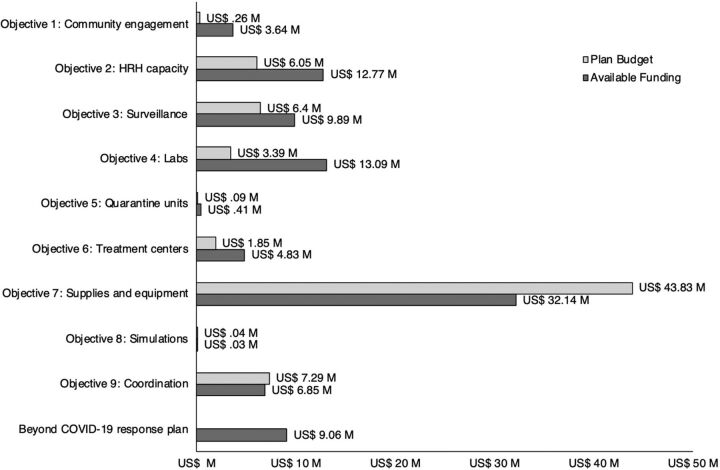
The RM exercise in Malawi is iteratively designed around the needs of the end users and policy priorities of the government, which in turn drives institutionalization of the exercise. We describe 4 ways in which RM data has been used, including national and district planning and budgeting; prioritization and coordination of existing funds by estimating resource availability; mobilization of new resources by conducting financial gap analysis against costed national strategic plans; and generation of evidence to support the national response to the coronavirus disease 2019 pandemic.
To achieve UHC goals in Malawi, RM has equipped the government and development partners with critical data used for resource mobilization and coordination decisions. Lessons learned from RM in Malawi may be applicable to other countries starting or refining their own health resource-tracking exercise.
2011 年,马拉维卫生部制定并实施了资源追踪流程,称为资源映射(Resource Mapping,RM),以收集卫生部门计划资金流动的信息,为资源分配和动员决策提供支持。我们分析了 RM 流程和工具,并描述了数据在卫生筹资决策中的关键用途,以实现全民健康覆盖(Universal Health Coverage,UHC)。
我们采用案例研究方法,由领导马拉维 RM 流程的政策制定者和开发工具、收集数据并在该期间报告结果的实施团队共同撰写。它借鉴了我们在马拉维开展 RM 的经验,记录了 RM 流程和数据、数据的关键用途、实施挑战和经验教训。我们进行了灰色文献综述,以了解我们未参与的 RM 轮次。最后,我们搜索了已发表的文献,将我们的工作置于国际卫生资源追踪文献中。
马拉维的 RM 练习是围绕最终用户的需求和政府的政策重点进行迭代设计的,这反过来又推动了练习的制度化。我们描述了 RM 数据的 4 种用途,包括国家和地区规划和预算;通过估计资源可用性,对现有资金进行优先排序和协调;通过对成本化国家战略计划进行财务差距分析,动员新资源;以及生成证据,支持国家对 2019 年冠状病毒病大流行的应对。
为了实现马拉维的 UHC 目标,RM 为政府和发展伙伴提供了用于资源动员和协调决策的关键数据。马拉维 RM 的经验教训可能适用于其他国家,这些国家正在启动或完善自己的卫生资源追踪工作。