Departament de Biologia Vegetal, Facultat de Farmàcia, Universitat de València Av. Vicent Andrés Estellés S/N, 46100 Burjassot, Valencia, Spain.
J Exp Bot. 2011 Jan;62(3):1229-39. doi: 10.1093/jxb/erq353. Epub 2010 Nov 10.
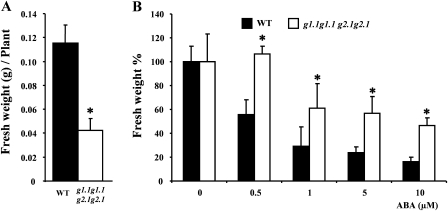
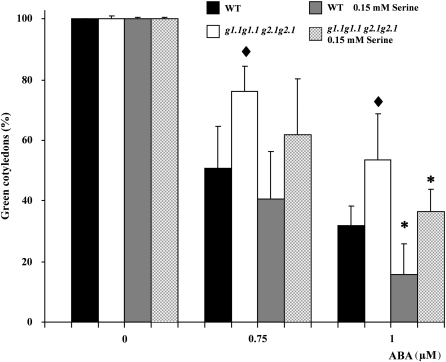
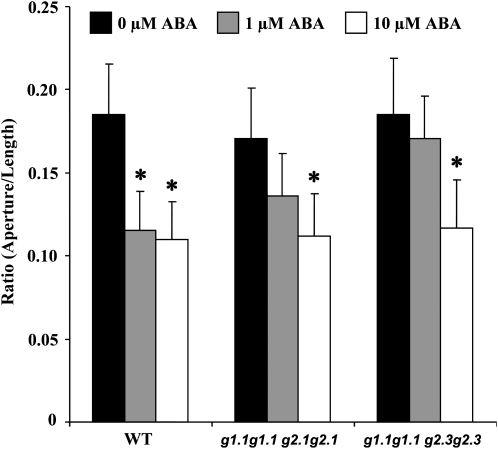
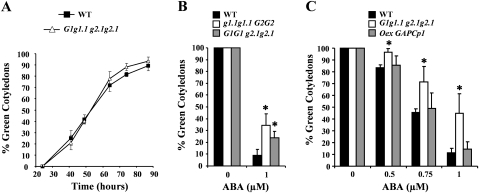
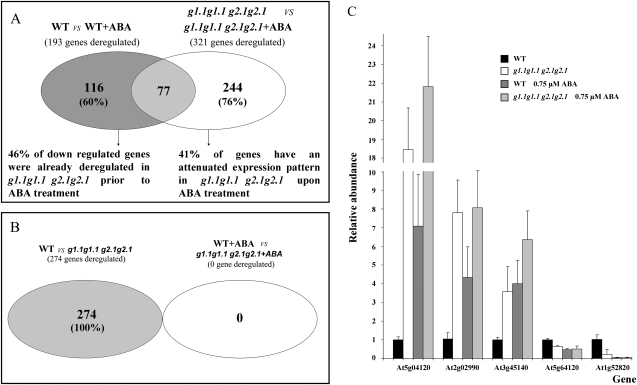
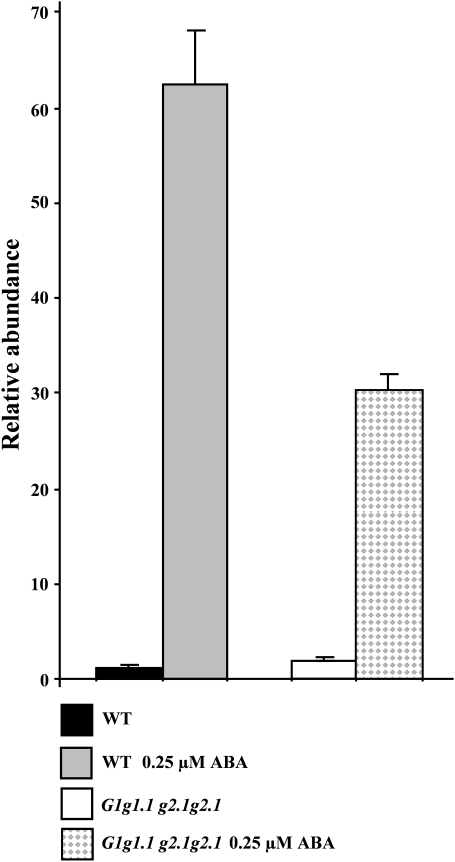
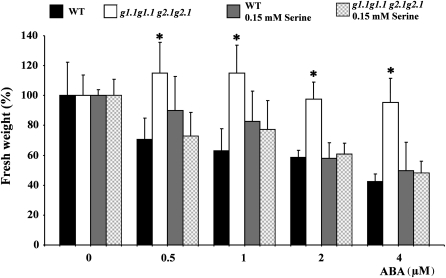
Abscisic acid (ABA) controls plant development and regulates plant responses to environmental stresses. A role for ABA in sugar regulation of plant development has also been well documented although the molecular mechanisms connecting the hormone with sugar signal transduction pathways are not well understood. In this work it is shown that Arabidopsis thaliana mutants deficient in plastidial glycolytic glyceraldehyde-3-phosphate dehydrogenase (gapcp1gapcp2) are ABA insensitive in growth, stomatal closure, and germination assays. The ABA levels of gapcp1gapcp2 were normal, suggesting that the ABA signal transduction pathway is impaired in the mutants. ABA modified gapcp1gapcp2 gene expression, but the mutant response to the hormone differed from that observed in wild-type plants. The gene expression of the transcription factor ABI4, involved in both sugar and ABA signalling, was altered in gapcp1gapcp2, suggesting that their ABA insensitivity is mediated, at least partially, through this transcriptional regulator. Serine supplementation was able partly to restore the ABA sensitivity of gapcp1gapcp2, indicating that amino acid homeostasis and/or serine metabolism may also be important determinants in the connections of ABA with primary metabolism. Overall, these studies provide new insights into the links between plant primary metabolism and ABA signalling, and demonstrate the importance of plastidial glycolytic glyceraldehyde-3-phosphate dehydrogenase in these interactions.
脱落酸(ABA)控制植物发育,并调节植物对环境胁迫的反应。ABA 在糖调控植物发育中的作用也有很好的记录,尽管将激素与糖信号转导途径联系起来的分子机制还不太清楚。在这项工作中,表明拟南芥突变体中质体糖酵解甘油醛-3-磷酸脱氢酶(gapcp1gapcp2)缺陷,在生长、气孔关闭和萌发试验中对 ABA 不敏感。gapcp1gapcp2 的 ABA 水平正常,这表明突变体中 ABA 信号转导途径受损。ABA 修饰了 gapcp1gapcp2 基因的表达,但突变体对激素的反应与在野生型植物中观察到的不同。参与糖和 ABA 信号转导的转录因子 ABI4 的基因表达在 gapcp1gapcp2 中发生改变,这表明它们的 ABA 不敏感性至少部分是通过这个转录调节因子介导的。丝氨酸的补充能够部分恢复 gapcp1gapcp2 的 ABA 敏感性,这表明氨基酸稳态和/或丝氨酸代谢也可能是 ABA 与初级代谢连接的重要决定因素。总的来说,这些研究为植物初级代谢与 ABA 信号转导之间的联系提供了新的见解,并证明了质体糖酵解甘油醛-3-磷酸脱氢酶在这些相互作用中的重要性。