Department of Genetics, University of Kaiserslautern, Postfach 3049, 67653 Kaiserslautern, Germany.
BMC Genomics. 2010 Nov 11;11:628. doi: 10.1186/1471-2164-11-628.
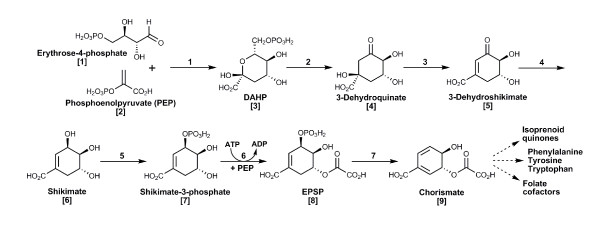
A central tenet in biochemistry for over 50 years has held that microorganisms, plants and, more recently, certain apicomplexan parasites synthesize essential aromatic compounds via elaboration of a complete shikimic acid pathway, whereas metazoans lacking this pathway require a dietary source of these compounds. The large number of sequenced bacterial and archaean genomes now available for comparative genomic analyses allows the fundamentals of this contention to be tested in prokaryotes. Using Hidden Markov Model profiles (HMM profiles) to identify all known enzymes of the pathway, we report the presence of genes encoding shikimate pathway enzymes in the hypothetical proteomes constructed from the genomes of 488 sequenced prokaryotes.
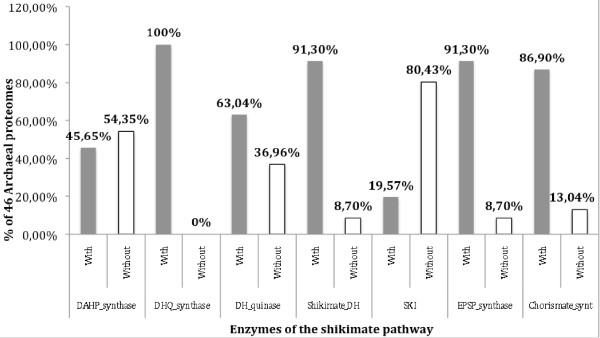
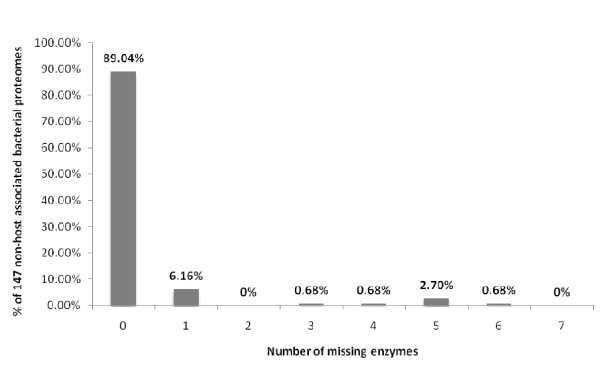
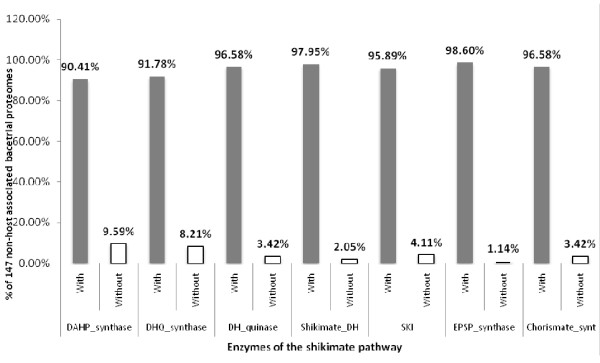
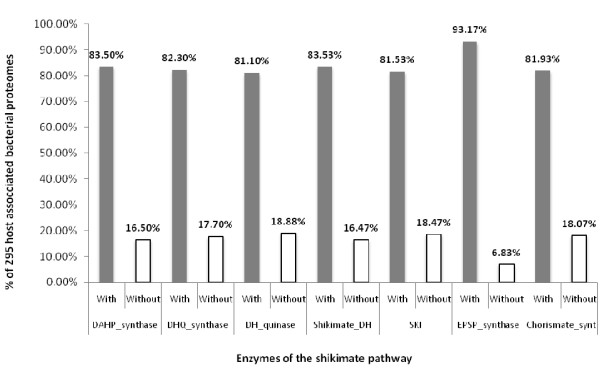
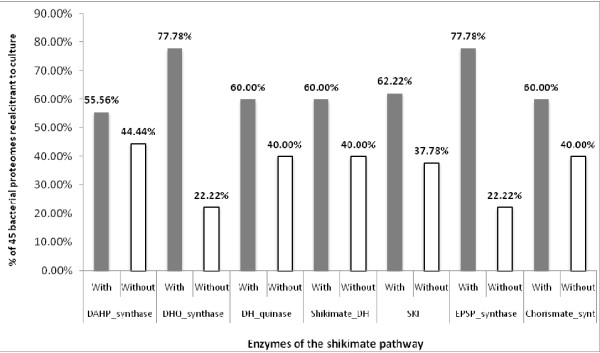
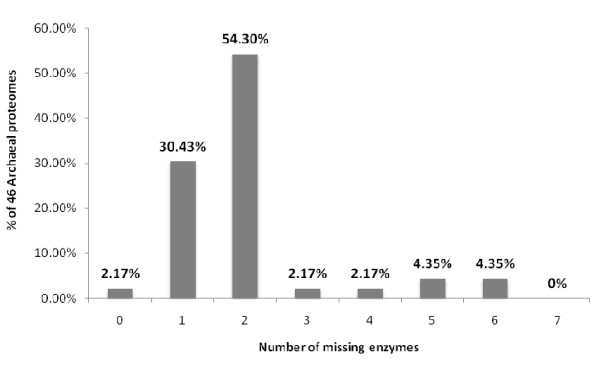
Amongst free-living prokaryotes most Bacteria possess, as expected, genes encoding a complete shikimic acid pathway, whereas of the culturable Archaea, only one was found to have a complete complement of recognisable enzymes in its predicted proteome. It may be that in the Archaea, the primary amino-acid sequences of enzymes of the pathway are highly divergent and so are not detected by HMM profiles. Alternatively, structurally unrelated (non-orthologous) proteins might be performing the same biochemical functions as those encoding recognized genes of the shikimate pathway. Most surprisingly, 30% of host-associated (mutualistic, commensal and pathogenic) bacteria likewise do not possess a complete shikimic acid pathway. Many of these microbes show some degree of genome reduction, suggesting that these host-associated bacteria might sequester essential aromatic compounds from a parasitised host, as a 'shared metabolic adaptation' in mutualistic symbiosis, or obtain them from other consorts having the complete biosynthetic pathway. The HMM results gave 84% agreement when compared against data in the highly curated BioCyc reference database of genomes and metabolic pathways.
These results challenge the conventional belief that the shikimic acid pathway is universal and essential in prokaryotes. The possibilities that non-orthologous enzymes catalyse reactions in this pathway (especially in the Archaea), or that there exist specific uptake mechanisms for the acquisition of shikimate intermediates or essential pathway products, warrant further examination to better understand the precise metabolic attributes of host-beneficial and pathogenic bacteria.
50 多年来,生物化学的一个核心原则是,微生物、植物,以及最近某些顶复门寄生虫通过完善的莽草酸途径来合成必需的芳香族化合物,而缺乏该途径的后生动物则需要这些化合物的饮食来源。现在可用于比较基因组分析的大量已测序细菌和古菌基因组,使得这一论点的基本原理能够在原核生物中得到检验。我们使用隐马尔可夫模型(HMM)轮廓来识别途径中的所有已知酶,报告了在从 488 个已测序原核生物的基因组构建的假设蛋白质组中存在编码莽草酸途径酶的基因。
在自由生活的原核生物中,大多数细菌如预期的那样,拥有完整的莽草酸途径基因,而在可培养的古菌中,只有一个在其预测的蛋白质组中拥有完整的可识别酶。可能是在古菌中,途径中酶的主要氨基酸序列高度发散,因此不能被 HMM 轮廓检测到。或者,结构上不相关(非同源)的蛋白质可能执行与识别的莽草酸途径基因相同的生化功能。最令人惊讶的是,30%的宿主相关(共生、共生和致病)细菌也没有完整的莽草酸途径。这些微生物中的许多都有一定程度的基因组减少,这表明这些宿主相关的细菌可能从被寄生的宿主中隔离必需的芳香族化合物,作为共生关系中的“共享代谢适应”,或者从具有完整生物合成途径的其他伙伴中获得这些化合物。当与高度编纂的生物 Cyc 基因组和代谢途径参考数据库中的数据进行比较时,HMM 结果的一致性为 84%。
这些结果挑战了普遍认为的原核生物中莽草酸途径是普遍存在和必需的传统观念。非同源酶催化该途径中的反应的可能性(特别是在古菌中),或者存在特定的摄取机制来获取莽草酸中间体或必需途径产物,值得进一步研究,以更好地了解对宿主有益和致病细菌的确切代谢特征。