Departamento de Microbiologia, Imunologia e Parasitologia, Universidade Federal de São Paulo, São Paulo, Brazil.
PLoS Negl Trop Dis. 2010 Nov 2;4(11):e864. doi: 10.1371/journal.pntd.0000864.
Transmitted by blood-sucking insects, the unicellular parasite Trypanosoma cruzi is the causative agent of Chagas' disease, a malady manifested in a variety of symptoms from heart disease to digestive and urinary tract dysfunctions. The reasons for such organ preference have been a matter of great interest in the field, particularly because the parasite can invade nearly every cell line and it can be found in most tissues following an infection. Among the molecular factors that contribute to virulence is a large multigene family of proteins known as gp85/trans-sialidase, which participates in cell attachment and invasion. But whether these proteins also contribute to tissue homing had not yet been investigated. Here, a combination of endothelial cell immortalization and phage display techniques has been used to investigate the role of gp85/trans-sialidase in binding to the vasculature.
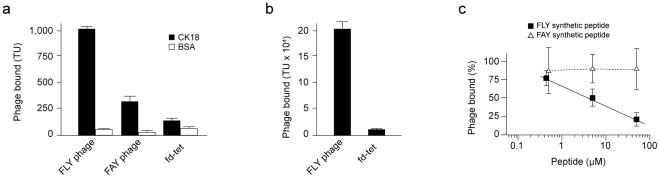
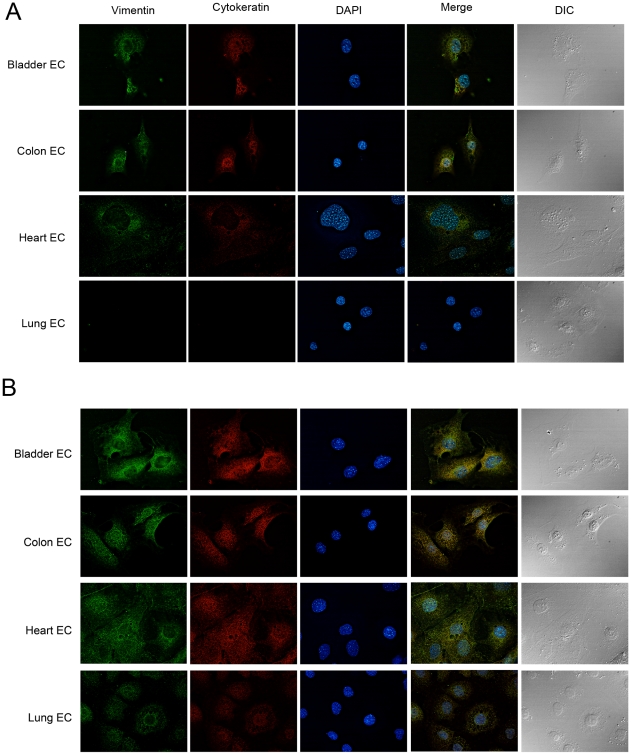
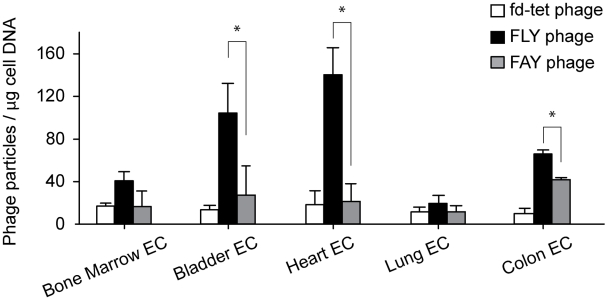
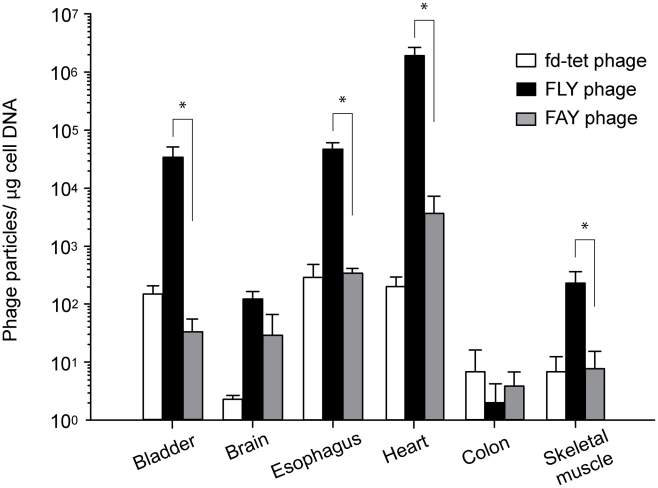
Bacteriophage expressing an important peptide motif (denominated FLY) common to all gp85/trans-sialidase proteins was used as a surrogate to investigate the interaction of this motif with the endothelium compartment. For that purpose phage particles were incubated with endothelial cells obtained from different organs or injected into mice intravenously and the number of phage particles bound to cells or tissues was determined. Binding of phages to intermediate filament proteins has also been studied.
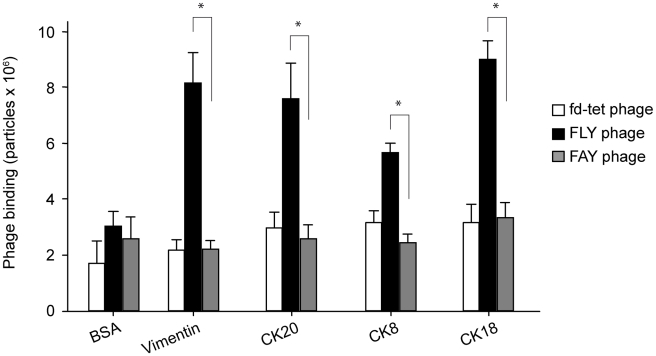
Our data indicate that FLY interacts with the endothelium in an organ-dependent manner with significantly higher avidity for the heart vasculature. Phage display results also show that FLY interaction with intermediate filament proteins is not limited to cytokeratin 18 (CK18), which may explain the wide variety of cells infected by the parasite. This is the first time that members of the intermediate filaments in general, constituted by a large group of ubiquitously expressed proteins, have been implicated in T. cruzi cell invasion and tissue homing.
吸血昆虫传播的单细胞寄生虫克氏锥虫是恰加斯病的病原体,这种疾病表现出各种症状,从心脏病到消化和泌尿系统功能障碍。这种器官偏好的原因一直是该领域非常关注的问题,特别是因为寄生虫几乎可以侵入每一种细胞系,并且在感染后可以在大多数组织中发现。导致毒力的分子因素之一是一个大型多基因家族的蛋白质,称为 gp85/转涎酶,它参与细胞附着和入侵。但是,这些蛋白质是否也有助于组织归巢尚未得到研究。在这里,使用内皮细胞永生化和噬菌体展示技术的组合来研究 gp85/转涎酶在与脉管系统结合中的作用。
表达所有 gp85/转涎酶蛋白共有的重要肽基序(称为 FLY)的噬菌体被用作替代物,以研究该基序与内皮细胞隔室的相互作用。为此,将噬菌体颗粒与来自不同器官的内皮细胞或静脉内注射到小鼠中孵育,并确定结合到细胞或组织上的噬菌体颗粒的数量。还研究了噬菌体与中间丝蛋白的结合。
我们的数据表明,FLY 以器官依赖的方式与内皮相互作用,与心脏脉管系统的亲和力显著更高。噬菌体展示结果还表明,FLY 与中间丝蛋白的相互作用不仅限于细胞角蛋白 18(CK18),这可能解释了寄生虫感染的各种细胞。这是中间丝蛋白的成员首次被牵连到克氏锥虫细胞入侵和组织归巢中,中间丝蛋白由一大组普遍表达的蛋白质组成。