Laboratory of Immunopathology, National Institute of Allergy and Infectious Disease, National Institutes of Health, Rockville, Maryland, United States of America.
PLoS One. 2010 Nov 8;5(11):e13872. doi: 10.1371/journal.pone.0013872.
BORIS/CTCFL is a paralogue of CTCF, the major epigenetic regulator of vertebrate genomes. BORIS is normally expressed only in germ cells but is aberrantly activated in numerous cancers. While recent studies demonstrated that BORIS is a transcriptional activator of testis-specific genes, little is generally known about its biological and molecular functions.
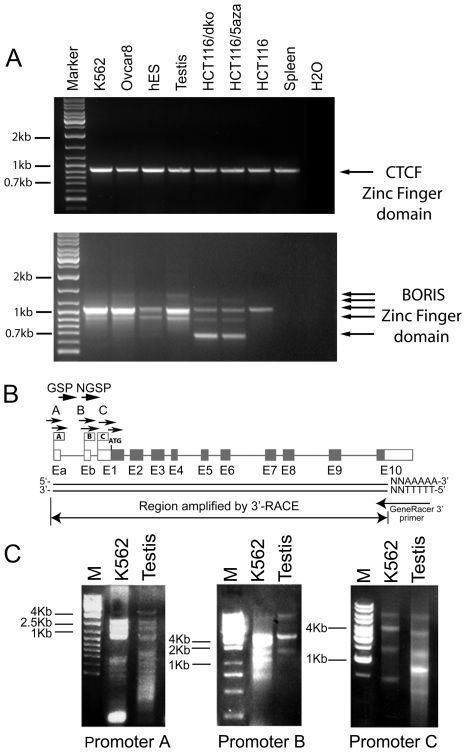
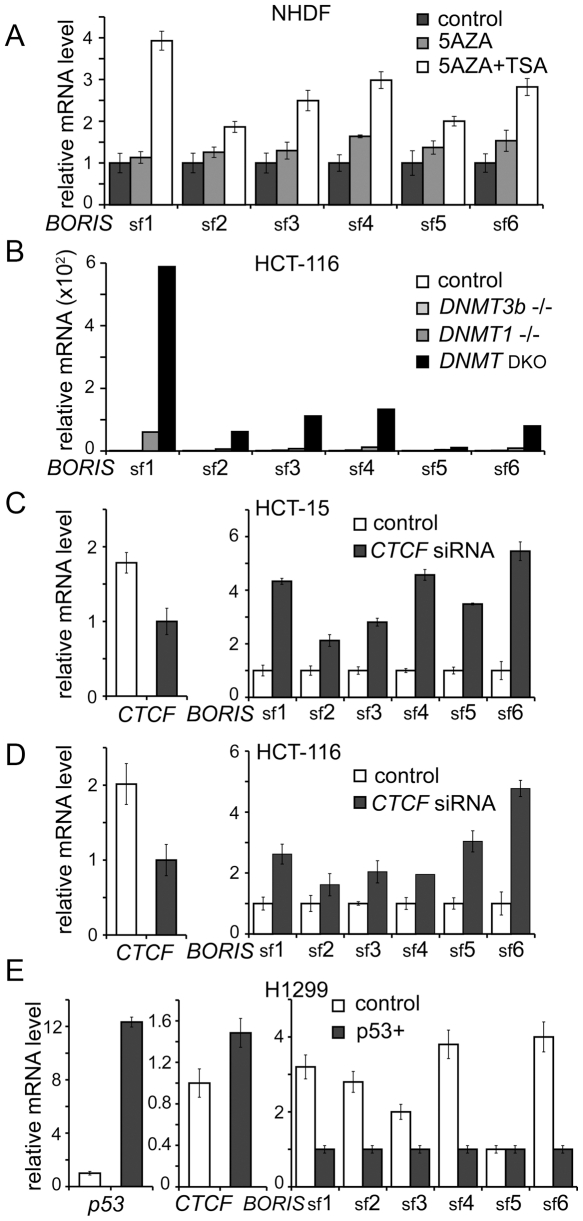
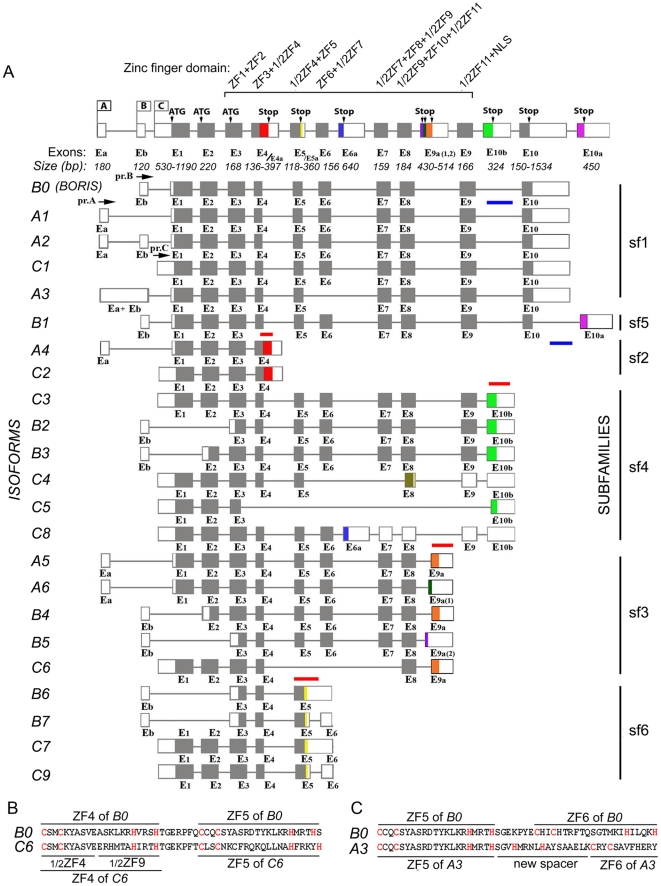
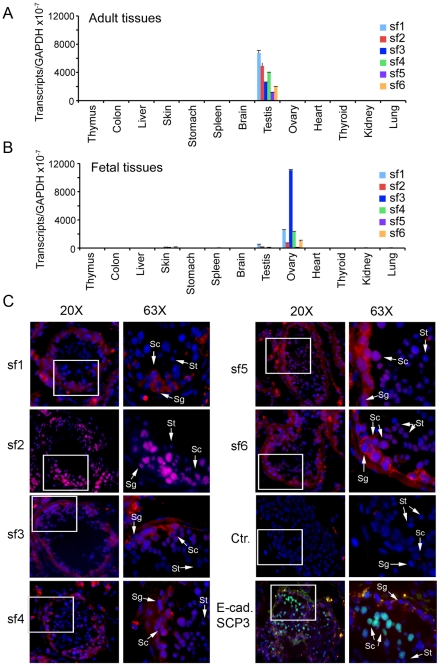
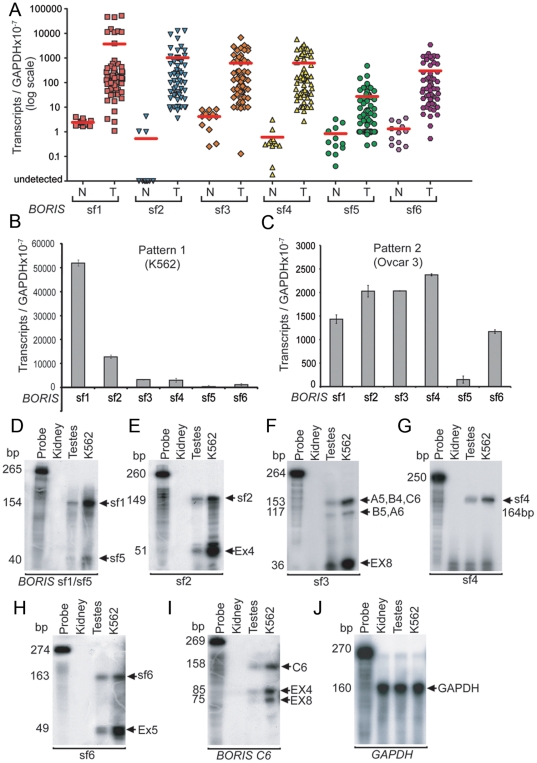
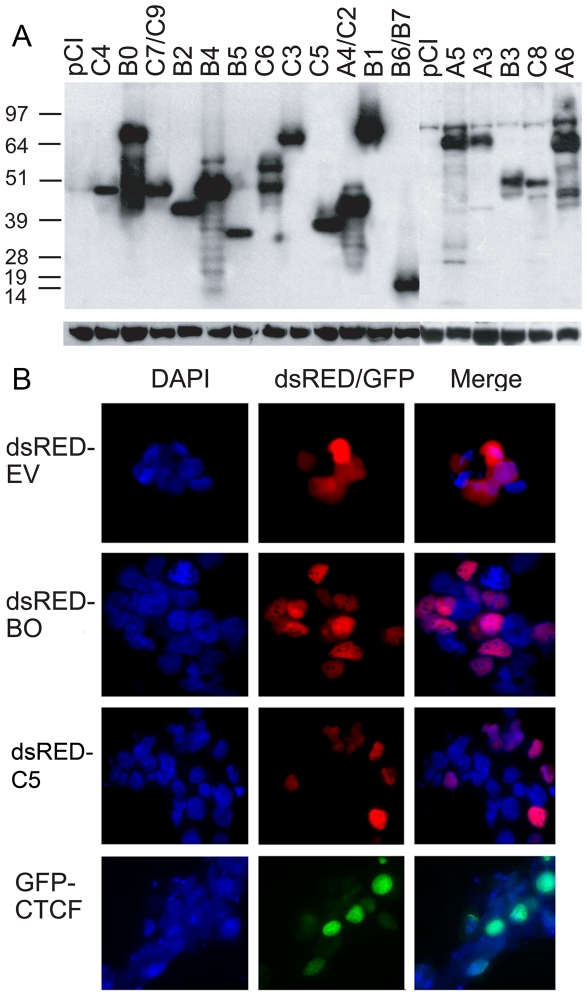
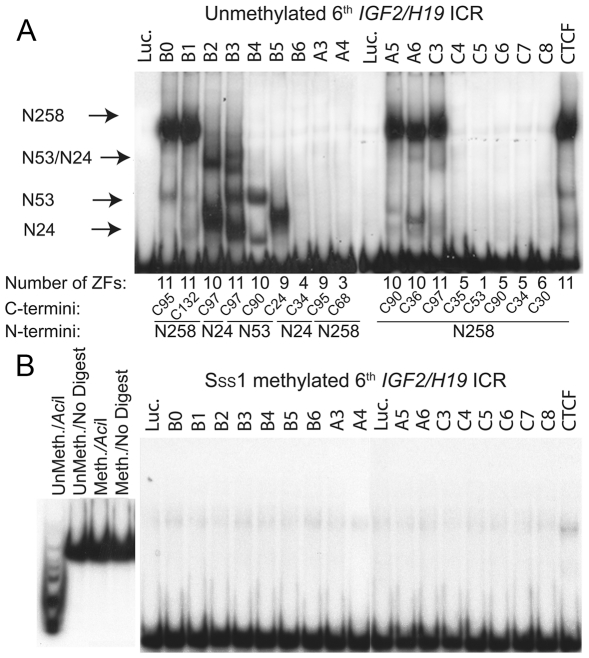
METHODOLOGY/PRINCIPAL FINDINGS: Here we show that BORIS is expressed as 23 isoforms in germline and cancer cells. The isoforms are comprised of alternative N- and C-termini combined with varying numbers of zinc fingers (ZF) in the DNA binding domain. The patterns of BORIS isoform expression are distinct in germ and cancer cells. Isoform expression is activated by downregulation of CTCF, upregulated by reduction in CpG methylation caused by inactivation of DNMT1 or DNMT3b, and repressed by activation of p53. Studies of ectopically expressed isoforms showed that all are translated and localized to the nucleus. Using the testis-specific cerebroside sulfotransferase (CST) promoter and the IGF2/H19 imprinting control region (ICR), it was shown that binding of BORIS isoforms to DNA targets in vitro is methylation-sensitive and depends on the number and specific composition of ZF. The ability to bind target DNA and the presence of a specific long amino terminus (N258) in different isoforms are necessary and sufficient to activate CST transcription. Comparative sequence analyses revealed an evolutionary burst in mammals with strong conservation of BORIS isoproteins among primates.
The extensive repertoire of spliced BORIS variants in humans that confer distinct DNA binding and transcriptional activation properties, and their differential patterns of expression among germ cells and neoplastic cells suggest that the gene is involved in a range of functionally important aspects of both normal gametogenesis and cancer development. In addition, a burst in isoform diversification may be evolutionarily tied to unique aspects of primate speciation.
BORIS/CTCFL 是 CTCF 的等位基因,是脊椎动物基因组主要的表观遗传调控因子。BORIS 通常仅在生殖细胞中表达,但在许多癌症中异常激活。尽管最近的研究表明 BORIS 是睾丸特异性基因的转录激活因子,但人们对其生物学和分子功能知之甚少。
方法/主要发现:本文展示了 BORIS 在生殖细胞和癌细胞中表达为 23 种异构体。这些异构体由 N-和 C-末端的替代以及 DNA 结合域中不同数量的锌指(ZF)组成。BORIS 异构体表达模式在生殖细胞和癌细胞中是不同的。CTCF 的下调会激活异构体的表达,DNMT1 或 DNMT3b 的失活导致 CpG 甲基化增加而上调,p53 的激活则抑制其表达。对外源表达的异构体的研究表明,所有异构体都被翻译并定位于细胞核。利用睾丸特异性脑苷脂硫酸转移酶(CST)启动子和 IGF2/H19 印迹控制区(ICR),证明了 BORIS 异构体在体外与 DNA 靶标结合是甲基化敏感的,并且取决于 ZF 的数量和特定组成。结合靶 DNA 的能力和不同异构体中特定的长氨基末端(N258)的存在对于激活 CST 转录是必要和充分的。比较序列分析显示,哺乳动物中存在 BORIS 同工蛋白的进化爆发,灵长类动物之间具有强烈的保守性。
人类中广泛存在的 BORIS 剪接变体,赋予其独特的 DNA 结合和转录激活特性,以及它们在生殖细胞和肿瘤细胞中的不同表达模式,表明该基因参与了正常配子发生和癌症发展的一系列重要功能方面。此外,异构体多样化的爆发可能与灵长类动物特化的独特方面在进化上有关。