Department of Forensic Medicine and Molecular Pathology, Graduate School of Medicine, Kyoto University, Kyoto, Kyoto Prefecture, Japan.
PLoS One. 2010 Nov 4;5(11):e13841. doi: 10.1371/journal.pone.0013841.
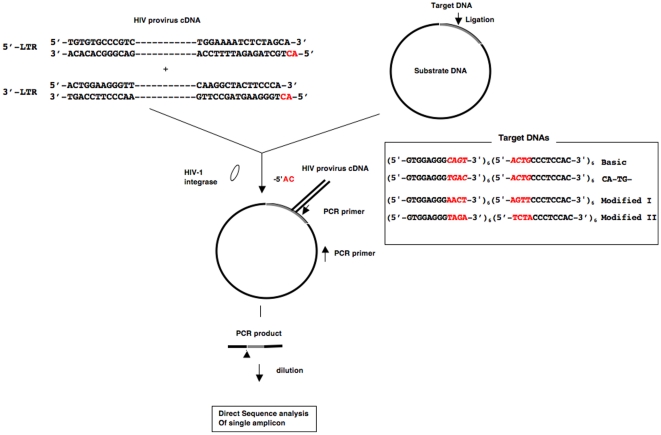
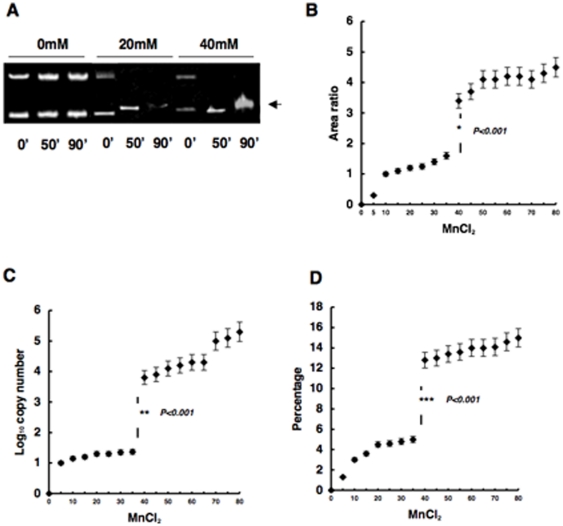
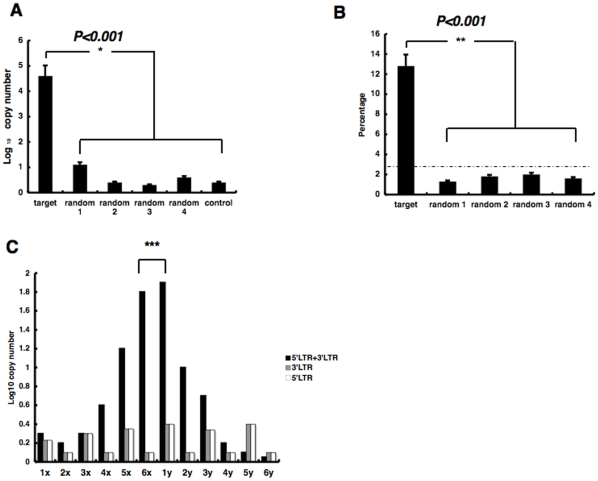
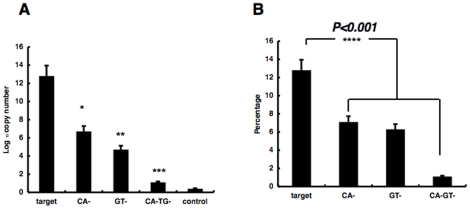
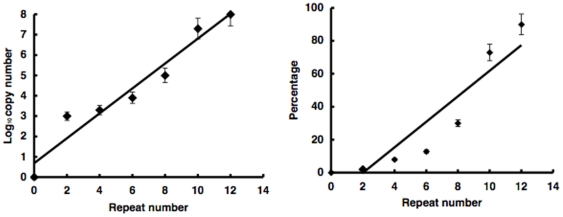
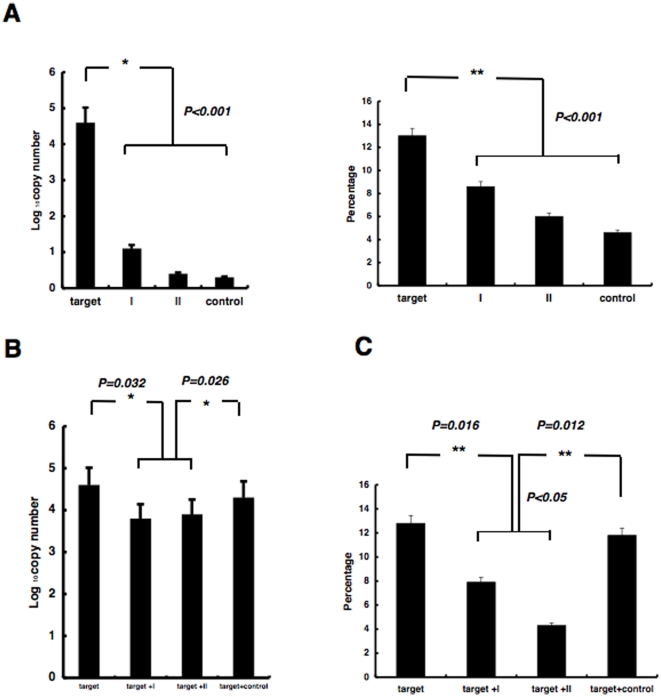
Although there have been a few reports that the HIV-1 genome can be selectively integrated into the genomic DNA of cultured host cell, the biochemistry of integration selectivity has not been fully understood. We modified the in vitro integration reaction protocol and developed a reaction system with higher efficiency. We used a substrate repeat, 5'-(GTCCCTTCCCAGT)(n)(ACTGGGAAGGGAC)(n)-3', and a modified sequence DNA ligated into a circular plasmid. CAGT and ACTG (shown in italics in the above sequence) in the repeat units originated from the HIV-1 proviral genome ends. Following the incubation of the HIV-1 genome end cDNA and recombinant integrase for the formation of the pre-integration (PI) complex, substrate DNA was reacted with this complex. It was confirmed that the integration selectively occurred in the middle segment of the repeat sequence. In addition, integration frequency and selectivity were positively correlated with repeat number n. On the other hand, both frequency and selectivity decreased markedly when using sequences with deletion of CAGT in the middle position of the original target sequence. Moreover, on incubation with the deleted DNAs and original sequence, the integration efficiency and selectivity for the original target sequence were significantly reduced, which indicated interference effects by the deleted sequence DNAs. Efficiency and selectivity were also found to vary discontinuously with changes in manganese dichloride concentration in the reaction buffer, probably due to its influence on the secondary structure of substrate DNA. Finally, integrase was found to form oligomers on the binding site and substrate DNA formed a loop-like structure. In conclusion, there is a considerable selectivity in HIV-integration into the specified sequence; however, similar DNA sequences can interfere with the integration process, and it is therefore difficult for in vivo integration to occur selectively in the actual host genome DNA.
虽然有一些报道称 HIV-1 基因组可以选择性地整合到培养的宿主细胞的基因组 DNA 中,但整合选择性的生物化学机制尚未完全了解。我们修改了体外整合反应方案,并开发了一种效率更高的反应系统。我们使用了一个底物重复序列,5'-(GTCCCTTCCCAGT)(n)(ACTGGGAAGGGAC)(n)-3',以及一个连接到环形质粒中的修饰序列 DNA。重复单元中的 CAGT 和 ACTG(上述序列中的斜体)源自 HIV-1 前病毒基因组末端。在 HIV-1 基因组末端 cDNA 和重组整合酶孵育形成前整合(PI)复合物后,将底物 DNA 与该复合物反应。确认整合选择性地发生在重复序列的中间片段。此外,整合频率和选择性与重复数 n 呈正相关。另一方面,当使用中间位置缺失 CAGT 的序列时,频率和选择性都明显降低。此外,在用缺失 DNA 和原始序列孵育时,对原始靶序列的整合效率和选择性显著降低,这表明缺失序列 DNA 存在干扰作用。整合效率和选择性也随反应缓冲液中二氯化锰浓度的变化而呈不连续变化,这可能是由于其对底物 DNA 二级结构的影响。最后,整合酶在结合位点上形成寡聚体,底物 DNA 形成环样结构。总之,HIV 整合到特定序列中存在相当大的选择性;然而,类似的 DNA 序列可以干扰整合过程,因此在实际宿主基因组 DNA 中,体内整合很难选择性地发生。