Mitchell Rick S, Beitzel Brett F, Schroder Astrid R W, Shinn Paul, Chen Huaming, Berry Charles C, Ecker Joseph R, Bushman Frederic D
Department of Microbiology, University of Pennsylvania School of Medicine, Philadelphia, Pennsylvania, USA.
PLoS Biol. 2004 Aug;2(8):E234. doi: 10.1371/journal.pbio.0020234. Epub 2004 Aug 17.
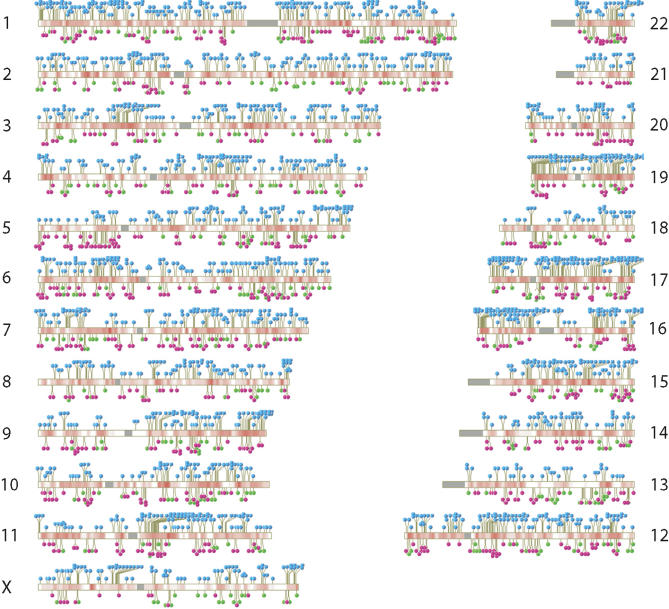
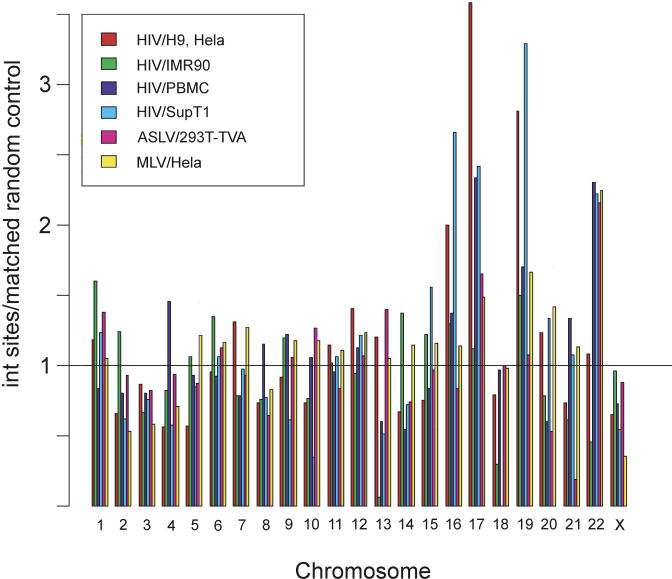
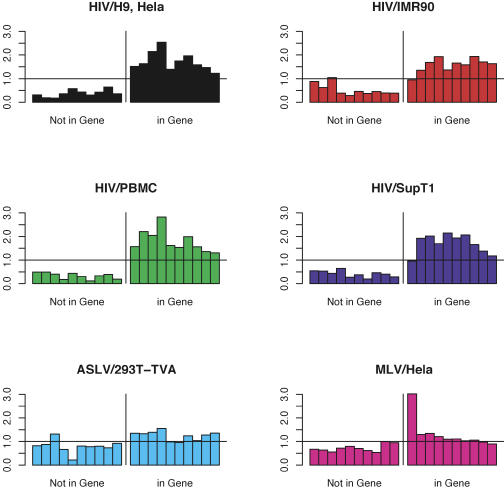
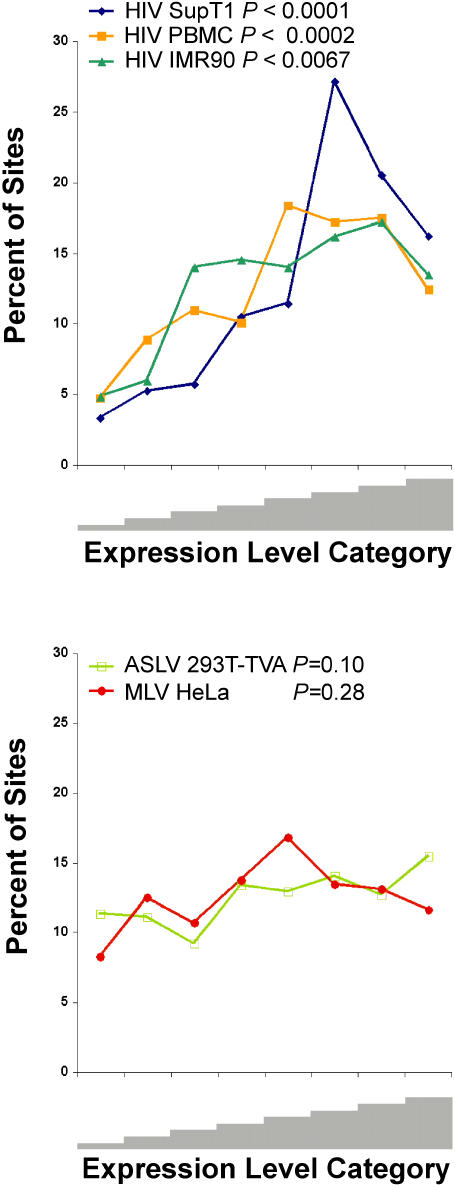
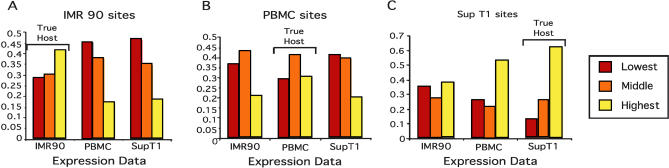
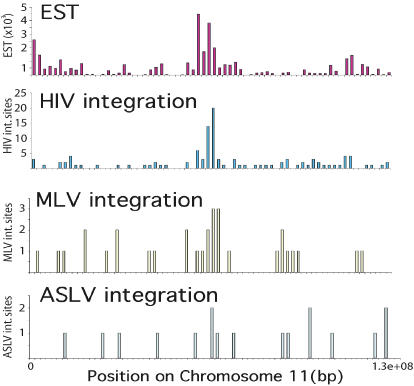
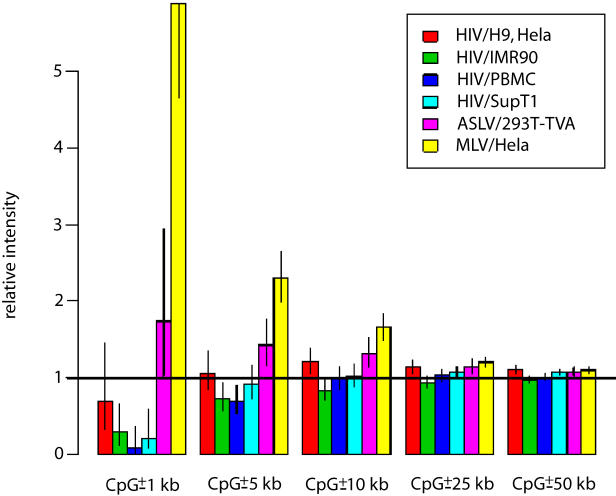
The completion of the human genome sequence has made possible genome-wide studies of retroviral DNA integration. Here we report an analysis of 3,127 integration site sequences from human cells. We compared retroviral vectors derived from human immunodeficiency virus (HIV), avian sarcoma-leukosis virus (ASLV), and murine leukemia virus (MLV). Effects of gene activity on integration targeting were assessed by transcriptional profiling of infected cells. Integration by HIV vectors, analyzed in two primary cell types and several cell lines, strongly favored active genes. An analysis of the effects of tissue-specific transcription showed that it resulted in tissue-specific integration targeting by HIV, though the effect was quantitatively modest. Chromosomal regions rich in expressed genes were favored for HIV integration, but these regions were found to be interleaved with unfavorable regions at CpG islands. MLV vectors showed a strong bias in favor of integration near transcription start sites, as reported previously. ASLV vectors showed only a weak preference for active genes and no preference for transcription start regions. Thus, each of the three retroviruses studied showed unique integration site preferences, suggesting that virus-specific binding of integration complexes to chromatin features likely guides site selection.
人类基因组序列的完成使得对逆转录病毒DNA整合进行全基因组研究成为可能。在此,我们报告了对来自人类细胞的3127个整合位点序列的分析。我们比较了源自人类免疫缺陷病毒(HIV)、禽肉瘤白血病病毒(ASLV)和鼠白血病病毒(MLV)的逆转录病毒载体。通过对感染细胞进行转录谱分析来评估基因活性对整合靶向的影响。在两种原代细胞类型和几种细胞系中分析的HIV载体整合,强烈倾向于活跃基因。对组织特异性转录作用的分析表明,这导致了HIV的组织特异性整合靶向,尽管这种作用在数量上较小。富含表达基因的染色体区域有利于HIV整合,但发现这些区域与CpG岛处的不利区域交错。如先前报道的那样,MLV载体表现出强烈偏向于在转录起始位点附近整合的倾向。ASLV载体仅对活跃基因表现出较弱的偏好,对转录起始区域没有偏好。因此,所研究的三种逆转录病毒中的每一种都表现出独特的整合位点偏好,这表明整合复合物与染色质特征的病毒特异性结合可能指导位点选择。