H. Lee Moffitt Cancer Center & Research Institute, Cancer Prevention & Control Division, 12902 Magnolia Drive, Tampa, FL 33612, USA.
Biomed Eng Online. 2010 Nov 16;9:73. doi: 10.1186/1475-925X-9-73.
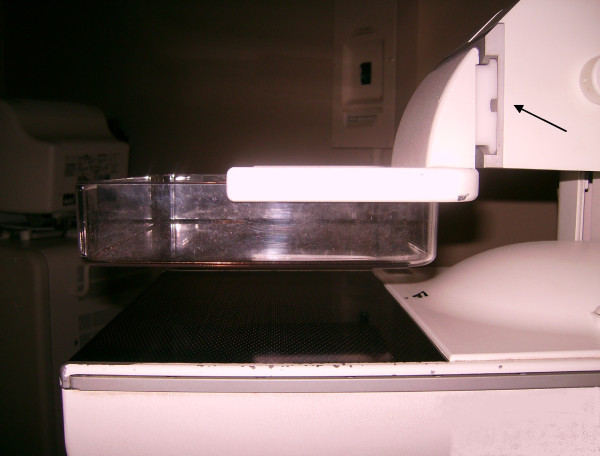
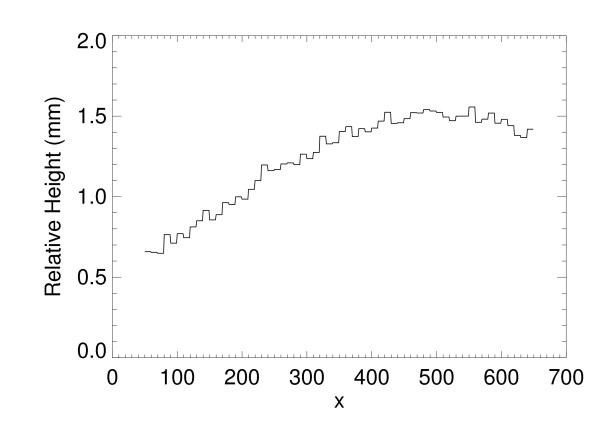
Calibrating mammograms to produce a standardized breast density measurement for breast cancer risk analysis requires an accurate spatial measure of the compressed breast thickness. Thickness inaccuracies due to the nominal system readout value and compression paddle orientation induce unacceptable errors in the calibration.
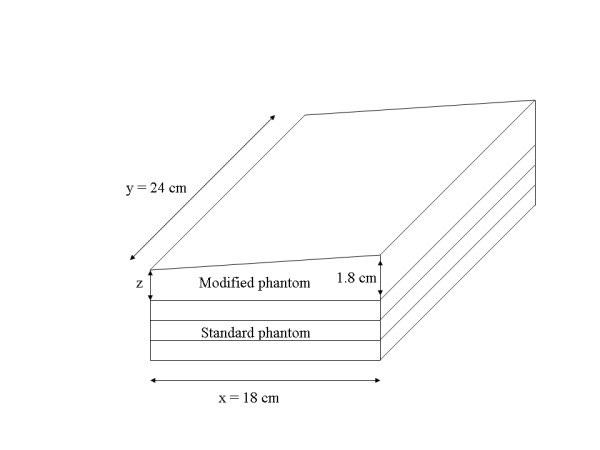
A thickness correction was developed and evaluated using a fully specified two-component surrogate breast model. A previously developed calibration approach based on effective radiation attenuation coefficient measurements was used in the analysis. Water and oil were used to construct phantoms to replicate the deformable properties of the breast. Phantoms consisting of measured proportions of water and oil were used to estimate calibration errors without correction, evaluate the thickness correction, and investigate the reproducibility of the various calibration representations under compression thickness variations.
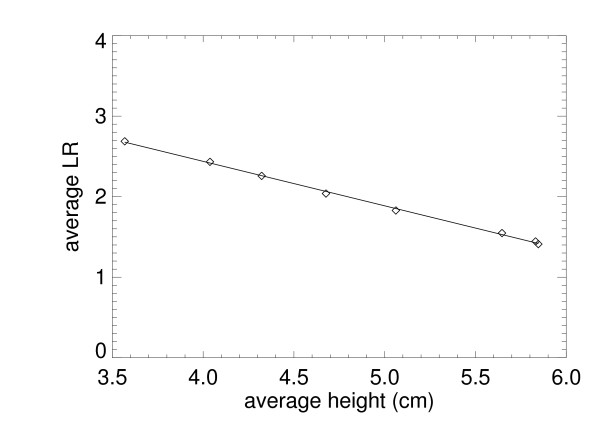
The average thickness uncertainty due to compression paddle warp was characterized to within 0.5 mm. The relative calibration error was reduced to 7% from 48-68% with the correction. The normalized effective radiation attenuation coefficient (planar) representation was reproducible under intra-sample compression thickness variations compared with calibrated volume measures.
Incorporating this thickness correction into the rigid breast tissue equivalent calibration method should improve the calibration accuracy of mammograms for risk assessments using the reproducible planar calibration measure.
为了进行乳腺癌风险分析,需要对乳房密度进行标准化测量,这就需要对压缩后的乳房厚度进行精确的空间测量。由于标称系统读数和压缩板的取向,厚度的不准确会导致校准产生不可接受的误差。
我们开发了一种厚度校正方法,并使用完全指定的两分量替代乳房模型对其进行了评估。我们使用了之前基于有效辐射衰减系数测量的校准方法进行分析。我们用水和油来构建体模,以复制乳房的可变形特性。使用测量的水和油的比例来构建体模,以在没有校正的情况下估计校准误差,评估厚度校正,并研究在压缩厚度变化下各种校准表示的可重复性。
压缩板翘曲引起的平均厚度不确定性可精确到 0.5 毫米以内。校正后,相对校准误差从 48%至 68%降低至 7%。与体积测量相比,归一化有效辐射衰减系数(平面)表示在样本内压缩厚度变化下具有可重复性。
将这种厚度校正纳入刚性乳房组织等效校准方法中,应该可以提高使用可重复的平面校准测量值进行乳腺癌风险评估的乳房 X 光片校准精度。