Laboratory of Molecular Immunopharmacology and Drug Discovery, Tufts University School of Medicine, Boston, MA, USA.
J Neuroinflammation. 2010 Nov 17;7:80. doi: 10.1186/1742-2094-7-80.
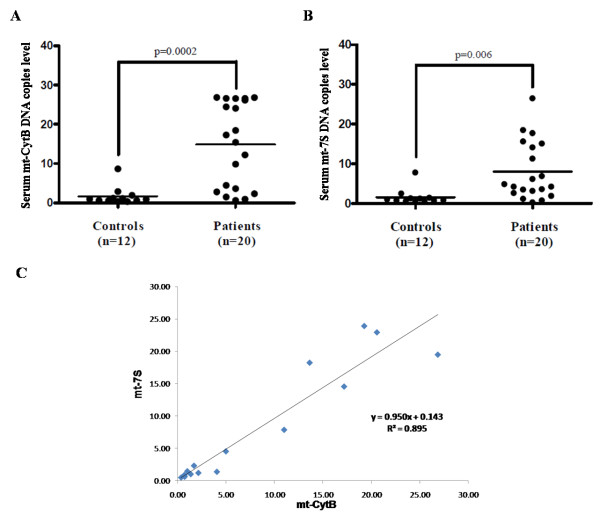
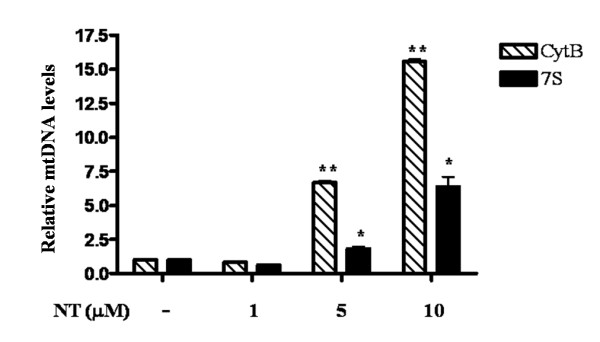
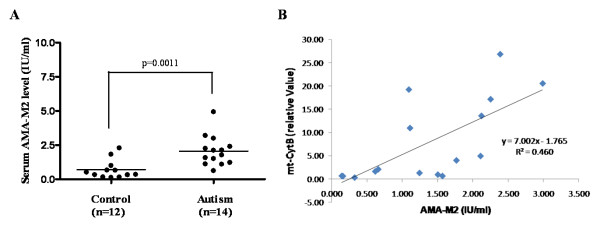
Autism spectrum disorders (ASD) are neurodevelopmental disorders characterized by difficulties in communication, cognitive and learning deficits, as well as stereotypic behaviors. For the majority of cases there are no reliable biomarkers or distinct pathogenesis. However, increasing evidence indicates ASD may be associated with some immune dysregulation, and may have a neuroimmune component. We recently showed that the peptide neurotensin (NT) is increased in autistic children. We now show that NT induces release of extracellular mitochondrial DNA (mtDNA) that could act as "autoimmune" trigger. We further show that serum from young autistic patients contains mtDNA (n = 20; cytochrome B, p = 0.0002 and 7S, p = 0.006), and anti-mitochondrial antibody Type 2 (n = 14; p = 0.001) as compared to normally developing, unrelated controls (n = 12). Extracellular blood mtDNA and other components may characterize an autistic endophenotype and may contribute to its pathogenesis by activating autoimmune responses.
自闭症谱系障碍(ASD)是一种神经发育障碍,其特征是沟通困难、认知和学习缺陷以及刻板行为。对于大多数病例,没有可靠的生物标志物或明确的发病机制。然而,越来越多的证据表明 ASD 可能与某些免疫失调有关,并且可能具有神经免疫成分。我们最近表明,神经降压素(NT)在自闭症儿童中增加。我们现在表明,NT 诱导细胞外线粒体 DNA(mtDNA)的释放,这可能作为“自身免疫”的触发因素。我们进一步表明,来自年轻自闭症患者的血清含有 mtDNA(n = 20;细胞色素 B,p = 0.0002 和 7S,p = 0.006)和抗线粒体抗体 2 型(n = 14;p = 0.001)与正常发育、无关的对照组(n = 12)相比。细胞外血液 mtDNA 和其他成分可能是自闭症表型的特征,并通过激活自身免疫反应来促进其发病机制。