Kaminski Valéria de Lima, Michita Rafael Tomoya, Ellwanger Joel Henrique, Veit Tiago Degani, Schuch Jaqueline Bohrer, Riesgo Rudimar Dos Santos, Roman Tatiana, Chies José Artur Bogo
Laboratório de Imunobiologia e Imunogenética, Departamento de Genética, Universidade Federal do Rio Grande do Sul - UFRGS, Porto Alegre, Rio Grande do Sul, Brazil.
Programa de Pós-Graduação em Genética e Biologia Molecular, Departamento de Genética, Universidade Federal do Rio Grande do Sul - UFRGS, Porto Alegre, Rio Grande do Sul, Brazil.
Heliyon. 2023 Apr 29;9(5):e15593. doi: 10.1016/j.heliyon.2023.e15593. eCollection 2023 May.
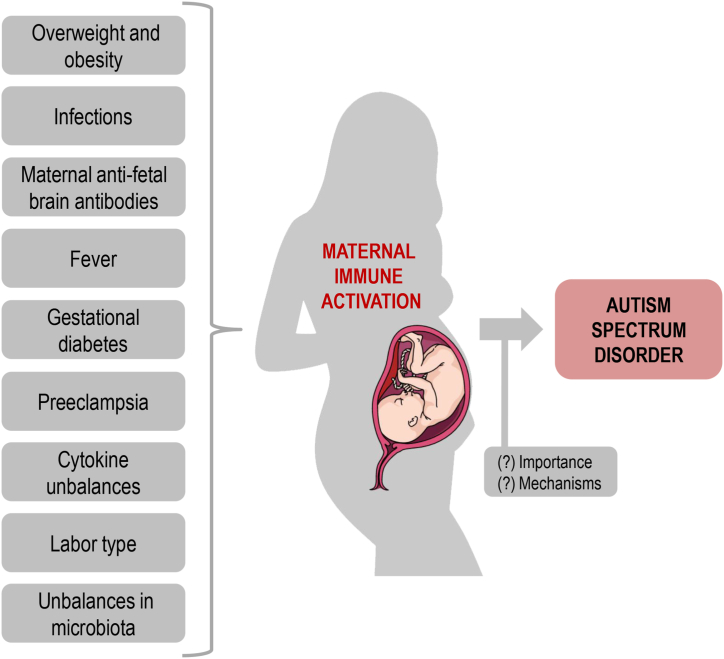
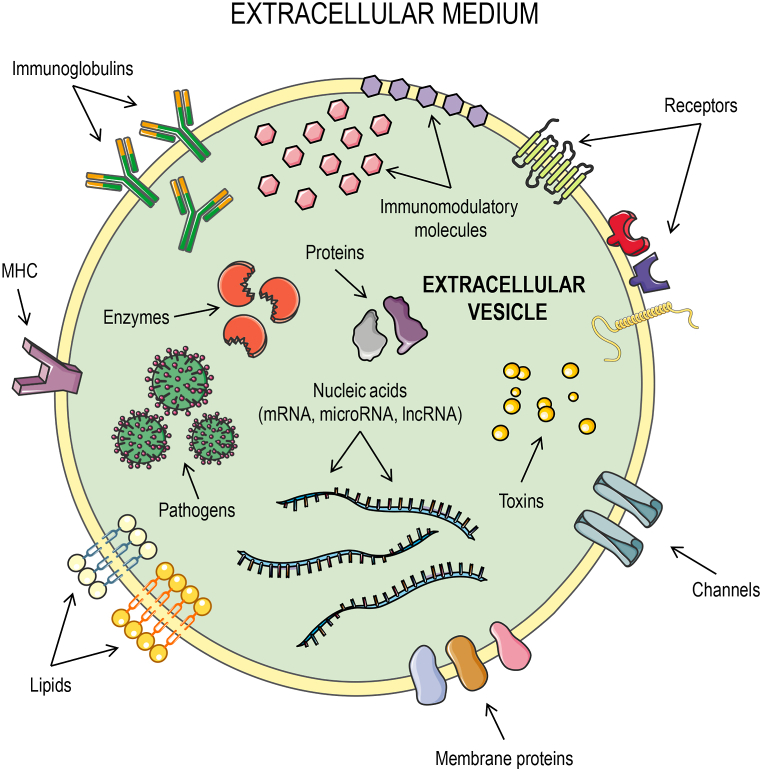
Autism Spectrum Disorder (ASD) is a set of neurodevelopmental disorders usually observed in early life, with impacts on behavioral and social skills. Incidence of ASD has been dramatically increasing worldwide, possibly due to increase in awareness/diagnosis as well as to genetic and environmental triggers. Currently, it is estimated that ∼1% of the world population presents ASD symptoms. In addition to its genetic background, environmental and immune-related factors also influence the ASD etiology. In this context, maternal immune activation (MIA) has recently been suggested as a component potentially involved in ASD development. In addition, extracellular vesicles (EVs) are abundant at the maternal-fetal interface and are actively involved in the immunoregulation required for a healthy pregnancy. Considering that alterations in concentration and content of EVs have also been associated with ASD, this article raises a debate about the potential roles of EVs in the processes surrounding MIA. This represents the major differential of the present review compared to other ASD studies. To support the suggested correlations and hypotheses, findings regarding the roles of EVs during pregnancy and potential influences on ASD are discussed, along with a review and update concerning the participation of infections, cytokine unbalances, overweight and obesity, maternal anti-fetal brain antibodies, maternal fever, gestational diabetes, preeclampsia, labor type and microbiota unbalances in MIA and ASD.
自闭症谱系障碍(ASD)是一组通常在生命早期出现的神经发育障碍,会影响行为和社交技能。全球范围内,ASD的发病率一直在急剧上升,这可能是由于认知/诊断水平的提高以及遗传和环境触发因素所致。目前,据估计全球约1%的人口有ASD症状。除了其遗传背景外,环境和免疫相关因素也会影响ASD的病因。在这种背景下,母体免疫激活(MIA)最近被认为是可能参与ASD发生发展的一个因素。此外,细胞外囊泡(EVs)在母胎界面大量存在,并积极参与健康妊娠所需的免疫调节。鉴于EVs的浓度和内容物变化也与ASD有关,本文引发了关于EVs在MIA相关过程中潜在作用的讨论。这是本综述与其他ASD研究相比的主要差异点。为了支持所提出的相关性和假设,本文讨论了关于EVs在孕期的作用及其对ASD潜在影响的研究结果,同时对感染、细胞因子失衡、超重和肥胖、母体抗胎儿脑抗体、母体发热、妊娠期糖尿病、先兆子痫、分娩类型以及微生物群失衡在MIA和ASD中的作用进行了综述和更新。