Department of Immunology, Beckman Research Institute of the City of Hope, Duarte, California, United States of America.
PLoS One. 2010 Nov 15;5(11):e13985. doi: 10.1371/journal.pone.0013985.
Bone generation and maintenance involve osteoblasts, osteoclasts, and osteocytes which originate from unique precursors and rely on key growth factors for differentiation. However, an incomplete understanding of bone forming cells during wound healing has led to an unfilled clinical need such as nonunion of bone fractures. Since circulating monocytes are often recruited to sites of injury and may differentiate into various cell types including osteoclasts, we investigated the possibility that circulating monocytes in the context of tissue injury may also contribute to bone repair. In particular, we hypothesized that LL-37 (produced from hCAP-18, cathelicidin), which recruits circulating monocytes during injury, may play a role in bone repair.
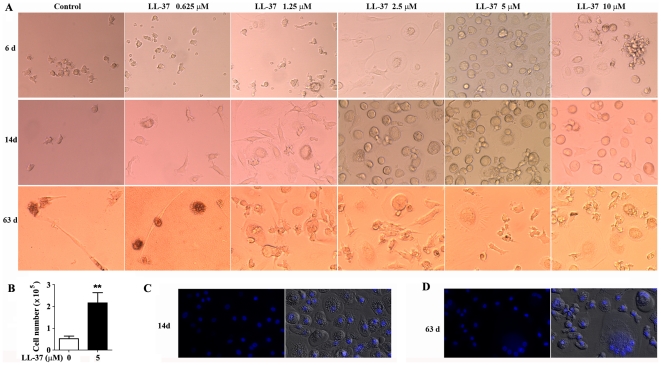
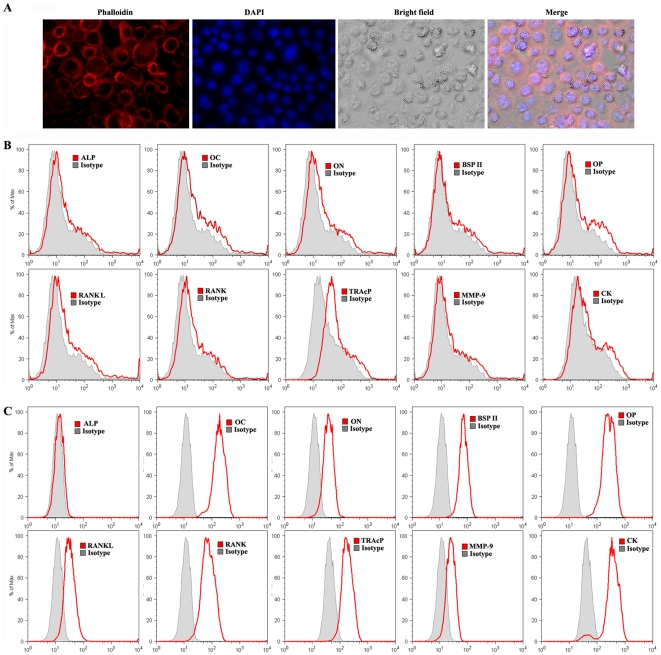
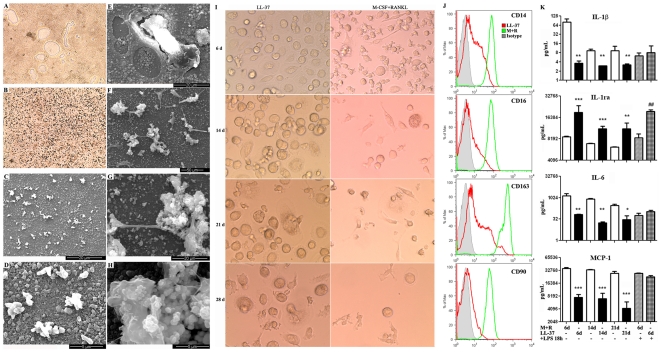
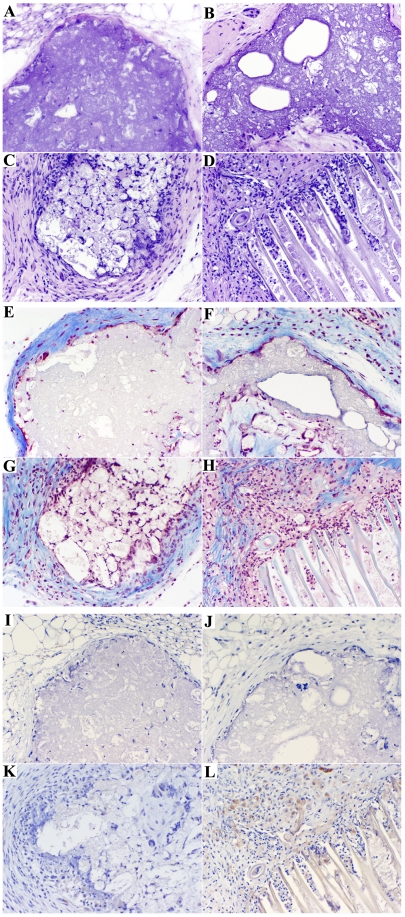
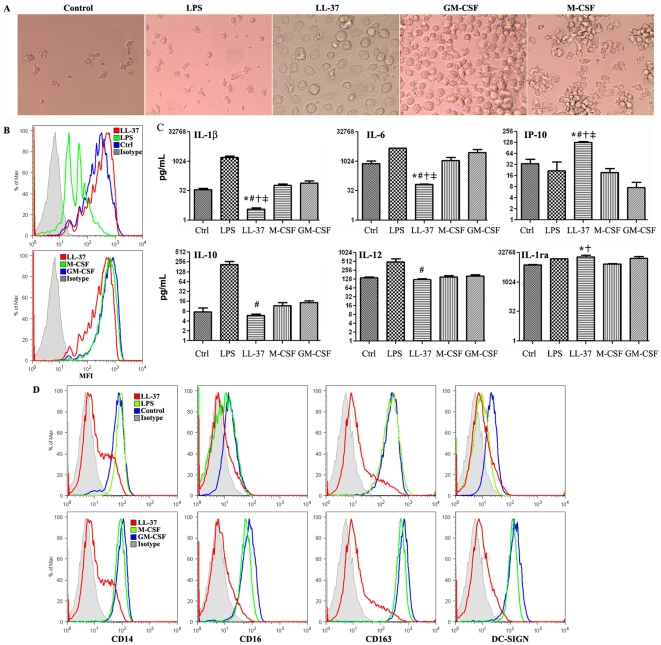
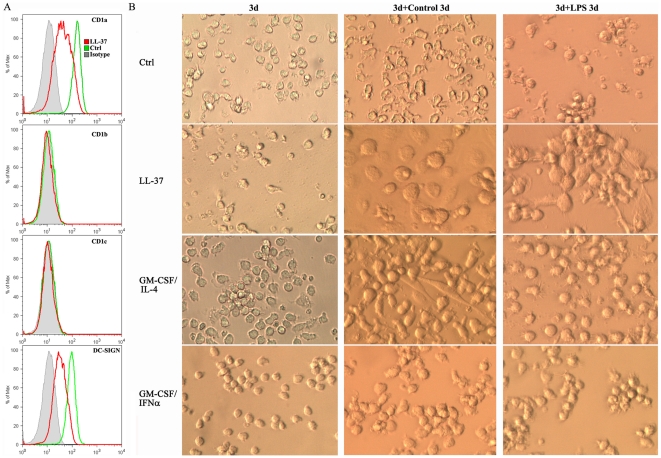
Treatment of monocytes from blood with LL-37 for 6 days resulted in their differentiation to large adherent cells. Growth of LL-37-differentiated monocytes on osteologic discs reveals bone-like nodule formation by scanning electron microscopy (SEM). In vivo transplantation studies in NOD/SCID mice show that LL-37-differentiated monocytes form bone-like structures similar to endochondral bone formation. Importantly, LL-37-differentiated monocytes are distinct from conventional monocyte-derived osteoclasts, macrophages, and dendritic cells and do not express markers of the mesenchymal stem cells (MSC) lineage, distinguishing them from the conventional precursors of osteoblasts. Furthermore, LL-37 differentiated monocytes express intracellular proteins of both the osteoblast and osteoclast lineage including osteocalcin (OC), osteonectin (ON), bone sialoprotein II (BSP II), osteopontin (OP), RANK, RANKL, MMP-9, tartrate resistant acid phosphatase (TRAP), and cathepsin K (CK).
Blood derived monocytes treated with LL-37 can be differentiated into a novel bone forming cell that functions both in vitro and in vivo. We propose the name monoosteophil to indicate their monocyte derived lineage and their bone forming phenotype. These cells may have wide ranging implications in the clinic including repair of broken bones and treatment of osteoporosis.
骨的生成和维持涉及成骨细胞、破骨细胞和骨细胞,它们起源于独特的前体细胞,并依赖于关键的生长因子进行分化。然而,由于对伤口愈合过程中成骨细胞的不完全了解,导致了未满足的临床需求,如骨折不愈合。由于循环单核细胞经常被招募到损伤部位,并可能分化为包括破骨细胞在内的各种细胞类型,我们研究了在组织损伤的情况下,循环单核细胞是否也可能有助于骨修复。具体来说,我们假设在损伤过程中募集循环单核细胞的 LL-37(来源于 hCAP-18,抗菌肽)可能在骨修复中发挥作用。
用 LL-37 处理血液中的单核细胞 6 天,导致其分化为大的贴壁细胞。在骨组织学培养盘中,LL-37 分化的单核细胞生长显示出通过扫描电子显微镜(SEM)形成类骨结节。在 NOD/SCID 小鼠体内移植研究中,LL-37 分化的单核细胞形成类似于软骨内骨形成的类骨结构。重要的是,LL-37 分化的单核细胞与传统的单核细胞衍生的破骨细胞、巨噬细胞和树突状细胞不同,不表达间充质干细胞(MSC)谱系的标志物,这将它们与成骨细胞的传统前体细胞区分开来。此外,LL-37 分化的单核细胞表达成骨细胞和破骨细胞谱系的细胞内蛋白,包括骨钙素(OC)、骨粘连蛋白(ON)、骨涎蛋白 II(BSP II)、骨桥蛋白(OP)、核因子κB 受体激活因子配体(RANKL)、基质金属蛋白酶 9(MMP-9)、抗酒石酸酸性磷酸酶 5b(TRAP)和组织蛋白酶 K(CK)。
用 LL-37 处理的血液来源单核细胞可以分化为一种新型的成骨细胞,在体外和体内都具有功能。我们提出单核嗜中性粒细胞的名称来表示其单核细胞衍生谱系及其成骨表型。这些细胞在临床上可能具有广泛的意义,包括修复骨折和治疗骨质疏松症。