Laboratório de Biologia Molecular de Plantas, Instituto de Bioquímica Médica, CCS, Cidade Universitária - Ilha do Fundão, CEP 21941-590 Rio de Janeiro, Brasil.
BMC Plant Biol. 2010 Nov 18;10:254. doi: 10.1186/1471-2229-10-254.
The orderly progression through mitosis is regulated by the Anaphase-Promoting Complex (APC), a large multiprotein E3 ubiquitin ligase that targets key cell-cycle regulators for destruction by the 26 S proteasome. The APC is composed of at least 11 subunits and associates with additional regulatory activators during mitosis and interphase cycles. Despite extensive research on APC and activator functions in the cell cycle, only a few components have been functionally characterized in plants.
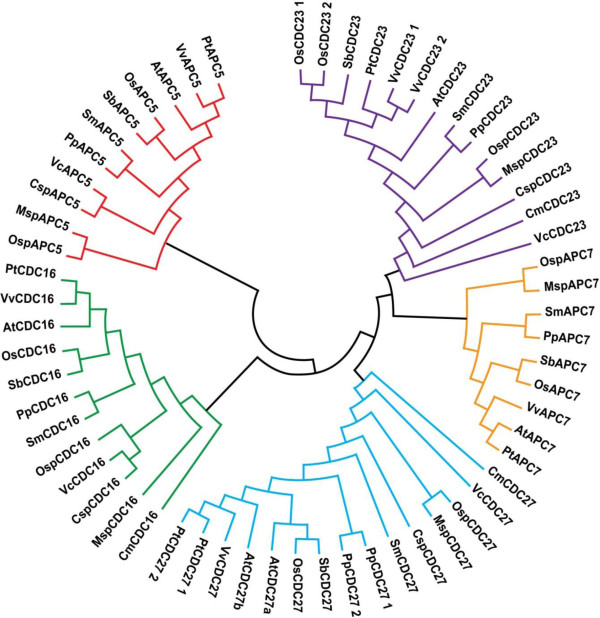
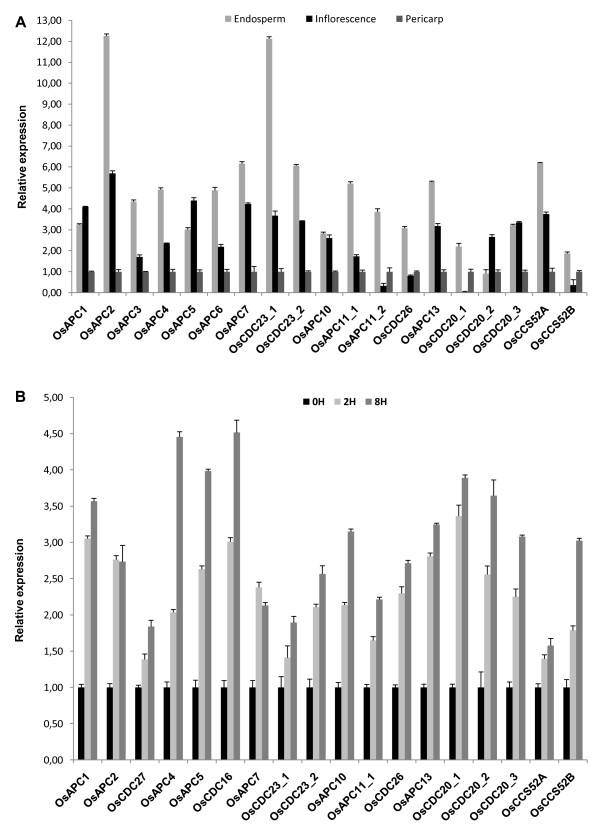
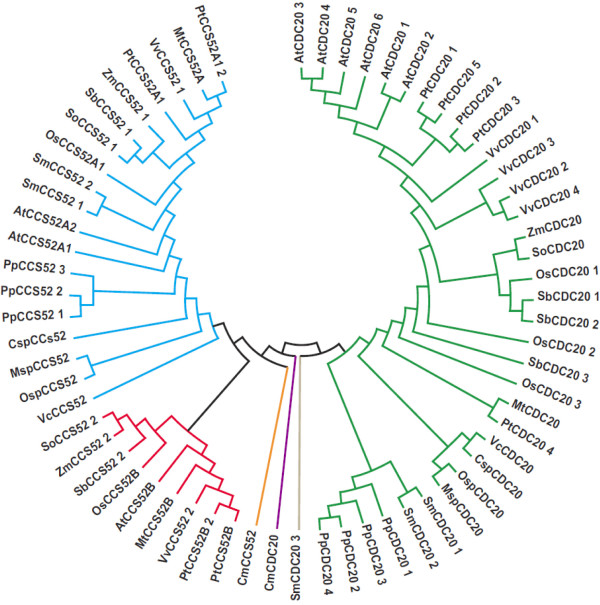
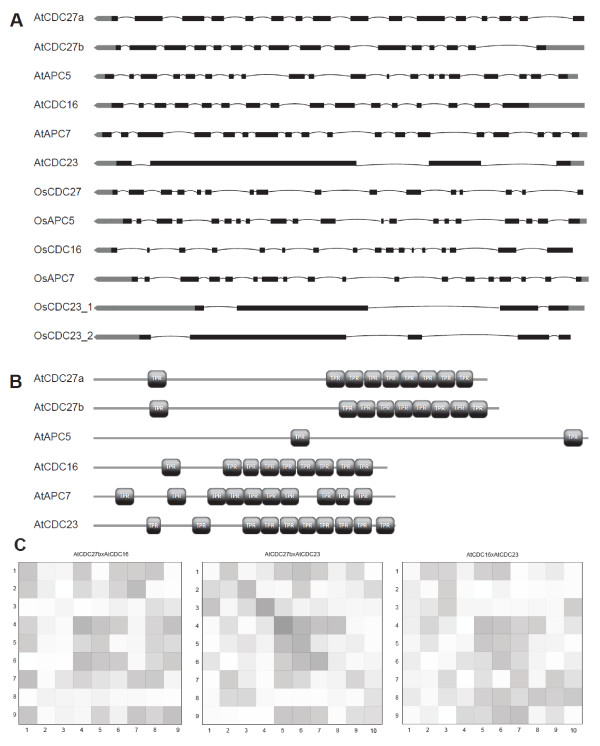
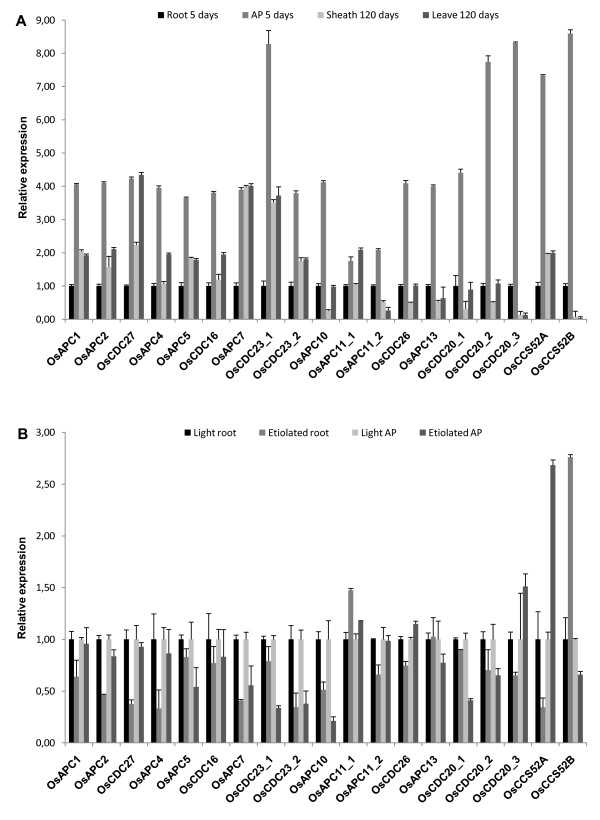
Here, we describe an in-depth search for APC subunits and activator genes in the Arabidopsis, rice and poplar genomes. Also, searches in other genomes that are not completely sequenced were performed. Phylogenetic analyses indicate that some APC subunits and activator genes have experienced gene duplication events in plants, in contrast to animals. Expression patterns of paralog subunits and activators in rice could indicate that this duplication, rather than complete redundancy, could reflect initial specialization steps. The absence of subunit APC7 from the genome of some green algae species and as well as from early metazoan lineages, could mean that APC7 is not required for APC function in unicellular organisms and it may be a result of duplication of another tetratricopeptide (TPR) subunit. Analyses of TPR evolution suggest that duplications of subunits started from the central domains.
The increased complexity of the APC gene structure, tied to the diversification of expression paths, suggests that land plants developed sophisticated mechanisms of APC regulation to cope with the sedentary life style and its associated environmental exposures.
有丝分裂的有序进行受后期促进复合物(APC)调控,APC 是一种大型的多蛋白 E3 泛素连接酶,可靶向关键细胞周期调节剂,使其被 26S 蛋白酶体破坏。APC 由至少 11 个亚基组成,并在有丝分裂和间期周期中与其他调节激活因子结合。尽管对 APC 和激活因子在细胞周期中的功能进行了广泛的研究,但在植物中仅对少数几个成分进行了功能表征。
在这里,我们在拟南芥、水稻和杨树基因组中深入搜索 APC 亚基和激活子基因。此外,还在其他未完全测序的基因组中进行了搜索。系统发育分析表明,与动物相比,植物中的一些 APC 亚基和激活子基因经历了基因复制事件。在水稻中,同工亚基和激活子的表达模式表明,这种复制不是完全的冗余,而是可能反映了最初的特化步骤。一些绿藻物种和早期后生动物谱系的基因组中缺乏 APC7 亚基,这意味着 APC7 对于 APC 在单细胞生物中的功能不是必需的,它可能是另一个四肽重复(TPR)亚基复制的结果。TPR 进化分析表明,亚基的复制始于中央结构域。
APC 基因结构的复杂性增加,与表达途径的多样化有关,这表明陆地植物发展了复杂的 APC 调节机制,以应对固着生活方式及其相关的环境暴露。