Mauri Maurizio, Magagnin Valentina, Cipresso Pietro, Mainardi Luca, Brown Emery N, Cerutti Sergio, Villamira Marco, Barbieri Riccardo
IULM University of Milan, Via Carlo Bo 2, 20143, Milan, Italy.
Annu Int Conf IEEE Eng Med Biol Soc. 2010;2010:3563-6. doi: 10.1109/IEMBS.2010.5627465.
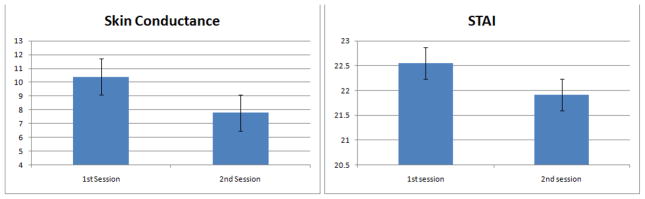
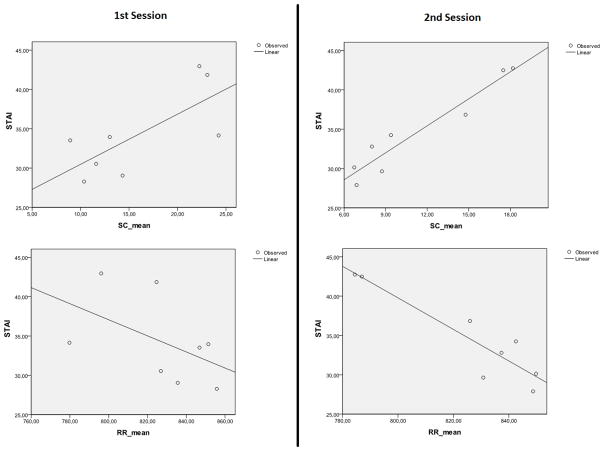
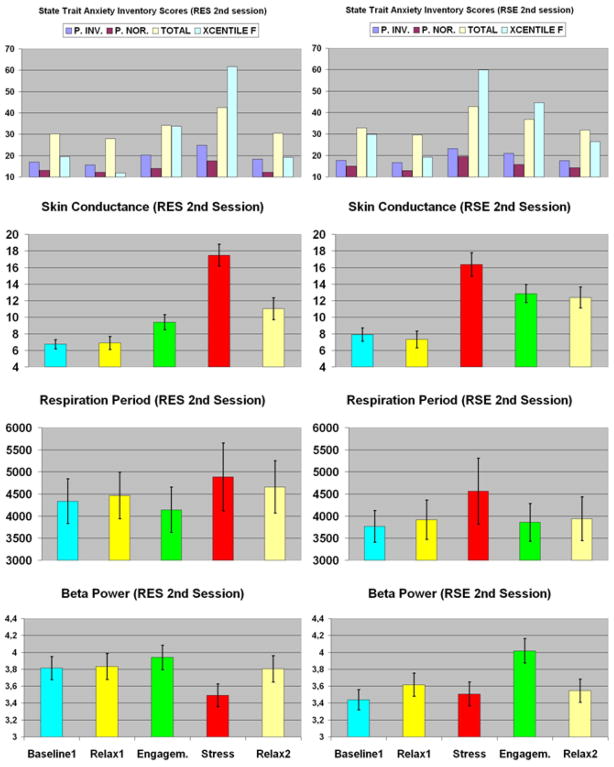
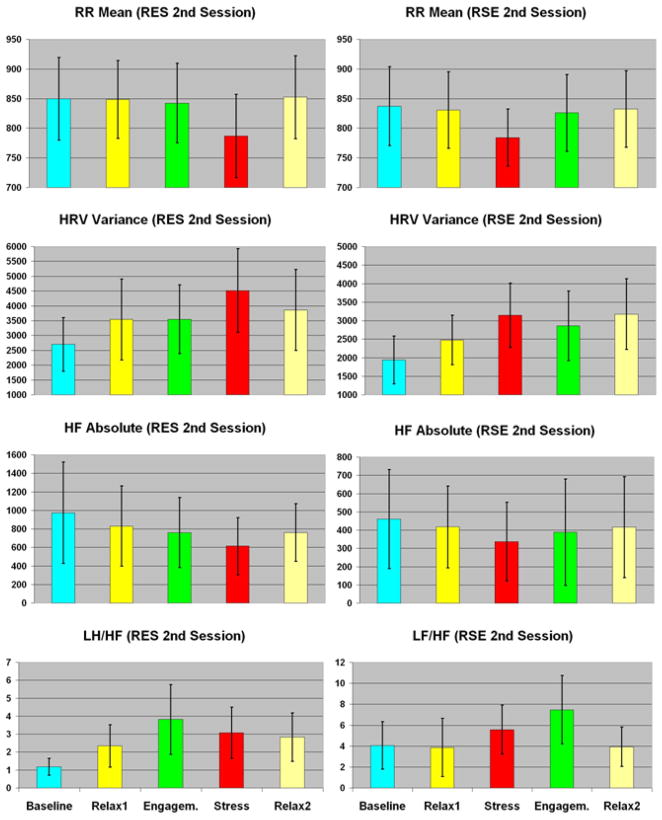
We present a preliminary quantitative study aimed at developing an optimal standard protocol for automatic classification of specific affective states as related to human- computer interactions. This goal is mainly achieved by comparing standard psychological test-reports to quantitative measures derived from simultaneous non-invasive acquisition of psychophysiological signals of interest, namely respiration, galvanic skin response, blood volume pulse, electrocardiogram and electroencephalogram. Forty-three healthy students were exposed to computer-mediated stimuli, while wearable non-invasive sensors were applied in order to collect the physiological data. The stimuli were designed to elicit three distinct affective states: relaxation, engagement and stress. In this work we report how our quantitative analysis has helped in redefining important aspects of the protocol, and we show preliminary findings related to the specific psychophysiological patterns correlating with the three target affective states. Results further suggest that some of the quantitative measures might be useful in characterizing specific affective states.
我们开展了一项初步定量研究,旨在制定一种最佳标准方案,用于自动分类与人机交互相关的特定情感状态。这一目标主要通过将标准心理测试报告与从同步无创采集感兴趣的心理生理信号(即呼吸、皮肤电反应、血容量脉搏、心电图和脑电图)得出的定量测量结果进行比较来实现。43名健康学生接触计算机介导的刺激,同时应用可穿戴无创传感器收集生理数据。这些刺激旨在引发三种不同的情感状态:放松、投入和压力。在这项工作中,我们报告了定量分析如何有助于重新定义方案的重要方面,并展示了与三种目标情感状态相关的特定心理生理模式的初步研究结果。结果进一步表明,一些定量测量可能有助于表征特定的情感状态。