Department of Orthopaedic Surgery, San Carlo Hospital, Potenza, Italy.
J Orthop Traumatol. 2011 Mar;12(1):1-17. doi: 10.1007/s10195-010-0120-0. Epub 2010 Nov 24.
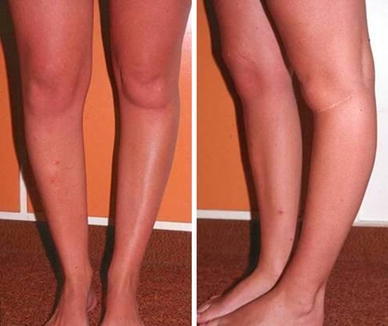
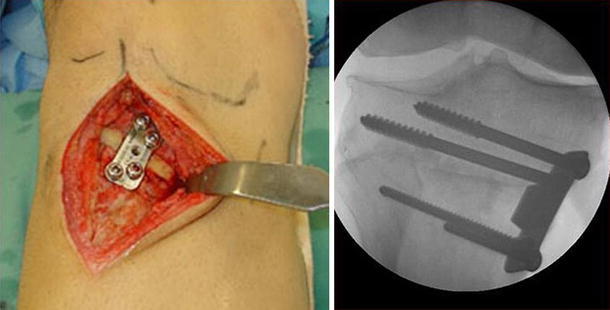
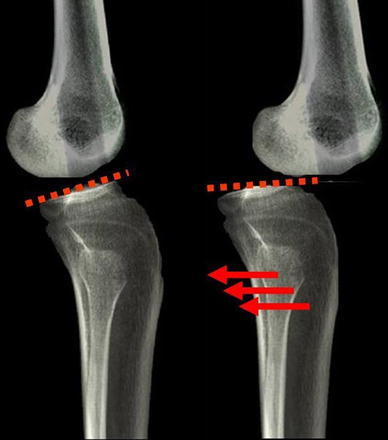
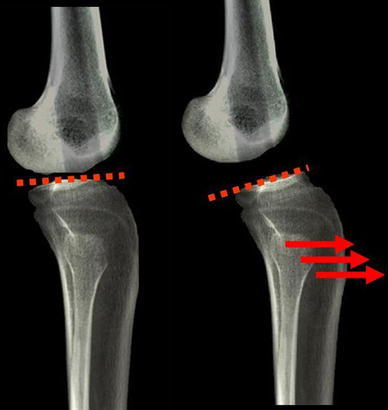
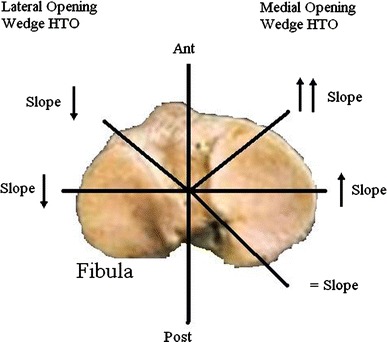
High tibial osteotomy (HTO) is a surgical procedure used to change the mechanical weight-bearing axis and alter the loads carried through the knee. Conventional indications for HTO are medial compartment osteoarthritis and varus malalignment of the knee causing pain and dysfunction. Traditionally, knee instability associated with varus thrust has been considered a contraindication. However, today the indications include patients with chronic ligament deficiencies and malalignment, because an HTO procedure can change not only the coronal but also the sagittal plane of the knee. The sagittal plane has generally been ignored in HTO literature, but its modification has a significant impact on biomechanics and joint stability. Indeed, decreased posterior tibial slope causes posterior tibia translation and helps the anterior cruciate ligament (ACL)-deficient knee. Vice versa, increased tibial slope causes anterior tibia translation and helps the posterior cruciate ligament (PCL)-deficient knee. A review of literature shows that soft tissue procedures alone are often unsatisfactory for chronic posterior instability if alignment is not corrected. Since limb alignment is the most important factor to consider in lower limb reconstructive surgery, diagnosis and treatment of limb malalignment should not be ignored in management of chronic ligamentous instabilities. This paper reviews the effects of chronic posterior instability and tibial slope alteration on knee and soft tissues, in addition to planning and surgical technique for chronic posterior and posterolateral instability with HTO.
胫骨高位截骨术(HTO)是一种用于改变力学负重轴并改变膝关节承受的负荷的手术。HTO 的传统适应证为内侧间室骨关节炎和膝内翻畸形导致疼痛和功能障碍。传统上,与膝内翻推力相关的膝关节不稳定被认为是禁忌证。然而,如今的适应证包括慢性韧带缺损和对线不良的患者,因为 HTO 手术不仅可以改变膝关节的冠状面,还可以改变矢状面。尽管 HTO 文献通常忽略了矢状面的改变,但它对生物力学和关节稳定性有重大影响。实际上,胫骨后倾角减小会导致胫骨后移,并有助于前交叉韧带(ACL)缺失的膝关节。相反,胫骨后倾角增加会导致胫骨前移位,并有助于后交叉韧带(PCL)缺失的膝关节。文献复习表明,如果对线不正,单独进行软组织手术往往不能满意治疗慢性后向不稳定。由于肢体对线是下肢重建手术中最重要的考虑因素,因此在慢性韧带不稳定的治疗中不应忽视肢体对线不良的诊断和治疗。本文综述了慢性后向不稳定和胫骨后倾角改变对膝关节和软组织的影响,以及 HTO 治疗慢性后向和后外侧不稳定的规划和手术技术。