Indiana University School of Informatics, Indianapolis, IN 46202, USA.
BMC Genomics. 2010 Dec 1;11 Suppl 3(Suppl 3):S4. doi: 10.1186/1471-2164-11-S3-S4.
Military and industrial activities have lead to reported release of 2,4-dinitrotoluene (2,4DNT) into soil, groundwater or surface water. It has been reported that 2,4DNT can induce toxic effects on humans and other organisms. However the mechanism of 2,4DNT induced toxicity is still unclear. Although a series of methods for gene network construction have been developed, few instances of applying such technology to generate pathway connected networks have been reported.
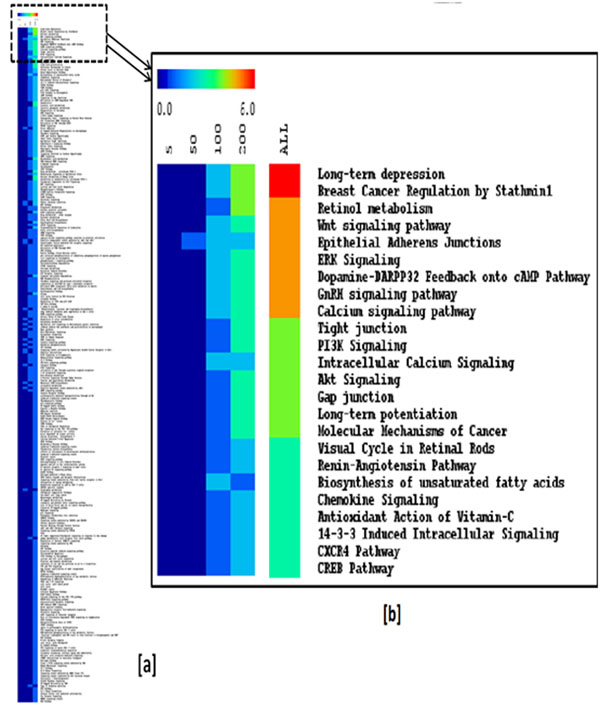
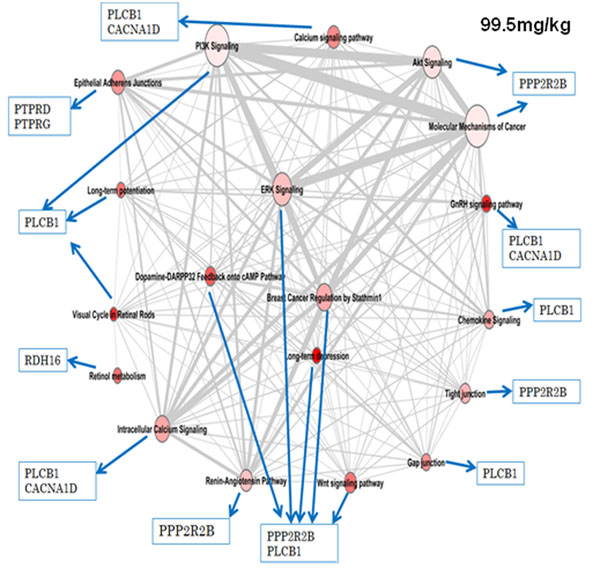
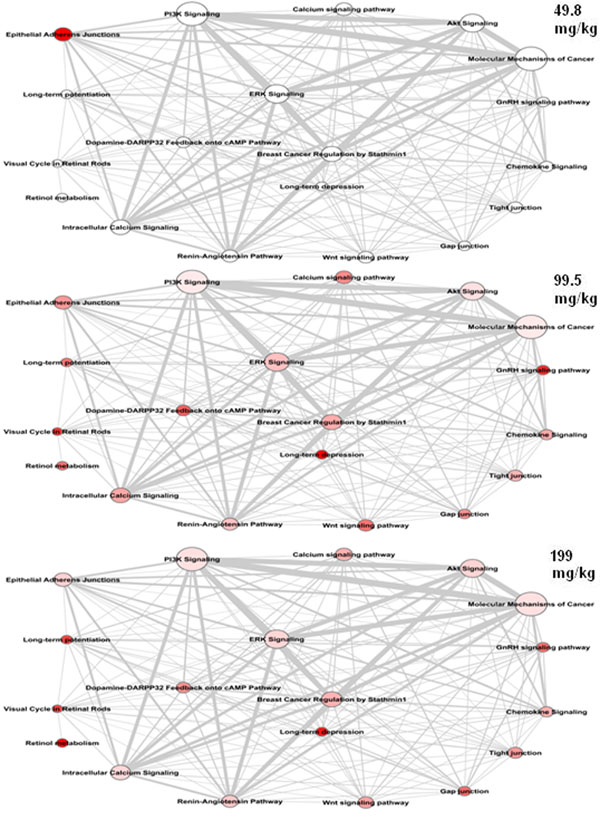
Microarray analyses were conducted using liver tissue of rats collected 24h after exposure to a single oral gavage with one of five concentrations of 2,4DNT. We observed a strong dose response of differentially expressed genes after 2,4DNT treatment. The most affected pathways included: long term depression, breast cancer regulation by stathmin1, WNT Signaling; and PI3K signaling pathways. In addition, we propose a new approach to construct pathway connected networks regulated by 2,4DNT. We also observed clear dose response pathway networks regulated by 2,4DNT.
We developed a new method for constructing pathway connected networks. This new method was successfully applied to microarray data from liver tissue of 2,4DNT exposed animals and resulted in the identification of unique dose responsive biomarkers in regards to affected pathways.
军事和工业活动导致 2,4-二硝基甲苯(2,4DNT)被报告释放到土壤、地下水或地表水。据报道,2,4DNT 会对人类和其他生物体产生毒性作用。然而,2,4DNT 诱导毒性的机制尚不清楚。虽然已经开发出了一系列用于构建基因网络的方法,但很少有将这种技术应用于生成通路连接网络的实例。
使用大鼠肝组织进行了微阵列分析,这些大鼠在单次口服灌胃暴露于 2,4DNT 的五个浓度之一 24 小时后收集。我们观察到 2,4DNT 处理后差异表达基因呈强烈的剂量反应。受影响最严重的途径包括:长时程抑制、stathmin1 调节的乳腺癌、WNT 信号通路和 PI3K 信号通路。此外,我们提出了一种构建受 2,4DNT 调节的通路连接网络的新方法。我们还观察到受 2,4DNT 调节的明确剂量反应途径网络。
我们开发了一种构建通路连接网络的新方法。该新方法成功应用于暴露于 2,4DNT 的大鼠肝组织的微阵列数据,结果确定了受影响途径的独特剂量反应生物标志物。