Escorts Heart Institute, New Delhi, India.
Indian J Med Res. 2010 Nov;132(5):543-8.
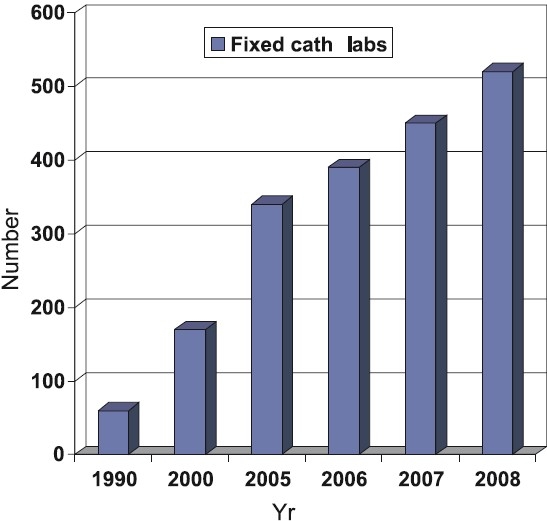
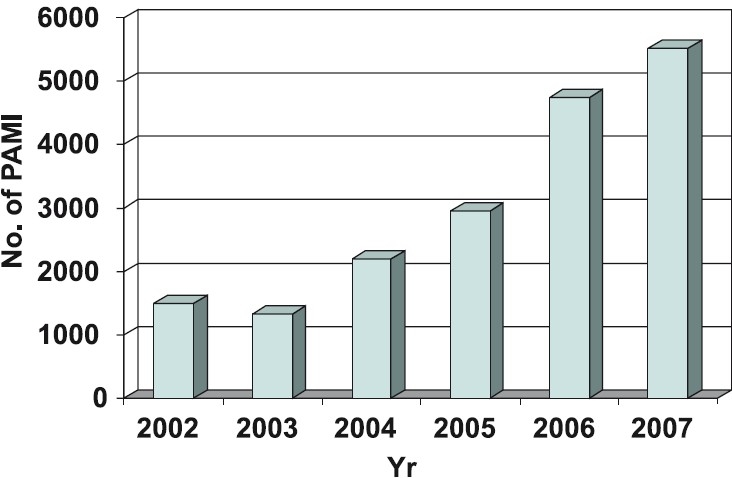
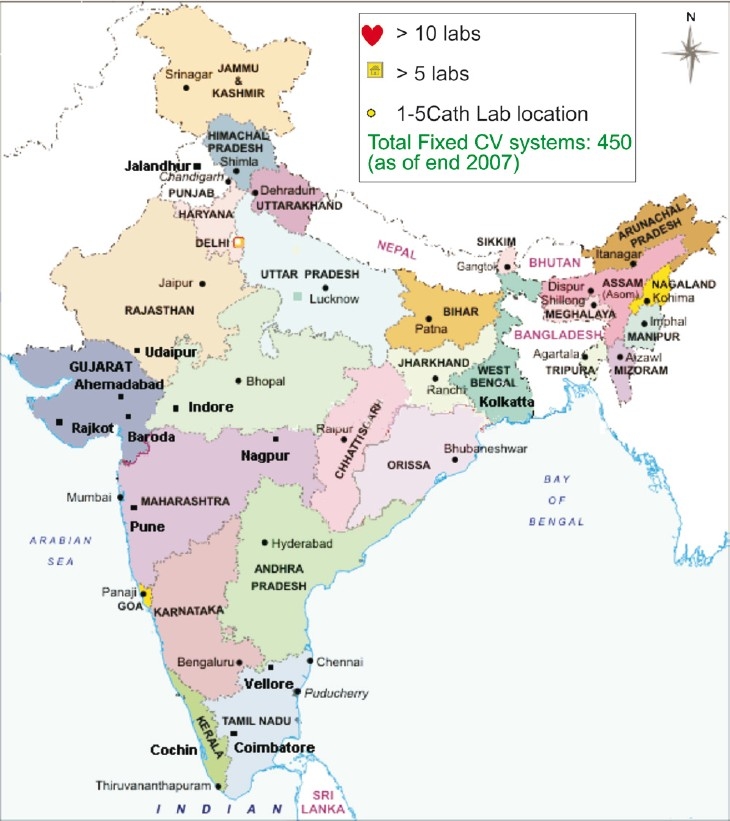
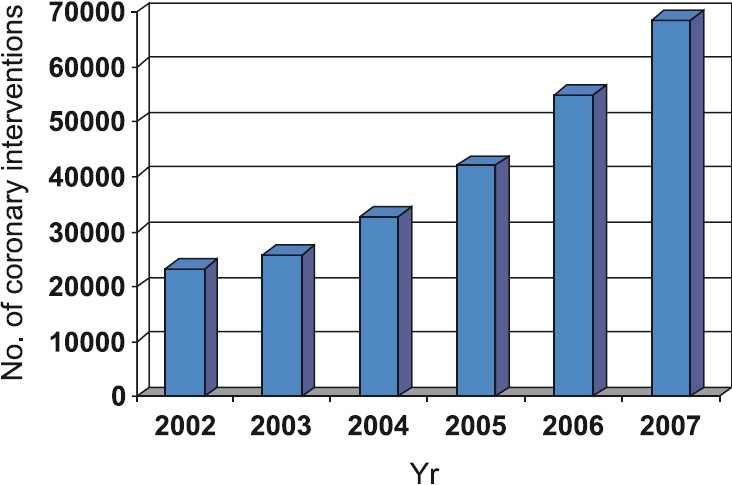
Cardiovascular disease has become the leading cause of morbidity and mortality in India during the last 3 decades. The genetic predisposition and acquisition of traditional risk factors at a rapid rate as a result of urbanization seems to be the major cause. While efforts are being made to contain this epidemic by educating public and applying preventive measures, the ever increasing burden of patients with symptomatic and life threatening manifestations of the disease is posing a major challenge. This requires a concerted effort to develop modern facilities to treat these patients. The healthcare facilities to manage these high risk patients by contemporary methods like percutaneous coronary revascularization and surgical methods have shown a very promising trend during the last decade. The facilities of modern diagnostic methods and new proven techniques to offer symptomatic relief and improve their prognosis are available in most parts of the country. The lack of social security and health insurance for the large majority of the population, however, is a serious limitation. Unregulated availability of some of the newer devices for these techniques had become a very concerning issue. However, in the last few years serious efforts have been made to streamline these procedures. Indigenous research and scientific data acquisition in relation to the modern technology for achieving coronary revascularization has also started on a promising note.
在过去的 30 年里,心血管疾病已成为印度发病率和死亡率的主要原因。由于城市化的快速发展,遗传易感性和传统危险因素的快速获得似乎是主要原因。虽然通过教育公众和采取预防措施来努力控制这种流行病,但越来越多的有症状和危及生命的疾病患者给治疗带来了巨大的挑战。这需要共同努力来开发现代设施来治疗这些患者。在过去的十年中,通过经皮冠状动脉血运重建和手术等现代方法来管理这些高危患者的医疗设施显示出了非常有希望的趋势。在全国大部分地区都有现代诊断方法和新的经过验证的技术的设施,可以提供症状缓解并改善预后。然而,对于大多数人来说,缺乏社会保障和医疗保险是一个严重的限制。这些技术中一些较新设备的不受监管的供应已成为一个非常令人担忧的问题。然而,在过去的几年中,已经做出了认真的努力来简化这些程序。与实现冠状动脉血运重建相关的本土研究和科学数据获取也开始有了良好的开端。