Department of Developmental Neurobiology, St Jude Children's Research Hospital, 262 Danny Thomas Place, Memphis, Tennessee 38105, USA.
Nature. 2010 Dec 23;468(7327):1095-9. doi: 10.1038/nature09587. Epub 2010 Dec 8.
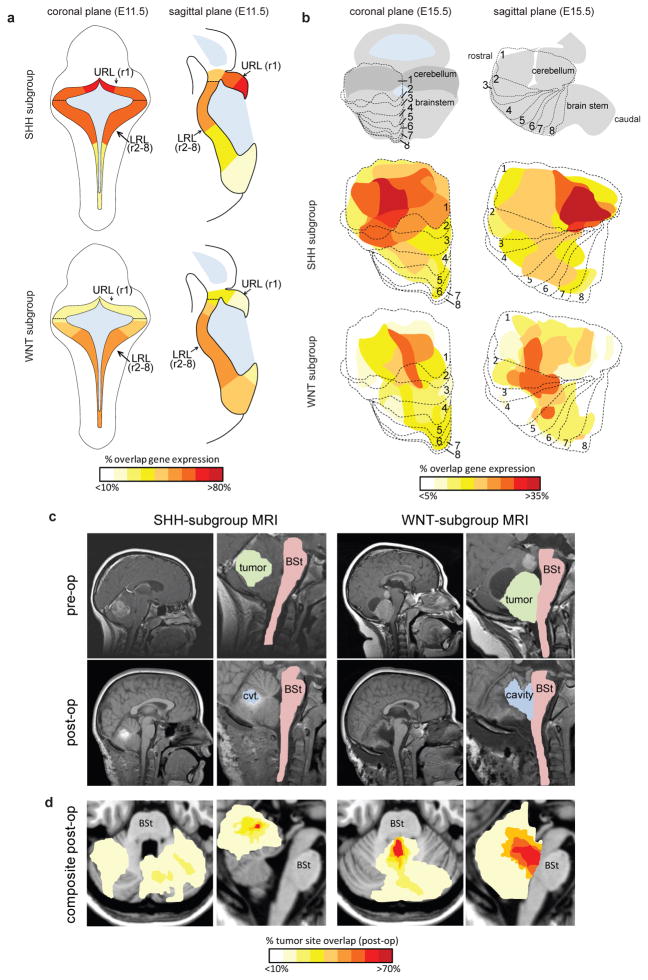
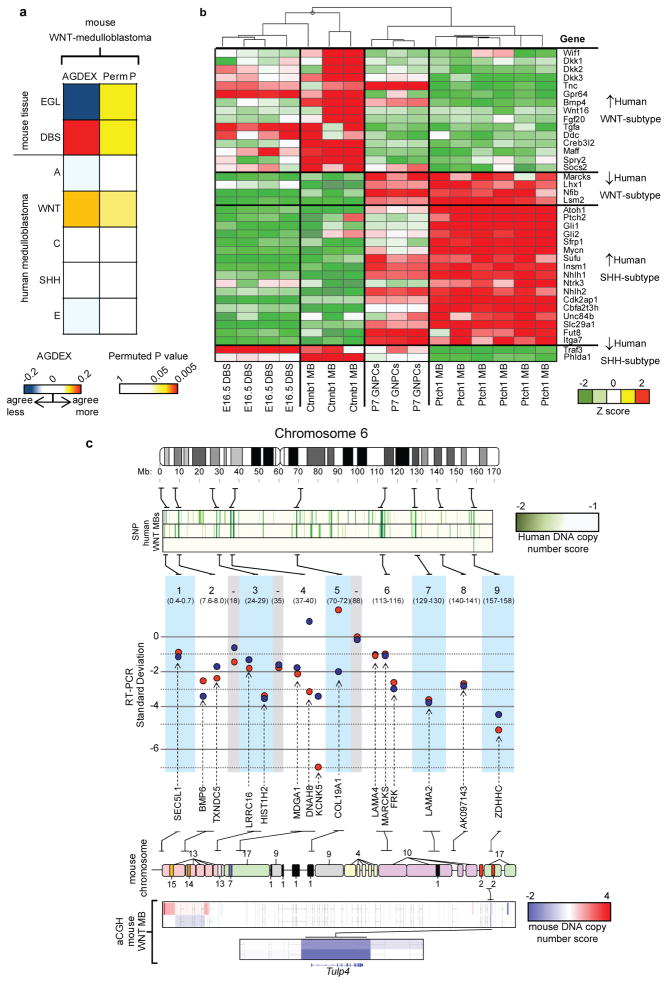
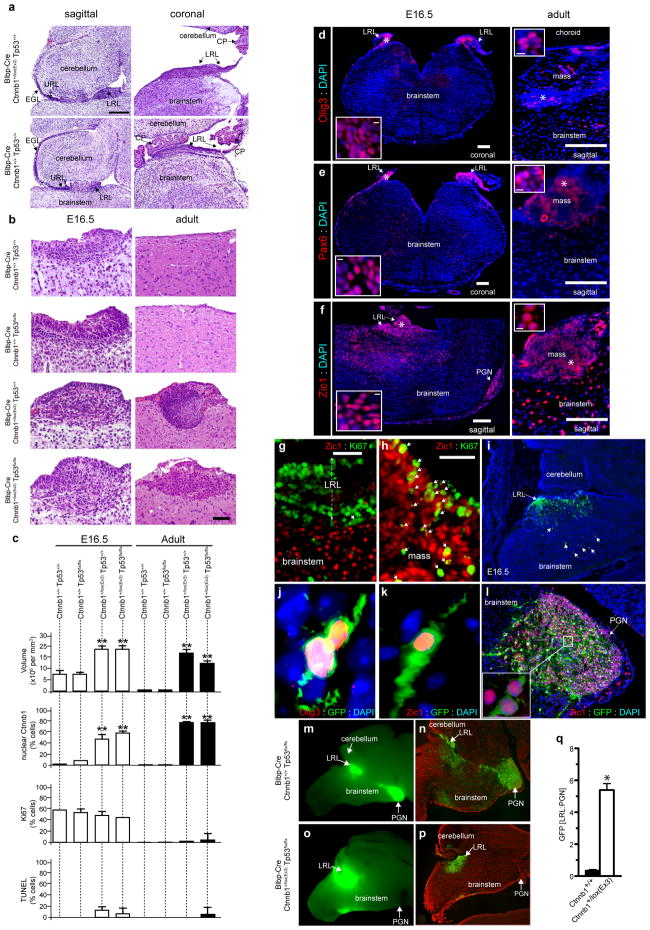
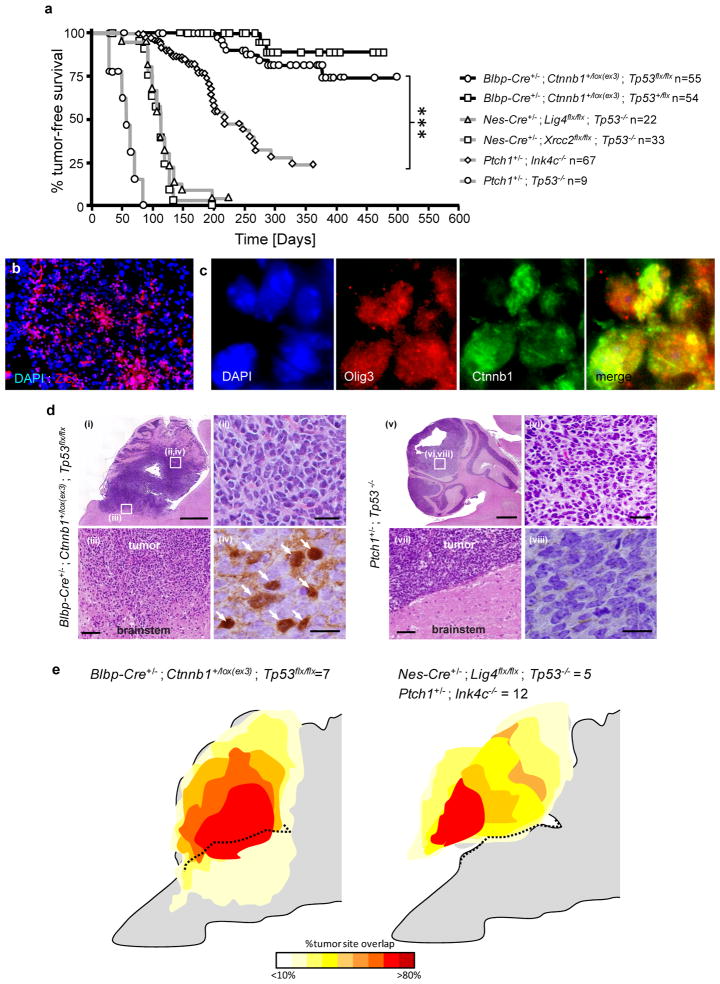
Medulloblastoma encompasses a collection of clinically and molecularly diverse tumour subtypes that together comprise the most common malignant childhood brain tumour. These tumours are thought to arise within the cerebellum, with approximately 25% originating from granule neuron precursor cells (GNPCs) after aberrant activation of the Sonic Hedgehog pathway (hereafter, SHH subtype). The pathological processes that drive heterogeneity among the other medulloblastoma subtypes are not known, hindering the development of much needed new therapies. Here we provide evidence that a discrete subtype of medulloblastoma that contains activating mutations in the WNT pathway effector CTNNB1 (hereafter, WNT subtype) arises outside the cerebellum from cells of the dorsal brainstem. We found that genes marking human WNT-subtype medulloblastomas are more frequently expressed in the lower rhombic lip (LRL) and embryonic dorsal brainstem than in the upper rhombic lip (URL) and developing cerebellum. Magnetic resonance imaging (MRI) and intra-operative reports showed that human WNT-subtype tumours infiltrate the dorsal brainstem, whereas SHH-subtype tumours are located within the cerebellar hemispheres. Activating mutations in Ctnnb1 had little impact on progenitor cell populations in the cerebellum, but caused the abnormal accumulation of cells on the embryonic dorsal brainstem which included aberrantly proliferating Zic1(+) precursor cells. These lesions persisted in all mutant adult mice; moreover, in 15% of cases in which Tp53 was concurrently deleted, they progressed to form medulloblastomas that recapitulated the anatomy and gene expression profiles of human WNT-subtype medulloblastoma. We provide the first evidence, to our knowledge, that subtypes of medulloblastoma have distinct cellular origins. Our data provide an explanation for the marked molecular and clinical differences between SHH- and WNT-subtype medulloblastomas and have profound implications for future research and treatment of this important childhood cancer.
髓母细胞瘤包含一组在临床上和分子上具有不同特征的肿瘤亚型,这些肿瘤亚型共同构成了最常见的儿童恶性脑肿瘤。这些肿瘤被认为起源于小脑,大约 25%的肿瘤来源于颗粒神经元前体细胞(GNPCs),是由于 Sonic Hedgehog 通路(以下简称 SHH 亚型)的异常激活。导致其他髓母细胞瘤亚型异质性的病理过程尚不清楚,这阻碍了急需的新疗法的发展。在这里,我们提供证据表明,一种含有 WNT 通路效应因子 CTNNB1 激活突变的髓母细胞瘤离散亚型(以下简称 WNT 亚型)起源于小脑之外的脑背部,来自脑背部的细胞。我们发现,标记人类 WNT 亚型髓母细胞瘤的基因在较低的菱形唇(LRL)和胚胎脑背部比在上菱形唇(URL)和发育中的小脑更频繁地表达。磁共振成像(MRI)和术中报告显示,人类 WNT 亚型肿瘤浸润脑背部,而 SHH 亚型肿瘤位于小脑半球内。Ctnnb1 的激活突变对小脑中的祖细胞群体影响不大,但导致胚胎脑背部细胞的异常积聚,包括异常增殖的 Zic1(+)前体细胞。这些病变在所有突变的成年小鼠中都持续存在;此外,在 15%的同时缺失 Tp53 的病例中,它们进展为形成髓母细胞瘤,这些肿瘤重现了人类 WNT 亚型髓母细胞瘤的解剖和基因表达谱。我们提供了第一个证据,据我们所知,髓母细胞瘤亚型具有不同的细胞起源。我们的数据为 SHH 和 WNT 亚型髓母细胞瘤之间显著的分子和临床差异提供了解释,并对这种重要的儿童癌症的未来研究和治疗具有深远的意义。