Sanaria Inc., Rockville, Maryland, United States of America.
PLoS One. 2010 Dec 9;5(12):e14275. doi: 10.1371/journal.pone.0014275.
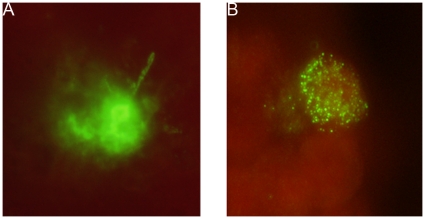
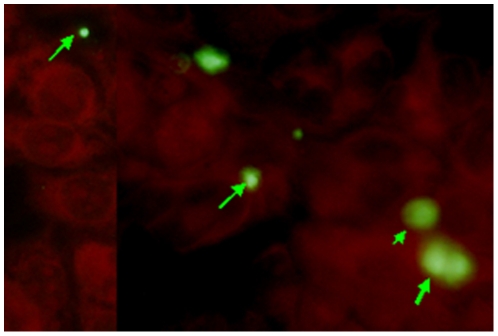
Plasmodium vivax (Pv) is the second most important human malaria parasite. Recent data indicate that the impact of Pv malaria on the health and economies of the developing world has been dramatically underestimated. Pv has a unique feature in its life cycle. Uninucleate sporozoites (spz), after invasion of human hepatocytes, either proceed to develop into tens of thousands of merozoites within the infected hepatocytes or remain as dormant forms called hypnozoites, which cause relapses of malaria months to several years after the primary infection. Elimination of malaria caused by Pv will be facilitated by developing a safe, highly effective drug that eliminates Pv liver stages, including hypnozoites. Identification and development of such a drug would be facilitated by the development of a medium to high throughput assay for screening drugs against Pv liver stages. We undertook the present pilot study to (1) assess the feasibility of producing large quantities of purified, vialed, cryopreserved Pv sporozoites and (2) establish a system for culturing the liver stages of Pv in order to assess the effects of drugs on the liver stages of Pv. We used primaquine (PQ) to establish this assay model, because PQ is the only licensed drug known to clear all Pv hepatocyte stages, including hypnozoites, and the effect of PQ on Pv hepatocyte stage development in vitro has not previously been reported. We report that we have established the capacity to reproducibly infect hepatoma cells with purified, cyropreserved Pv spz from the same lot, quantitate the primary outcome variable of infected hepatoma cells and demonstrate the inhibitory activity of primaquine on the infected hepatoma cells. We have also identified small parasite forms that may be hypnozoites. These data provide the foundation for finalizing a medium throughput, high content assay to identify new drugs for the elimination of all Pv liver stages.
间日疟原虫(Pv)是第二重要的人类疟原虫。最近的数据表明,间日疟原虫疟疾对发展中国家的健康和经济的影响被大大低估了。Pv 在其生命周期中有一个独特的特征。单核的孢子(spz),在入侵人类肝细胞后,要么在感染的肝细胞内发育成成千上万的裂殖子,要么保持休眠状态,称为休眠子,这些休眠子会在初次感染数月至数年后引发疟疾复发。开发一种安全、高效的药物来消除包括休眠子在内的 Pv 肝期,将有助于消除由 Pv 引起的疟疾。开发一种能够筛选针对 Pv 肝期的药物的中高通量检测方法,将有助于识别和开发这种药物。我们进行了本初步研究,以(1)评估大量生产纯化、小瓶包装、冷冻保存的 Pv 孢子的可行性,(2)建立培养 Pv 肝期的系统,以评估药物对 Pv 肝期的影响。我们使用伯氨喹(PQ)来建立这个检测模型,因为 PQ 是已知唯一能清除所有 Pv 肝细胞阶段的药物,包括休眠子,而且 PQ 对体外 Pv 肝细胞阶段发育的影响以前没有报道过。我们报告说,我们已经建立了从同一批次中用纯化的冷冻保存的 Pv spz 重复感染肝癌细胞的能力,可以定量检测感染肝癌细胞的主要结果变量,并证明伯氨喹对感染肝癌细胞的抑制活性。我们还发现了可能是休眠子的小寄生虫形式。这些数据为最终确定一种中高通量、高内涵的检测方法来识别消除所有 Pv 肝期的新药奠定了基础。