Nuclear Medicine Division, Department of Radiology and Imaging Sciences, Clinical Center, National Institutes of Health, Bethesda, Maryland, United States of America.
PLoS One. 2010 Dec 2;5(12):e14195. doi: 10.1371/journal.pone.0014195.
The radiation-induced "bystander effect" (RIBE) was shown to occur in a number of experimental systems both in vitro and in vivo as a result of exposure to ionizing radiation (IR). RIBE manifests itself by intercellular communication from irradiated cells to non-irradiated cells which may cause DNA damage and eventual death in these bystander cells. It is known that human stem cells (hSC) are ultimately involved in numerous crucial biological processes such as embryologic development; maintenance of normal homeostasis; aging; and aging-related pathologies such as cancerogenesis and other diseases. However, very little is known about radiation-induced bystander effect in hSC. To mechanistically interrogate RIBE responses and to gain novel insights into RIBE specifically in hSC compartment, both medium transfer and cell co-culture bystander protocols were employed.
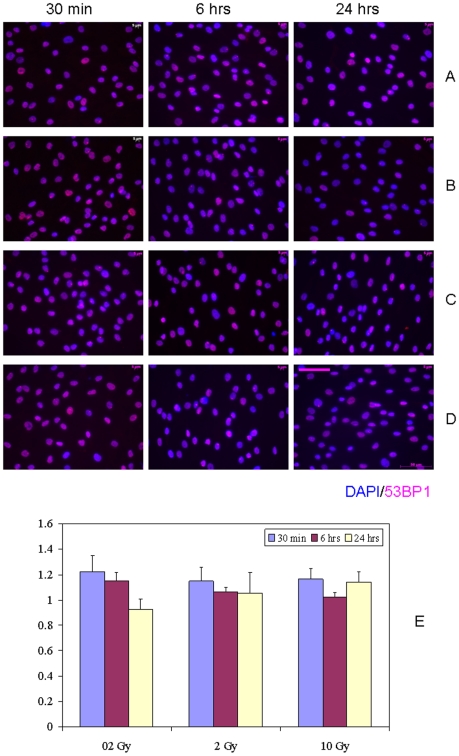
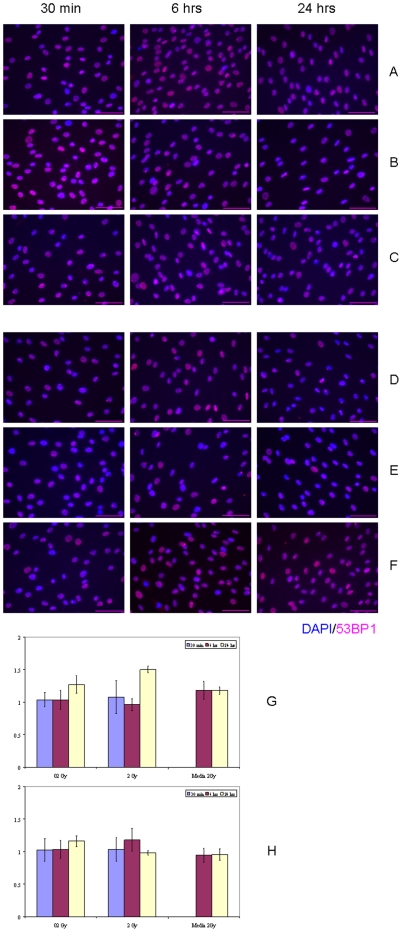
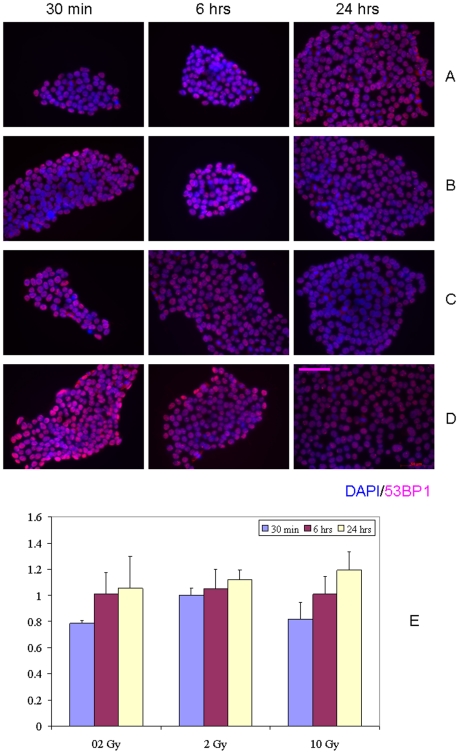
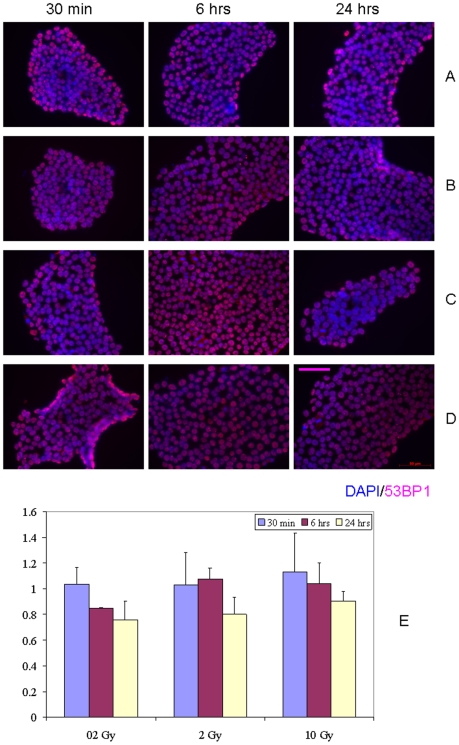
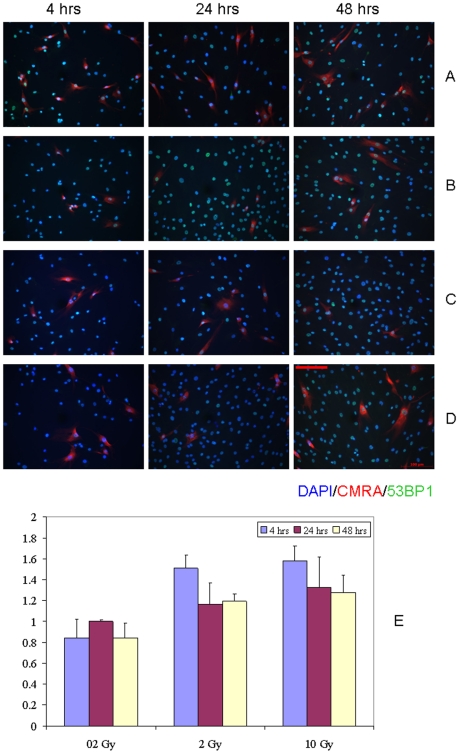
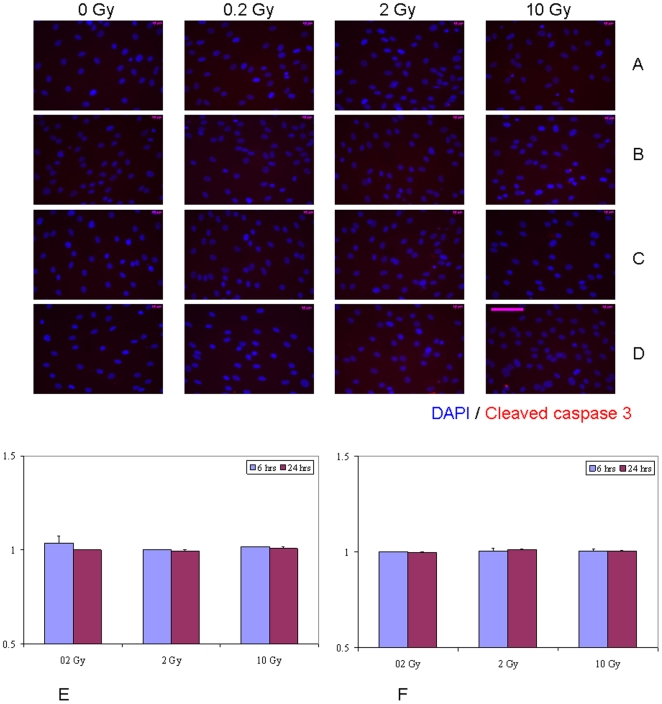
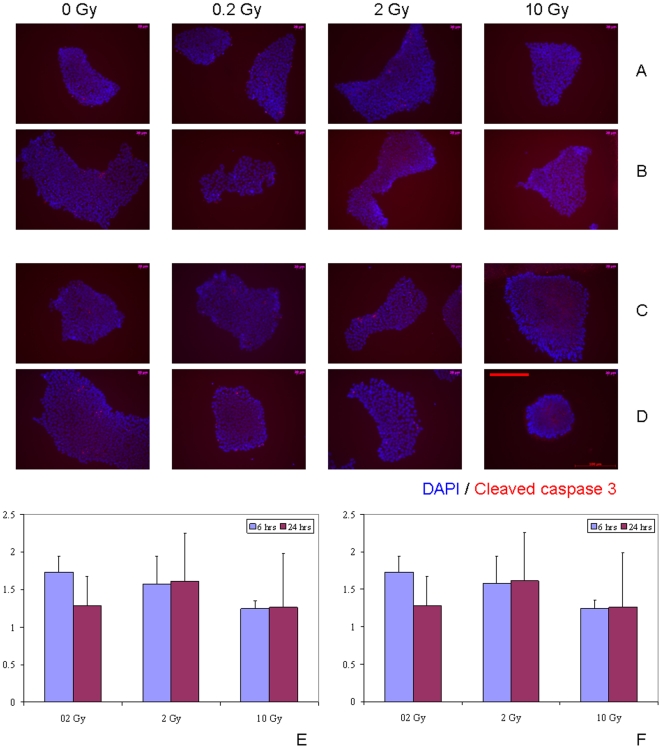
METHODOLOGY/PRINCIPAL FINDINGS: Human bone-marrow mesenchymal stem cells (hMSC) and embryonic stem cells (hESC) were irradiated with doses 0.2 Gy, 2 Gy and 10 Gy of X-rays, allowed to recover either for 1 hr or 24 hr. Then conditioned medium was collected and transferred to non-irradiated hSC for time course studies. In addition, irradiated hMSC were labeled with a vital CMRA dye and co-cultured with non-irradiated bystander hMSC. The medium transfer data showed no evidence for RIBE either in hMSC and hESC by the criteria of induction of DNA damage and for apoptotic cell death compared to non-irradiated cells (p>0.05). A lack of robust RIBE was also demonstrated in hMSC co-cultured with irradiated cells (p>0.05).
CONCLUSIONS/SIGNIFICANCE: These data indicate that hSC might not be susceptible to damaging effects of RIBE signaling compared to differentiated adult human somatic cells as shown previously. This finding could have profound implications in a field of radiation biology/oncology, in evaluating radiation risk of IR exposures, and for the safety and efficacy of hSC regenerative-based therapies.
体外和体内的许多实验系统都表明,电离辐射(IR)会导致辐射诱导的“旁观者效应”(RIBE)。RIBE 通过照射细胞与未照射细胞之间的细胞间通讯表现出来,这可能导致这些旁观者细胞中的 DNA 损伤和最终死亡。已知人类干细胞(hSC)最终参与许多重要的生物学过程,如胚胎发育;维持正常的体内平衡;衰老;以及与衰老相关的病理学,如癌变和其他疾病。然而,对于 hSC 中的辐射诱导旁观者效应知之甚少。为了从机制上探究 RIBE 反应,并深入了解 hSC 中特定的 RIBE,我们采用了介质转移和细胞共培养旁观者方案。
方法/主要发现:用人骨髓间充质干细胞(hMSC)和胚胎干细胞(hESC)用 X 射线照射 0.2Gy、2Gy 和 10Gy 的剂量,分别在 1 小时或 24 小时后恢复。然后收集条件培养基并转移到未照射的 hSC 中进行时间过程研究。此外,用一种活细胞染料 CMRA 标记照射的 hMSC,并与未照射的旁观者 hMSC 共培养。介质转移数据表明,在 hMSC 和 hESC 中,无论根据诱导 DNA 损伤和凋亡细胞死亡的标准,都没有证据表明存在 RIBE(与未照射细胞相比,p>0.05)。在与照射细胞共培养的 hMSC 中也没有显示出强大的 RIBE(p>0.05)。
结论/意义:这些数据表明,与之前所示的分化成人体细胞相比,hSC 可能不易受到 RIBE 信号的损伤作用。这一发现可能对辐射生物学/肿瘤学领域具有深远的意义,在评估 IR 暴露的辐射风险以及 hSC 再生治疗的安全性和有效性方面。