Division of Metabolism, Endocrinology and Diabetes, Department of Internal Medicine, University of Michigan Medical Center, Ann Arbor, Michigan, United States of America.
PLoS One. 2010 Dec 2;5(12):e14199. doi: 10.1371/journal.pone.0014199.
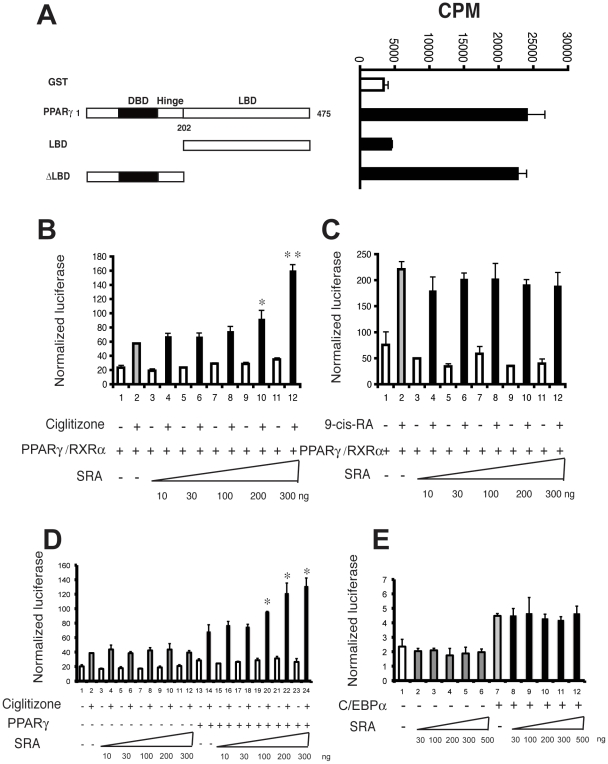
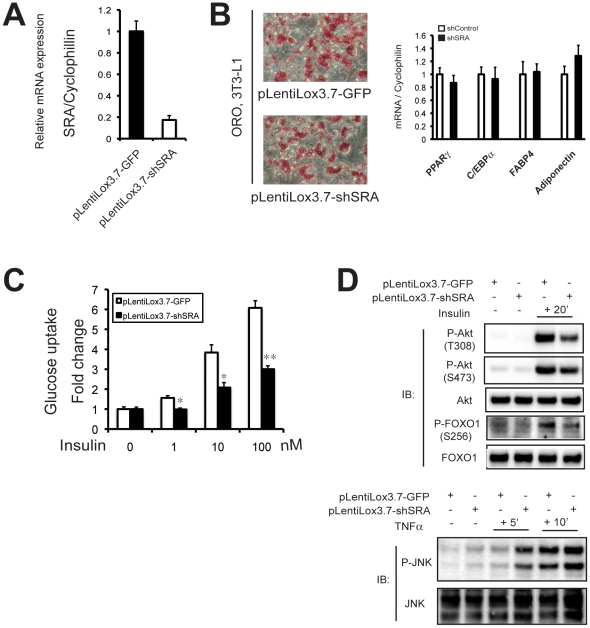
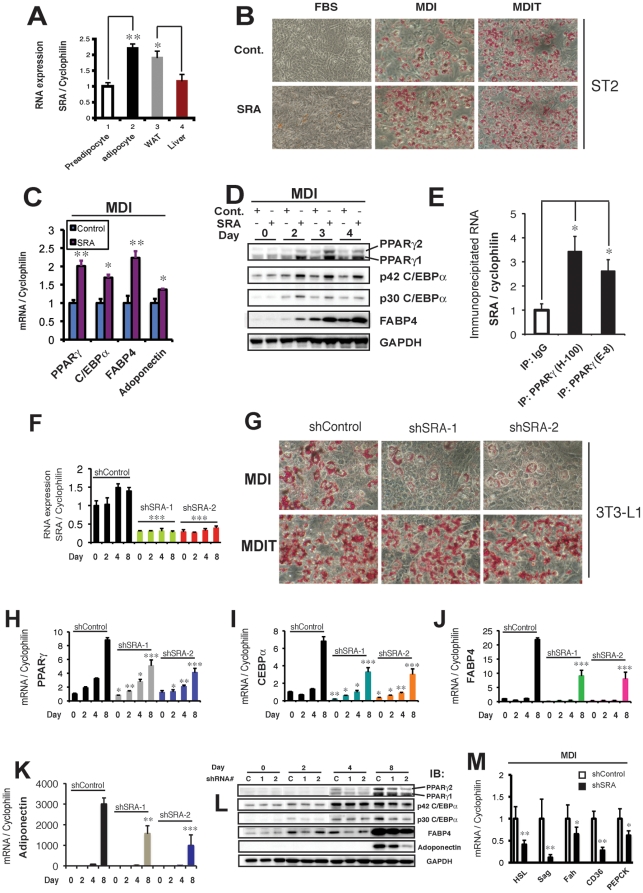
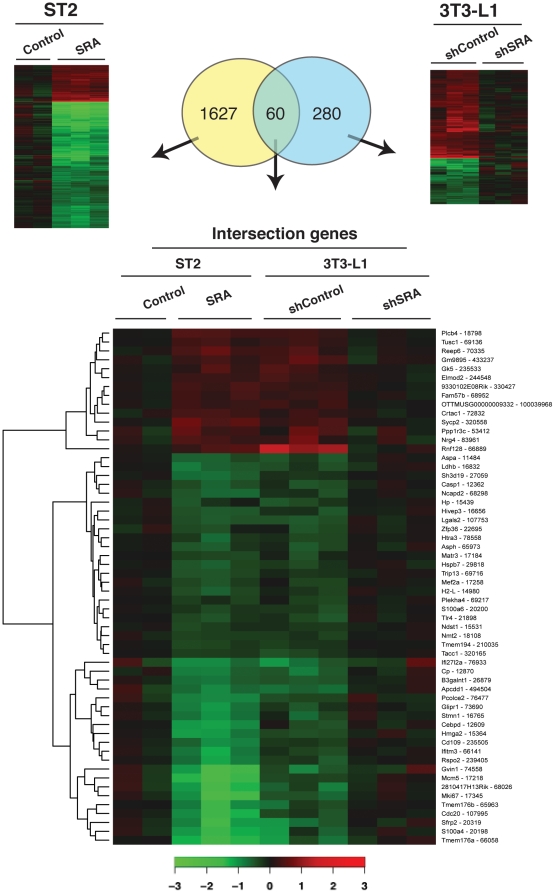
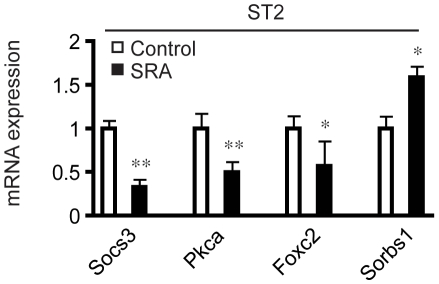
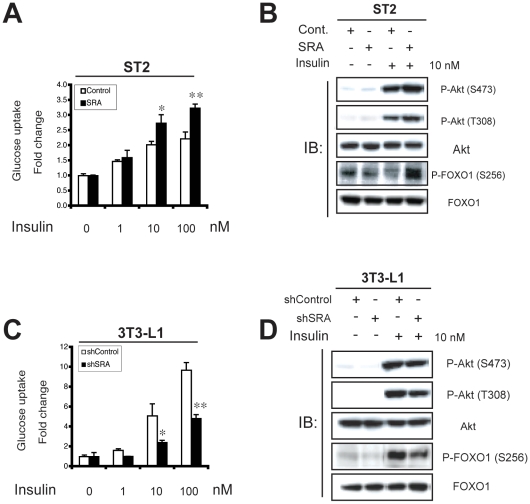
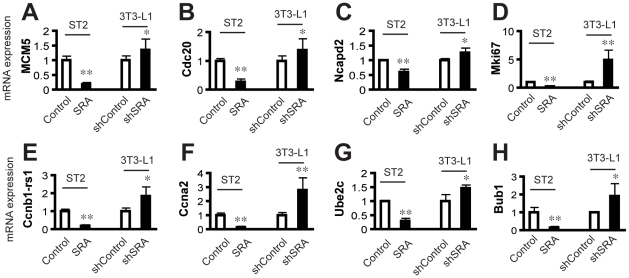
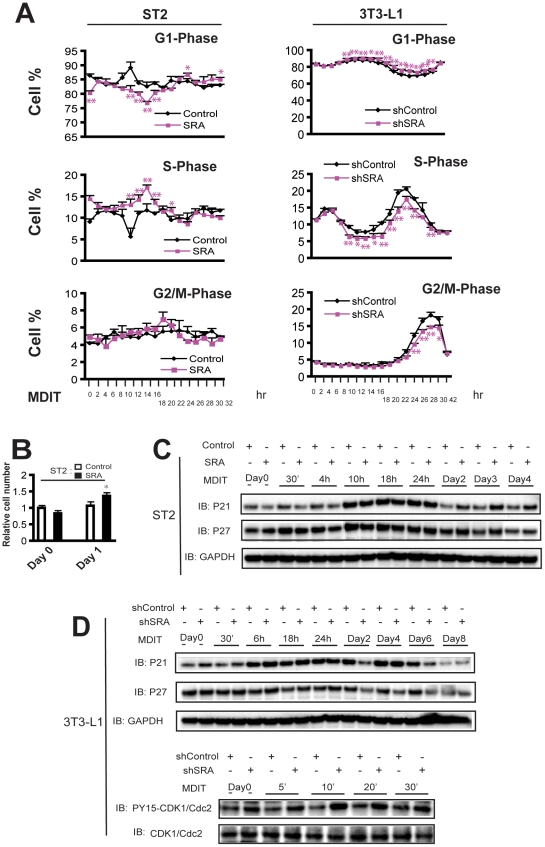
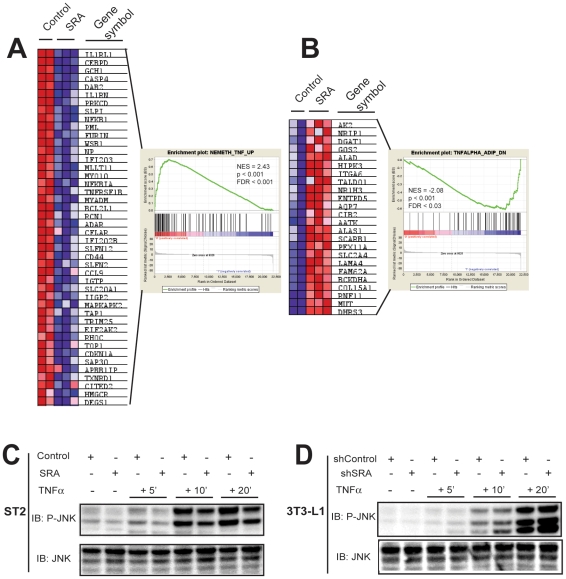
Peroxisome proliferator-activated receptor-γ (PPARγ) is a master transcriptional regulator of adipogenesis. Hence, the identification of PPARγ coactivators should help reveal mechanisms controlling gene expression in adipose tissue development and physiology. We show that the non-coding RNA, Steroid receptor RNA Activator (SRA), associates with PPARγ and coactivates PPARγ-dependent reporter gene expression. Overexpression of SRA in ST2 mesenchymal precursor cells promotes their differentiation into adipocytes. Conversely, knockdown of endogenous SRA inhibits 3T3-L1 preadipocyte differentiation. Microarray analysis reveals hundreds of SRA-responsive genes in adipocytes, including genes involved in the cell cycle, and insulin and TNFα signaling pathways. Some functions of SRA may involve mechanisms other than coactivation of PPARγ. SRA in adipocytes increases both glucose uptake and phosphorylation of Akt and FOXO1 in response to insulin. SRA promotes S-phase entry during mitotic clonal expansion, decreases expression of the cyclin-dependent kinase inhibitors p21Cip1 and p27Kip1, and increases phosphorylation of Cdk1/Cdc2. SRA also inhibits the expression of adipocyte-related inflammatory genes and TNFα-induced phosphorylation of c-Jun NH(2)-terminal kinase. In conclusion, SRA enhances adipogenesis and adipocyte function through multiple pathways.
过氧化物酶体增殖物激活受体-γ(PPARγ)是脂肪生成的主要转录调控因子。因此,鉴定 PPARγ 共激活因子应该有助于揭示控制脂肪组织发育和生理学中基因表达的机制。我们表明,非编码 RNA 类固醇受体 RNA 激活物(SRA)与 PPARγ 结合并共激活 PPARγ 依赖性报告基因表达。SRA 在 ST2 间充质前体细胞中的过表达促进其分化为脂肪细胞。相反,内源性 SRA 的敲低抑制 3T3-L1 前脂肪细胞的分化。微阵列分析揭示了脂肪细胞中数百个 SRA 反应基因,包括参与细胞周期以及胰岛素和 TNFα 信号通路的基因。SRA 的一些功能可能涉及除了与 PPARγ 共激活之外的机制。脂肪细胞中的 SRA 增加胰岛素刺激下的葡萄糖摄取和 Akt 和 FOXO1 的磷酸化。SRA 促进有丝分裂克隆扩张过程中的 S 期进入,降低细胞周期蛋白依赖性激酶抑制剂 p21Cip1 和 p27Kip1 的表达,并增加 Cdk1/Cdc2 的磷酸化。SRA 还抑制脂肪细胞相关炎症基因的表达和 TNFα 诱导的 c-Jun NH(2)-末端激酶的磷酸化。总之,SRA 通过多种途径增强脂肪生成和脂肪细胞功能。