Department of Chemistry, University of Liverpool, Liverpool L69 7ZD, United Kingdom.
J Am Chem Soc. 2011 Feb 2;133(4):1016-32. doi: 10.1021/ja1090832.
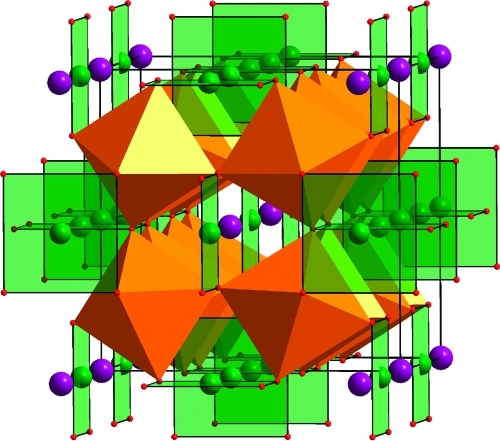
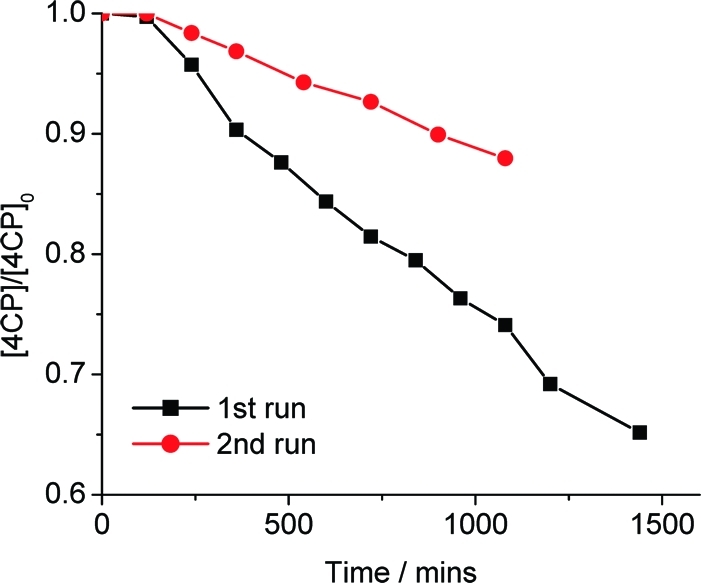
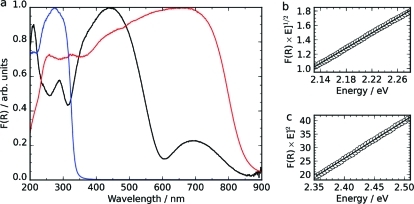
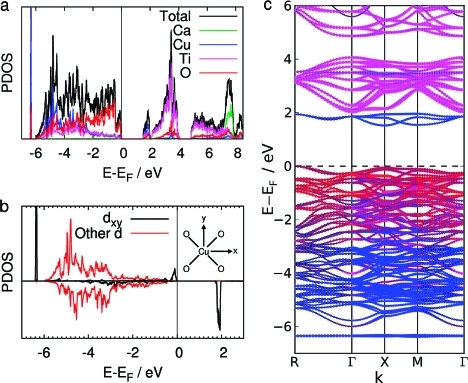
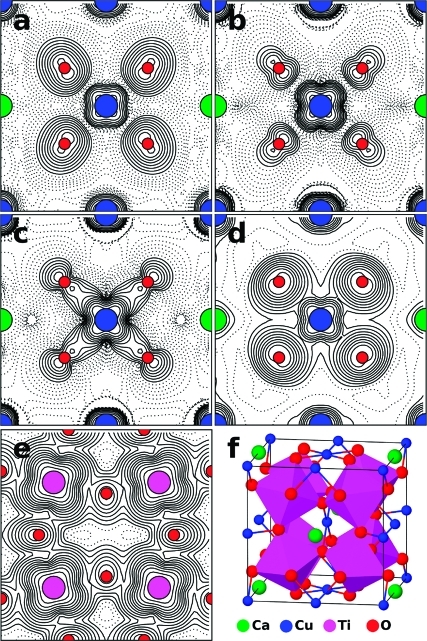
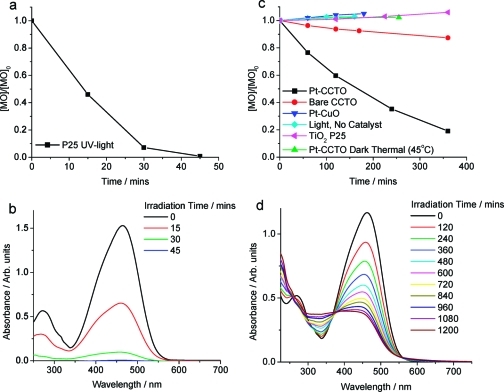
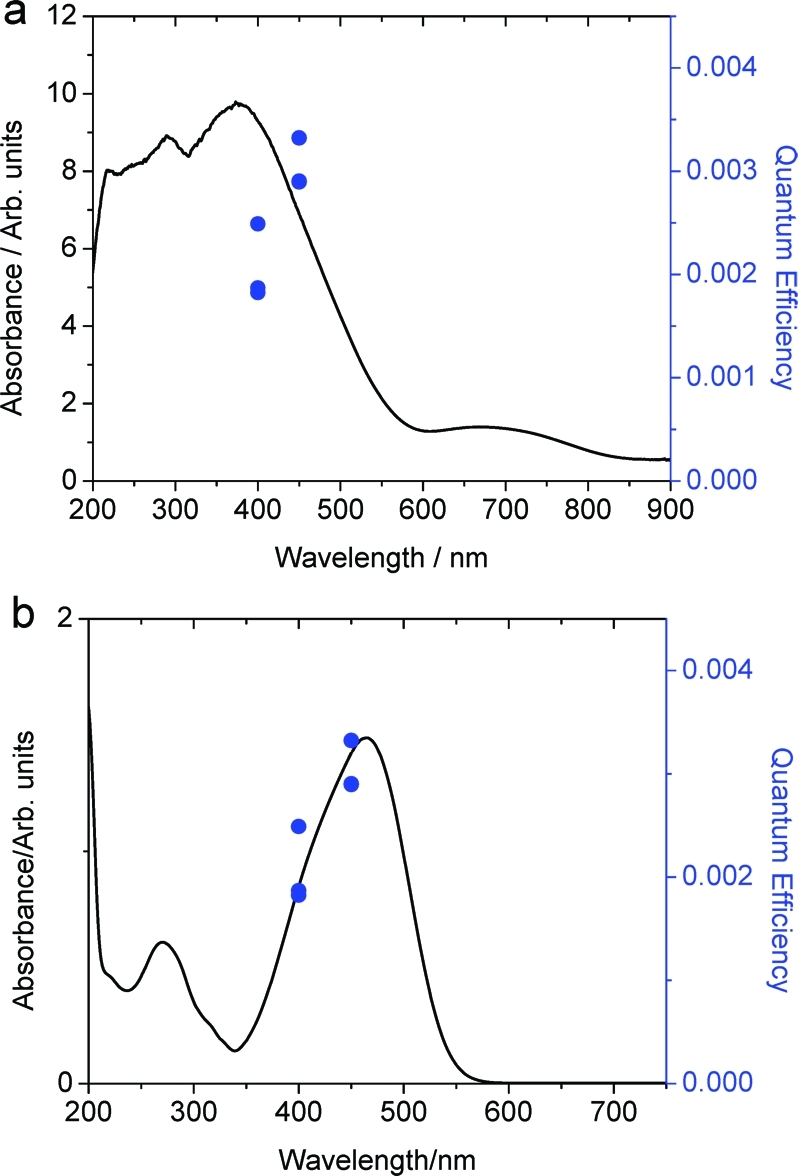
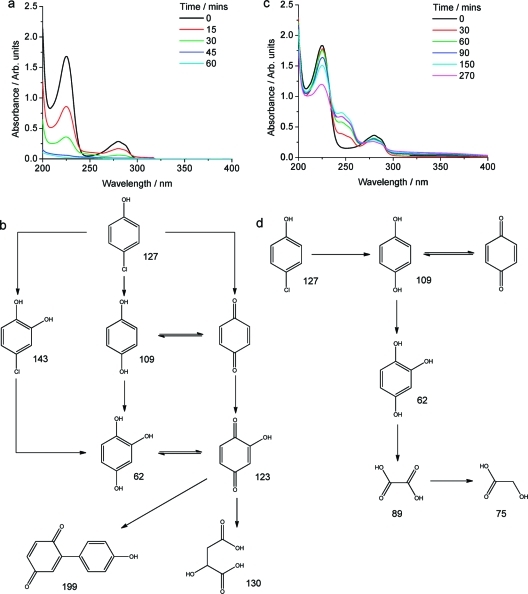
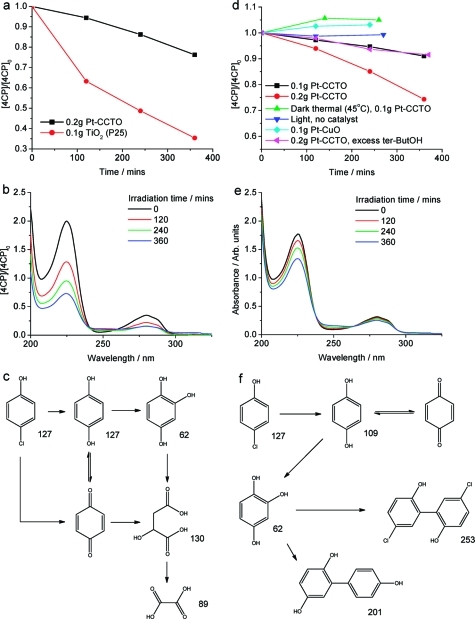
Charge transfer between metal ions occupying distinct crystallographic sublattices in an ordered material is a strategy to confer visible light absorption on complex oxides to generate potentially catalytically active electron and hole charge carriers. CaCu3Ti4O12 has distinct octahedral Ti4+ and square planar Cu2+ sites and is thus a candidate material for this approach. The sol−gel synthesis of high surface area CaCu3Ti4O12 and investigation of its optical absorption and photocatalytic reactivity with model pollutants are reported. Two gaps of 2.21 and 1.39 eV are observed in the visible region. These absorptions are explained by LSDA+U electronic structure calculations, including electron correlation on the Cu sites, as arising from transitions from a Cu-hybridized O 2p-derived valence band to localized empty states on Cu (attributed to the isolation of CuO4 units within the structure of CaCu3Ti4O12) and to a Ti-based conduction band. The resulting charge carriers produce selective visible light photodegradation of 4-chlorophenol (monitored by mass spectrometry) by Pt-loaded CaCu3Ti4O12 which is attributed to the chemical nature of the photogenerated charge carriers and has a quantum yield comparable with commercial visible light photocatalysts.
在有序材料中占据不同晶体亚晶格的金属离子之间的电荷转移是将可见光吸收赋予复杂氧化物以产生潜在催化活性的电子和空穴电荷载流子的一种策略。CaCu3Ti4O12 具有独特的八面体 Ti4+和平面正方形 Cu2+位,因此是该方法的候选材料。本文报道了高表面积 CaCu3Ti4O12 的溶胶-凝胶合成及其对模型污染物的光吸收和光催化反应性的研究。在可见光区观察到 2.21 和 1.39 eV 的两个间隙。这些吸收通过 LSDA+U 电子结构计算得到了解释,包括 Cu 位上的电子相关,这归因于从 Cu 杂化 O 2p 衍生的价带到 Cu 上的局部空态(归因于 CuO4 单元在 CaCu3Ti4O12 结构内的隔离)和基于 Ti 的导带的跃迁。负载 Pt 的 CaCu3Ti4O12 产生了选择性的可见光光降解 4-氯苯酚(通过质谱监测),这归因于光生电荷载流子的化学性质,其量子产率可与商业可见光光催化剂相媲美。