Laboratory of Computational Biology, Van Andel Research Institute, Grand Rapids, MI, USA.
BMC Med Genomics. 2010 Dec 16;3:59. doi: 10.1186/1755-8794-3-59.
Germline mutations in the folliculin (FLCN) gene are associated with the development of Birt-Hogg-Dubé syndrome (BHDS), a disease characterized by papular skin lesions, a high occurrence of spontaneous pneumothorax, and the development of renal neoplasias. The majority of renal tumors that arise in BHDS-affected individuals are histologically similar to sporadic chromophobe renal cell carcinoma (RCC) and sporadic renal oncocytoma. However, most sporadic tumors lack FLCN mutations and the extent to which the BHDS-derived renal tumors share genetic defects associated with the sporadic tumors has not been well studied.
BHDS individuals were identified symptomatically and FLCN mutations were confirmed by DNA sequencing. Comparative gene expression profiling analyses were carried out on renal tumors isolated from individuals afflicted with BHDS and a panel of sporadic renal tumors of different subtypes using discriminate and clustering approaches. qRT-PCR was used to confirm selected results of the gene expression analyses. We further analyzed differentially expressed genes using gene set enrichment analysis and pathway analysis approaches. Pathway analysis results were confirmed by generation of independent pathway signatures and application to additional datasets.
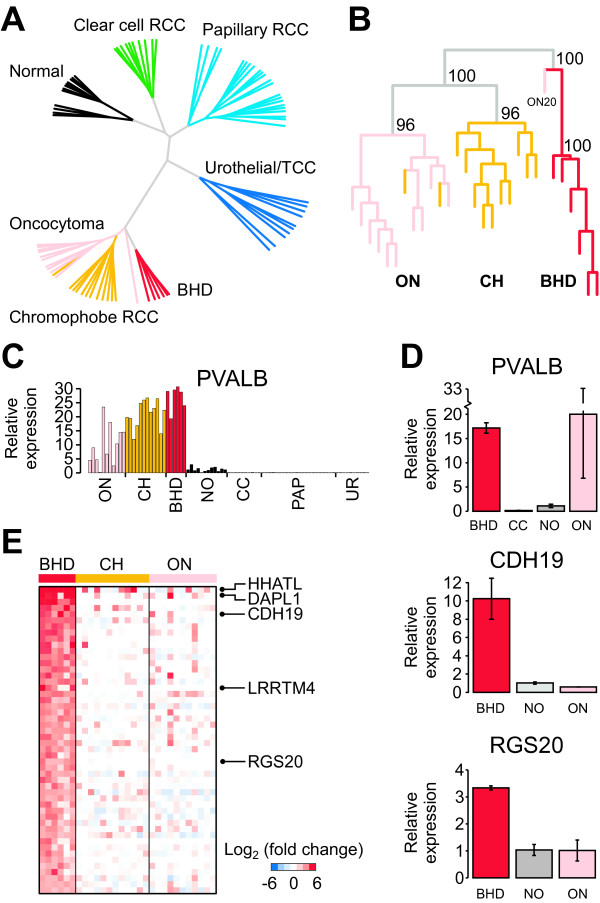
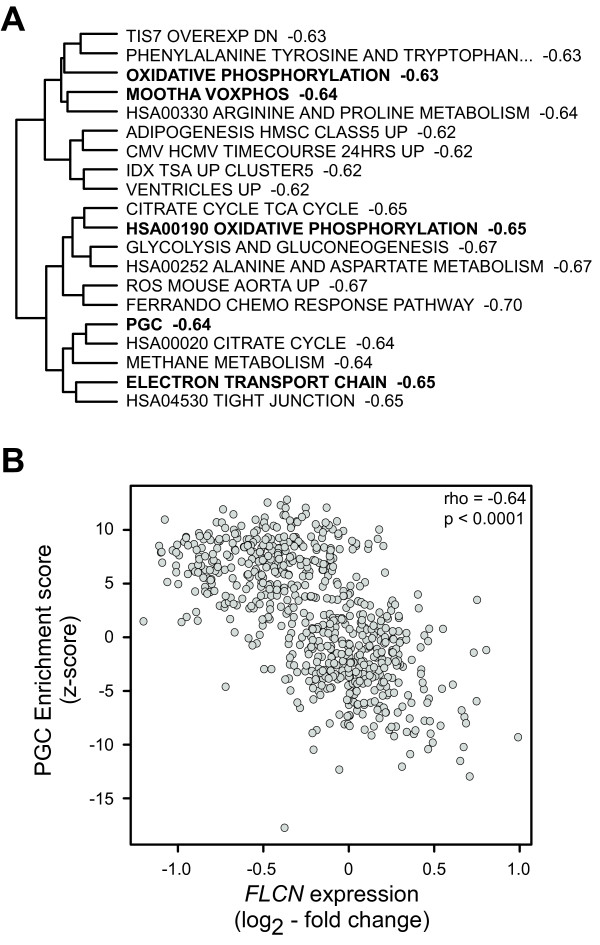
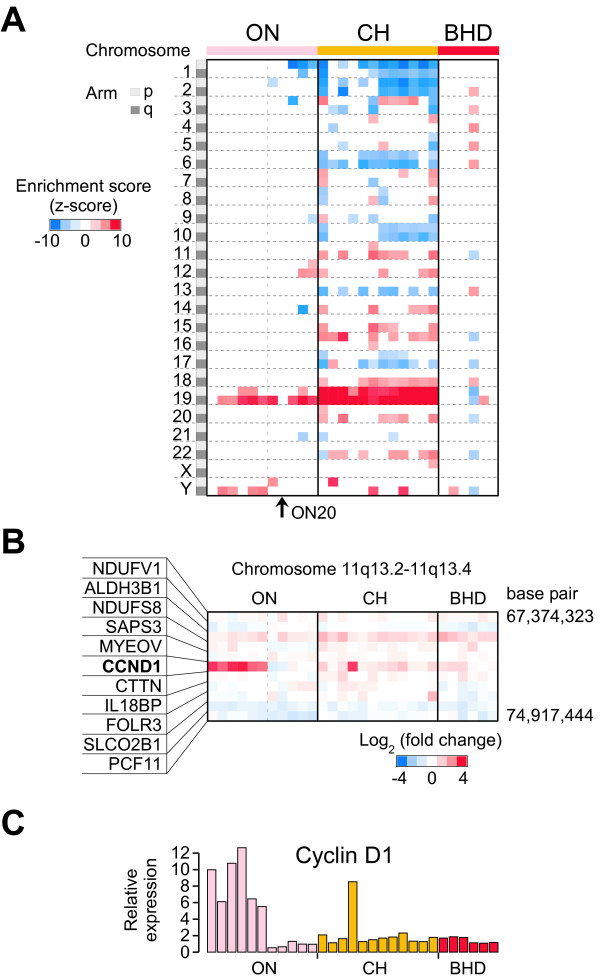
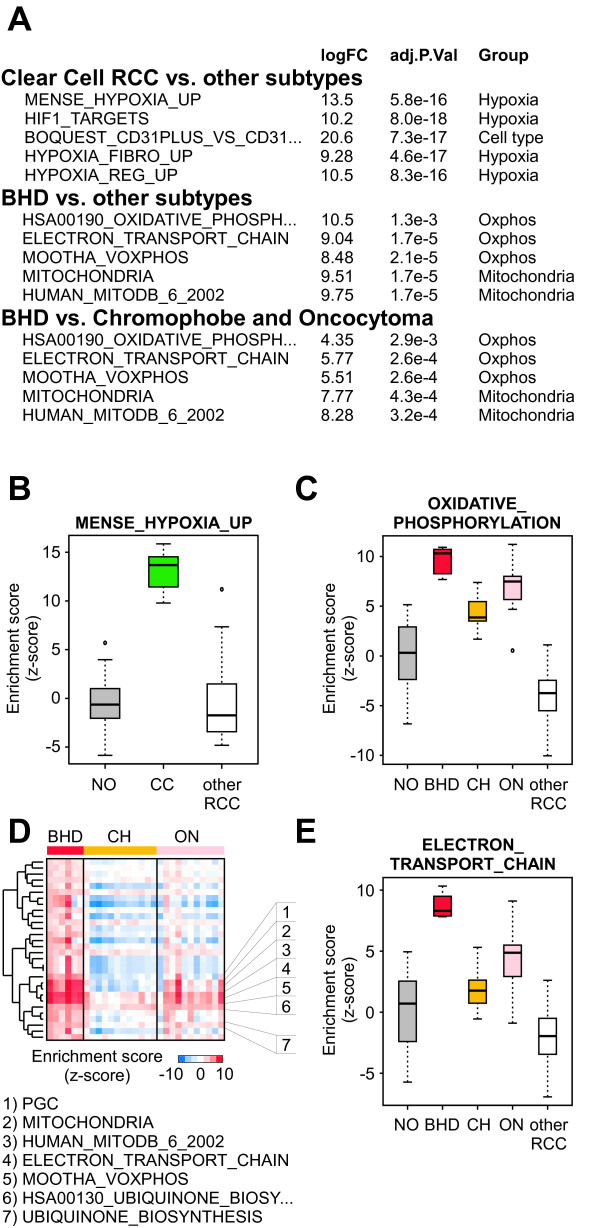
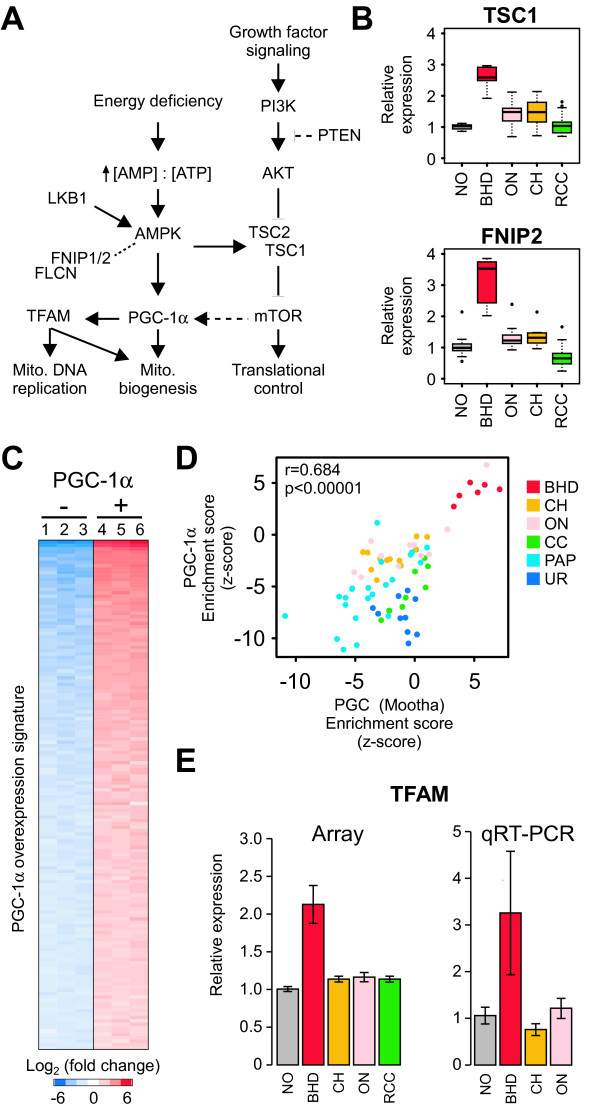
Renal tumors isolated from individuals with BHDS showed distinct gene expression and cytogenetic characteristics from sporadic renal oncocytoma and chromophobe RCC. The most prominent molecular feature of BHDS-derived kidney tumors was high expression of mitochondria-and oxidative phosphorylation (OXPHOS)-associated genes. This mitochondria expression phenotype was associated with deregulation of the PGC-1α-TFAM signaling axis. Loss of FLCN expression across various tumor types is also associated with increased nuclear mitochondrial gene expression.
Our results support a genetic distinction between BHDS-associated tumors and other renal neoplasias. In addition, deregulation of the PGC-1α-TFAM signaling axis is most pronounced in renal tumors that harbor FLCN mutations and in tumors from other organs that have relatively low expression of FLCN. These results are consistent with the recently discovered interaction between FLCN and AMPK and support a model in which FLCN is a regulator of mitochondrial function.
滤泡素(FLCN)基因突变与 Birt-Hogg-Dubé 综合征(BHDS)的发生有关,BHDS 是一种以丘疹性皮肤损伤、自发性气胸发生率高和肾肿瘤发生为特征的疾病。在 BHDS 患者中发生的大多数肾肿瘤在组织学上与散发性嗜铬细胞瘤肾细胞癌(RCC)和散发性肾嗜酸细胞瘤相似。然而,大多数散发性肿瘤缺乏 FLCN 突变,并且 BHDS 衍生的肾肿瘤在多大程度上与散发性肿瘤共享遗传缺陷尚未得到很好的研究。
通过 DNA 测序对有症状的 BHDS 个体进行鉴定,并确认 FLCN 突变。使用判别和聚类方法对来自 BHDS 个体的肾肿瘤和一组不同亚型的散发性肾肿瘤进行比较基因表达谱分析。使用 qRT-PCR 对基因表达分析的选定结果进行验证。我们进一步使用基因集富集分析和途径分析方法分析差异表达基因。通过生成独立的途径特征并将其应用于其他数据集来确认途径分析结果。
来自 BHDS 个体的肾肿瘤与散发性肾嗜酸细胞瘤和嗜铬细胞瘤 RCC 的基因表达和细胞遗传学特征明显不同。BHDS 衍生的肾肿瘤最突出的分子特征是与线粒体和氧化磷酸化(OXPHOS)相关基因的高表达。这种线粒体表达表型与 PGC-1α-TFAM 信号轴的失调有关。在各种肿瘤类型中,FLCN 表达的丧失也与核线粒体基因表达的增加有关。
我们的研究结果支持 BHDS 相关肿瘤与其他肾肿瘤之间存在遗传差异。此外,PGC-1α-TFAM 信号轴的失调在携带 FLCN 突变的肾肿瘤和其他器官肿瘤中最为明显,这些肿瘤中 FLCN 的表达相对较低。这些结果与最近发现的 FLCN 与 AMPK 之间的相互作用一致,并支持 FLCN 是线粒体功能调节剂的模型。