Department of Neurology, Program in Neuroscience, and Division of Sleep Medicine, Beth Israel Deaconess Medical Center and Harvard Medical School, Boston, MA 02215, USA.
Neuron. 2010 Dec 22;68(6):1023-42. doi: 10.1016/j.neuron.2010.11.032.
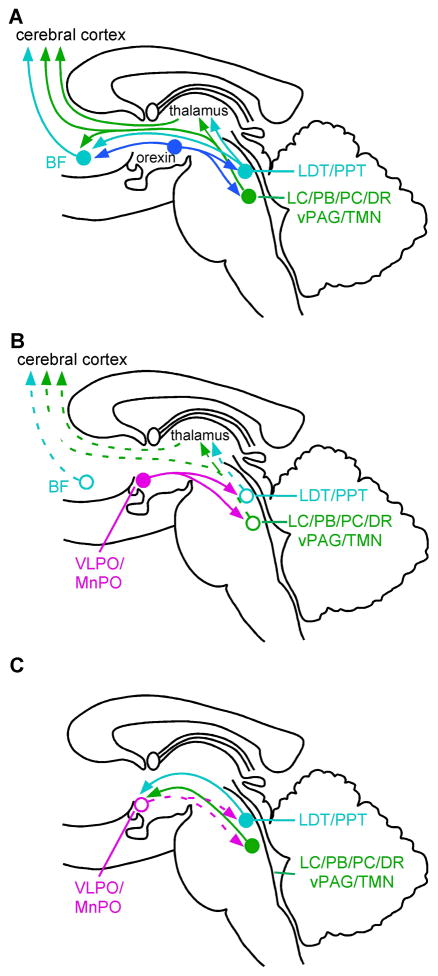
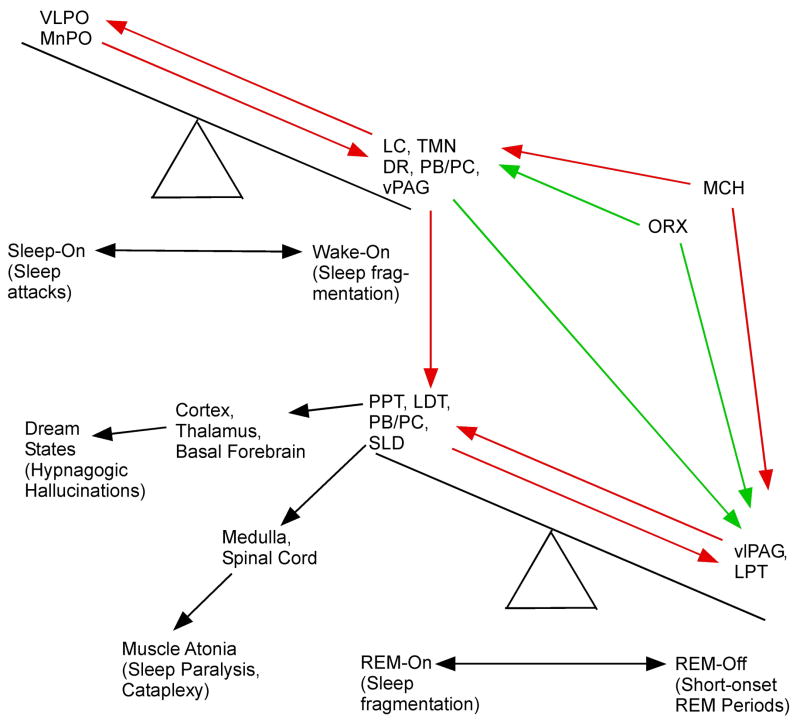
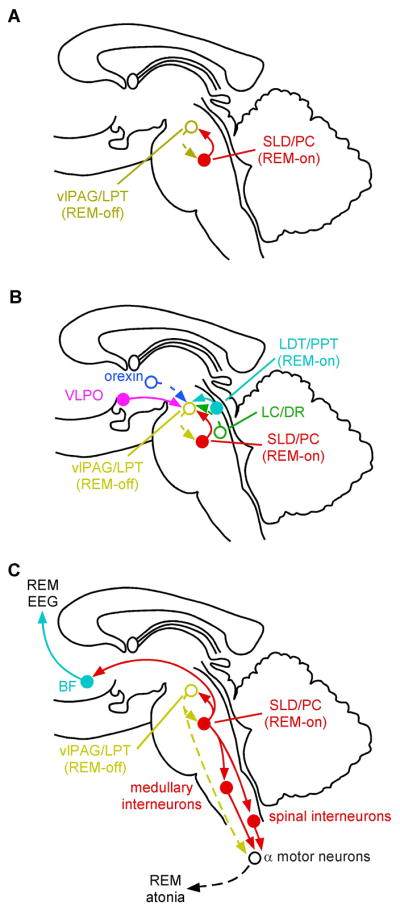
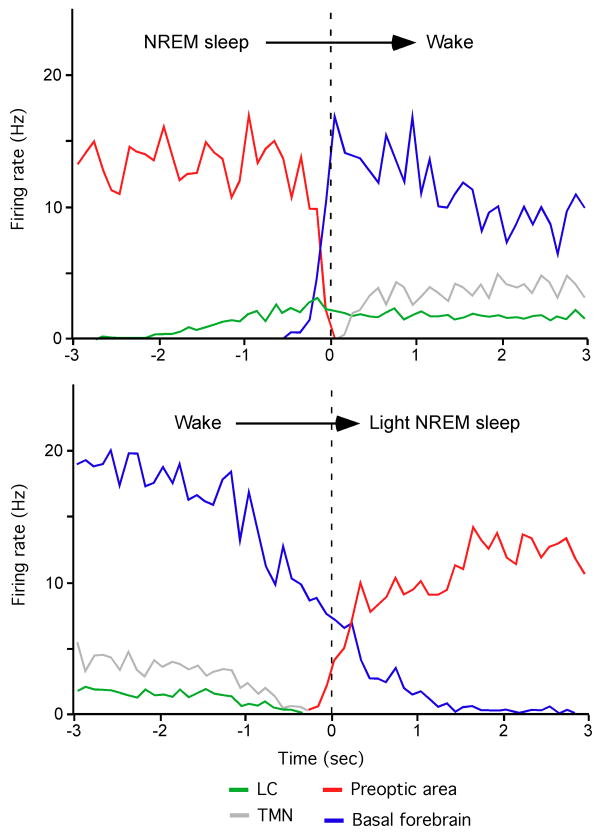
We take for granted the ability to fall asleep or to snap out of sleep into wakefulness, but these changes in behavioral state require specific switching mechanisms in the brain that allow well-defined state transitions. In this review, we examine the basic circuitry underlying the regulation of sleep and wakefulness and discuss a theoretical framework wherein the interactions between reciprocal neuronal circuits enable relatively rapid and complete state transitions. We also review how homeostatic, circadian, and allostatic drives help regulate sleep state switching and discuss how breakdown of the switching mechanism may contribute to sleep disorders such as narcolepsy.
我们认为入睡或从睡眠中突然醒来进入觉醒状态是理所当然的,但这些行为状态的改变需要大脑中特定的切换机制,以允许明确的状态转变。在这篇综述中,我们研究了调节睡眠和觉醒的基本神经回路,并讨论了一个理论框架,其中相互作用的神经元回路的相互作用使相对快速和完全的状态转变成为可能。我们还回顾了稳态、昼夜节律和压力驱动如何帮助调节睡眠状态的转换,并讨论了切换机制的崩溃如何导致睡眠障碍,如发作性睡病。