Wellcome Trust Centre for Gene Regulation and Expression, University of Dundee, Dundee DD1 5EH, Scotland, UK.
J Cell Biol. 2010 Dec 27;191(7):1285-97. doi: 10.1083/jcb.201007074. Epub 2010 Dec 20.
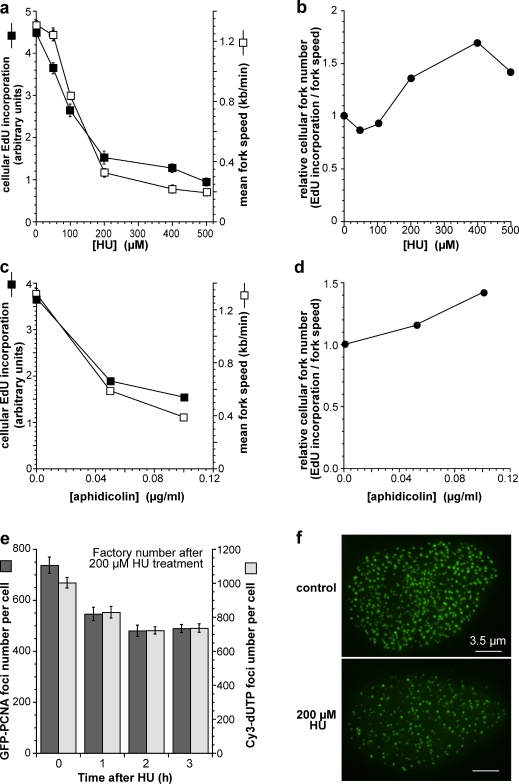
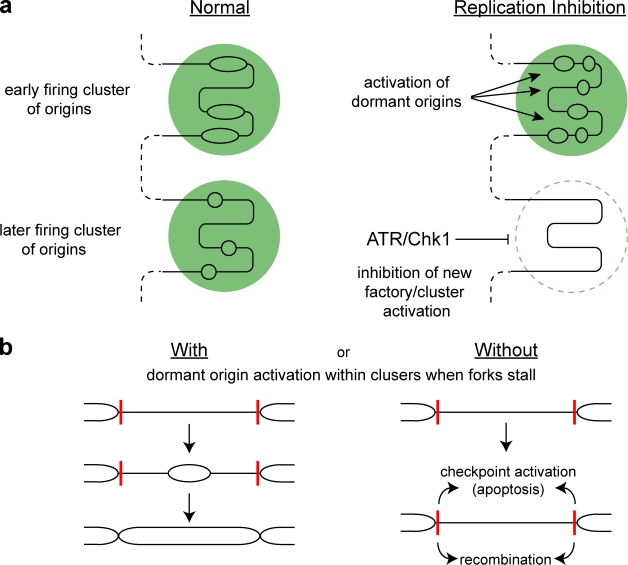
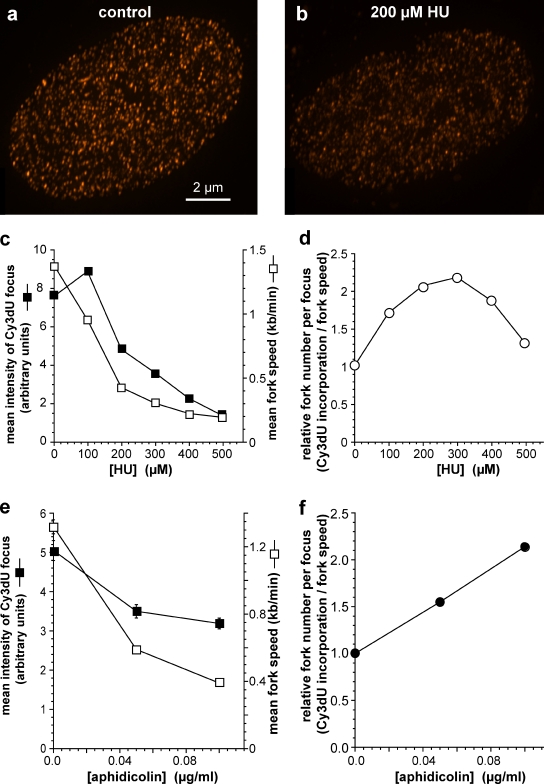
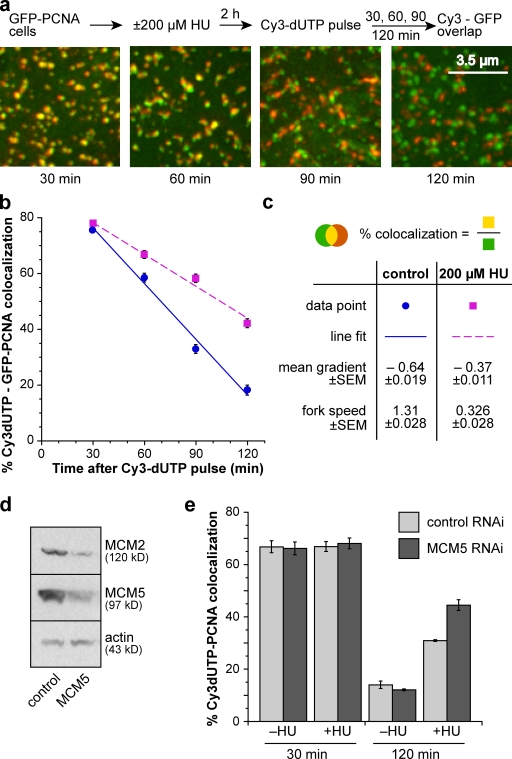
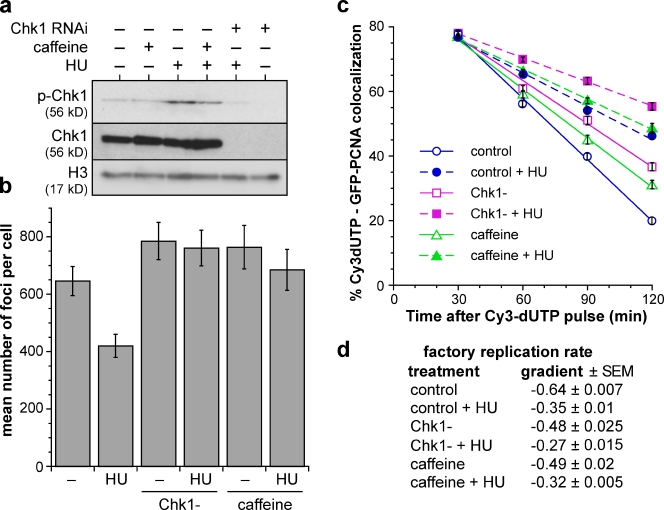
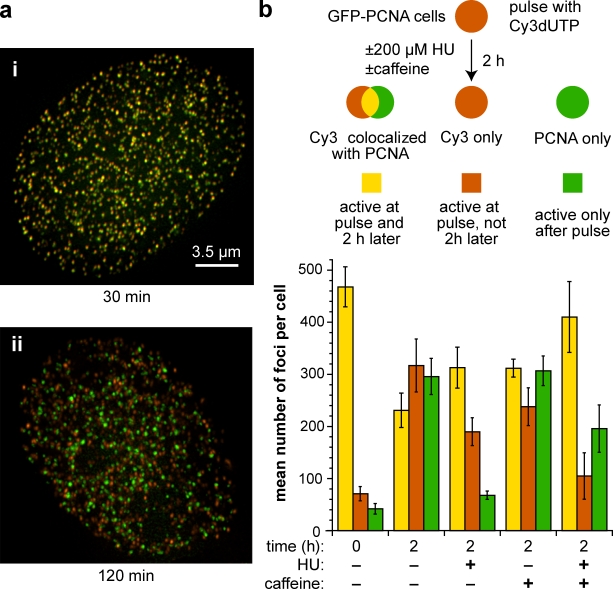
Replication origins are licensed by loading MCM2-7 hexamers before entry into S phase. However, only ∼10% of licensed origins are normally used in S phase, with the others remaining dormant. When fork progression is inhibited, dormant origins initiate nearby to ensure that all of the DNA is eventually replicated. In apparent contrast, replicative stress activates ataxia telangiectasia and rad-3-related (ATR) and Chk1 checkpoint kinases that inhibit origin firing. In this study, we show that at low levels of replication stress, ATR/Chk1 predominantly suppresses origin initiation by inhibiting the activation of new replication factories, thereby reducing the number of active factories. At the same time, inhibition of replication fork progression allows dormant origins to initiate within existing replication factories. The inhibition of new factory activation by ATR/Chk1 therefore redirects replication toward active factories where forks are inhibited and away from regions that have yet to start replication. This minimizes the deleterious consequences of fork stalling and prevents similar problems from arising in unreplicated regions of the genome.
复制起点通过在进入 S 期之前加载 MCM2-7 六聚体来获得许可。然而,在 S 期内通常只有约 10%的许可起点被正常使用,其余的则处于休眠状态。当叉进展受到抑制时,休眠起点会在附近启动,以确保所有的 DNA 最终都被复制。与此形成鲜明对比的是,复制应激会激活共济失调毛细血管扩张症和 rad-3 相关(ATR)和 Chk1 检查点激酶,从而抑制起始原点的点火。在这项研究中,我们表明,在低水平的复制应激下,ATR/Chk1 主要通过抑制新复制工厂的激活来抑制起始原点的启动,从而减少活跃工厂的数量。与此同时,复制叉进展的抑制允许休眠起点在现有的复制工厂内启动。ATR/Chk1 对新工厂激活的抑制因此将复制重新导向受抑制叉的活跃工厂,远离尚未开始复制的区域。这最大限度地减少了叉停滞的有害后果,并防止基因组中未复制区域出现类似的问题。