Ferrer-Vaquer Anna, Piliszek Anna, Tian Guangnan, Aho Robert J, Dufort Daniel, Hadjantonakis Anna-Katerina
Developmental Biology Program, Sloan-Kettering Institute, New York, NY, USA.
BMC Dev Biol. 2010 Dec 21;10:121. doi: 10.1186/1471-213X-10-121.
Understanding the dynamic cellular behaviors and underlying molecular mechanisms that drive morphogenesis is an ongoing challenge in biology. Live imaging provides the necessary methodology to unravel the synergistic and stereotypical cell and molecular events that shape the embryo. Genetically-encoded reporters represent an essential tool for live imaging. Reporter strains can be engineered by placing cis-regulatory elements of interest to direct the expression of a desired reporter gene. In the case of canonical Wnt signaling, also referred to as Wnt/β-catenin signaling, since the downstream transcriptional response is well understood, reporters can be designed that reflect sites of active Wnt signaling, as opposed to sites of gene transcription, as is the case with many fluorescent reporters. However, even though several transgenic Wnt/β-catenin reporter strains have been generated, to date, none provides the single-cell resolution favored for live imaging studies.
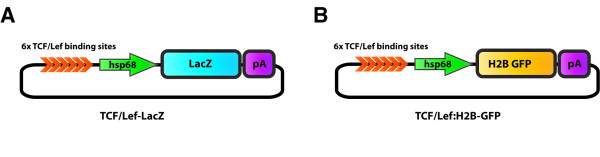
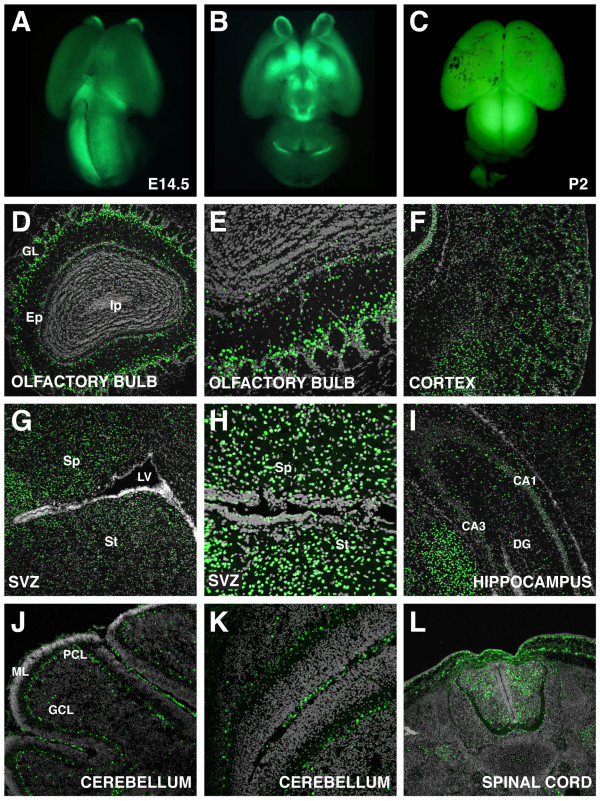
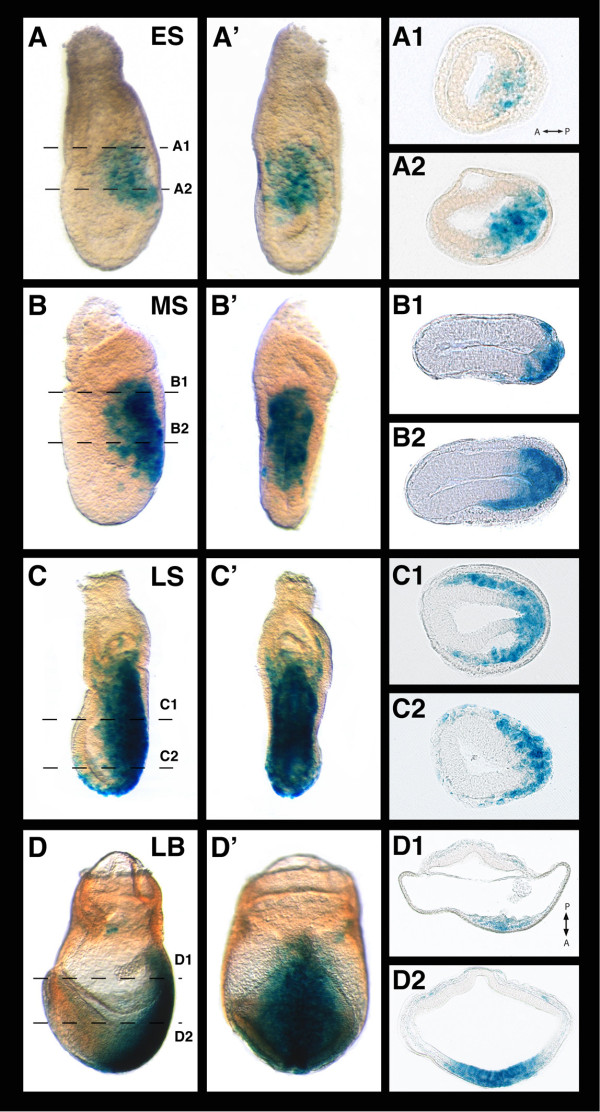
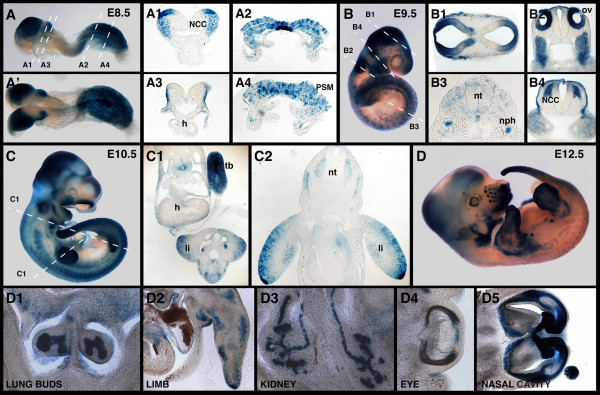
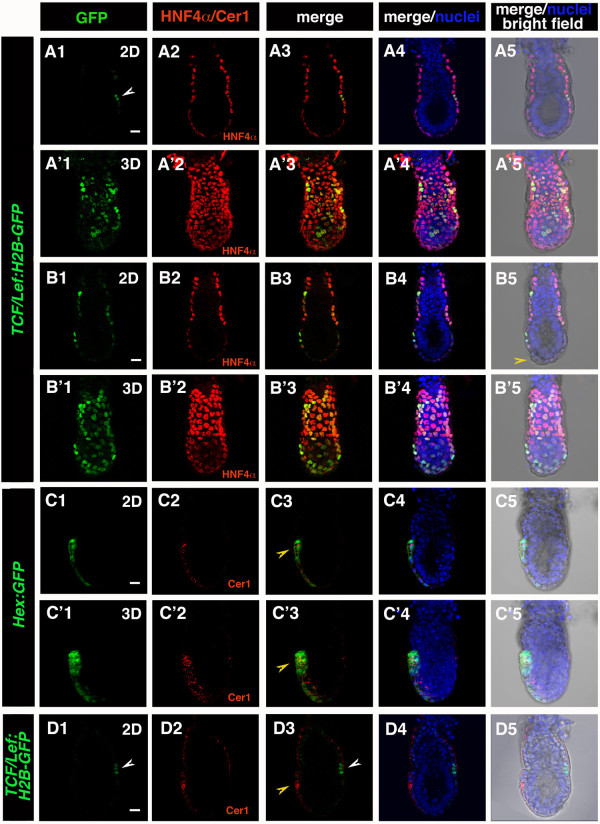
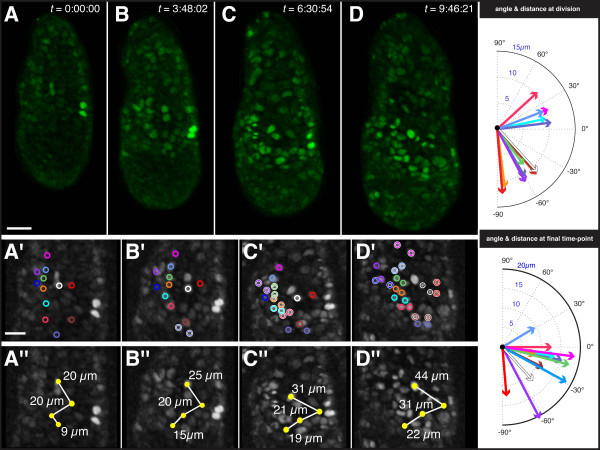
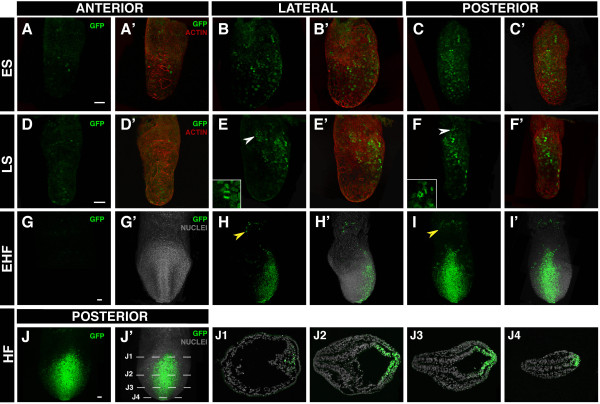
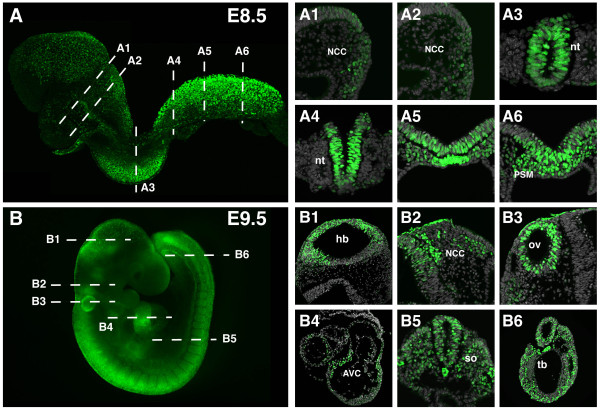
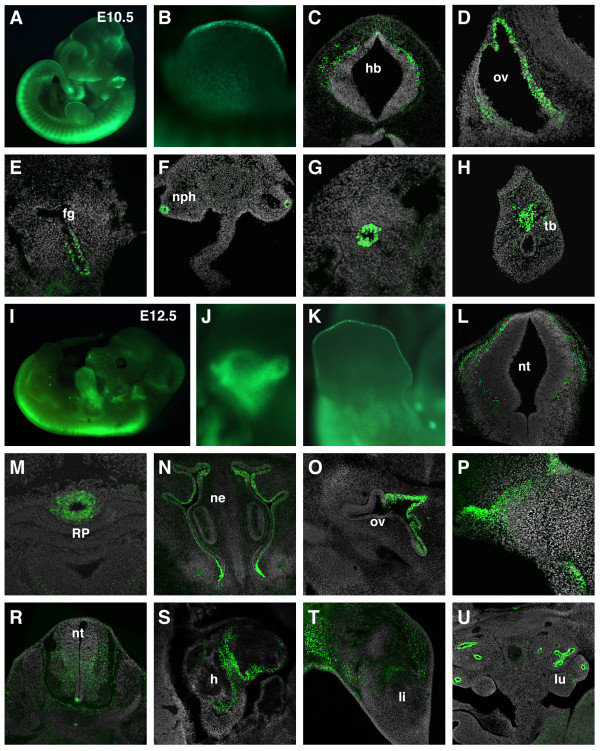
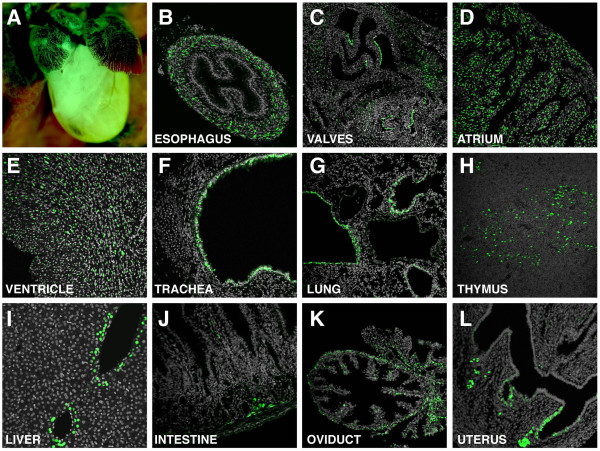
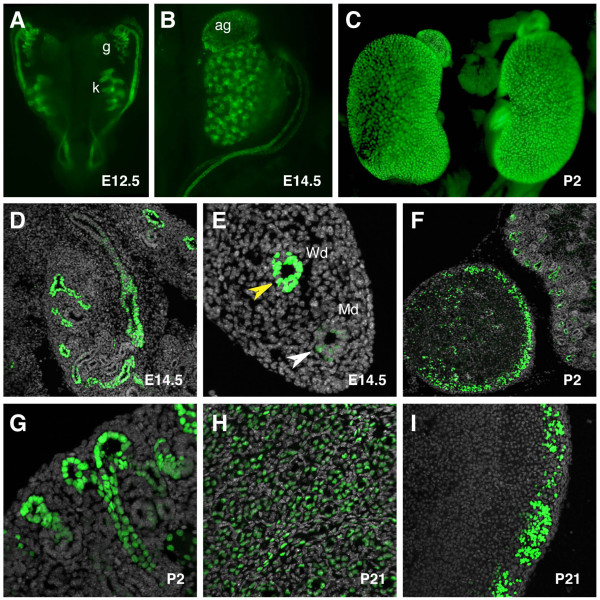
We have placed six copies of a TCF/Lef responsive element and an hsp68 minimal promoter in front of a fluorescent protein fusion comprising human histone H2B to GFP and used it to generate a strain of mice that would report Wnt/β-catenin signaling activity. Characterization of developmental and adult stages of the resulting TCF/Lef:H2B-GFP strain revealed discrete and specific expression of the transgene at previously characterized sites of Wnt/β-catenin signaling. In support of the increased sensitivity of the TCF/Lef:H2B-GFP reporter, additional sites of Wnt/β-catenin signaling not documented with other reporters but identified through genetic and embryological analysis were observed. Furthermore, the sub-cellular localization of the reporter minimized reporter perdurance, and allowed visualization and tracking of individual cells within a cohort, so facilitating the detailed analysis of cell behaviors and signaling activity during morphogenesis.
By combining the Wnt activity read-out efficiency of multimerized TCF/Lef DNA binding sites, together with the high-resolution imaging afforded by subcellularly-localized fluorescent fusion proteins such as H2B-GFP, we have created a mouse transgenic line that faithfully recapitulates Wnt signaling activity at single-cell resolution. The TCF/Lef:H2B-GFP reporter represents a unique tool for live imaging the in vivo processes triggered by Wnt/β-catenin signaling, and thus should help the formulation of a high-resolution understanding of the serial events that define the morphogenetic process regulated by this signaling pathway.
了解驱动形态发生的动态细胞行为及其潜在分子机制是生物学领域一直面临的挑战。实时成像提供了必要的方法来揭示塑造胚胎的协同且刻板的细胞和分子事件。基因编码报告基因是实时成像的重要工具。通过放置感兴趣的顺式调控元件来指导所需报告基因的表达,可以构建报告菌株。就经典Wnt信号通路(也称为Wnt/β-连环蛋白信号通路)而言,由于其下游转录反应已得到充分了解,因此可以设计出反映活跃Wnt信号位点的报告基因,这与许多荧光报告基因反映基因转录位点的情况不同。然而,尽管已经产生了几种转基因Wnt/β-连环蛋白报告菌株,但迄今为止,尚无一种能提供实时成像研究所需的单细胞分辨率。
我们在包含人组蛋白H2B与绿色荧光蛋白(GFP)融合的荧光蛋白融合体前放置了六个TCF/Lef反应元件拷贝和一个hsp68最小启动子,并利用它来培育一种能报告Wnt/β-连环蛋白信号活性的小鼠品系。对所得TCF/Lef:H2B-GFP品系的发育阶段和成年阶段进行表征,发现转基因在Wnt/β-连环蛋白信号的先前已表征位点有离散且特异性的表达。为支持TCF/Lef:H2B-GFP报告基因的更高灵敏度,观察到了其他报告基因未记录但通过遗传和胚胎学分析确定的Wnt/β-连环蛋白信号的其他位点。此外,报告基因的亚细胞定位使报告基因的持久性最小化,并允许对一群细胞中的单个细胞进行可视化和追踪,从而便于详细分析形态发生过程中的细胞行为和信号活性。
通过将多聚化TCF/Lef DNA结合位点的Wnt活性读出效率与亚细胞定位的荧光融合蛋白(如H2B-GFP)提供的高分辨率成像相结合,我们创建了一个能在单细胞分辨率下忠实地重现Wnt信号活性的小鼠转基因品系。TCF/Lef:H2B-GFP报告基因是实时成像由Wnt/β-连环蛋白信号触发的体内过程的独特工具,因此应有助于形成对定义由该信号通路调控的形态发生过程的一系列事件的高分辨率理解。