Alimentary Health Ltd., National University of Ireland, Cork, Ireland.
BMC Immunol. 2010 Dec 22;11:63. doi: 10.1186/1471-2172-11-63.
Bifidobacteria and lactobacilli are among the early and important colonizers of the gastrointestinal tract and are generally considered to be part of a normal, healthy microbiota. It is believed that specific strains within the microbiota can influence host immune-reactivity and may play a role in protection from infection and aberrant inflammatory activity. One such strain, Bifidobacterium animalis AHC7, has been previously shown to protect against Salmonella typhimurium infection in mice and helps resolve acute idiopathic diarrhea in dogs. The aim of this study was to investigate the potential molecular and cellular mechanisms underpinning the Bifidobacterium animalis AHC7 protective effect.
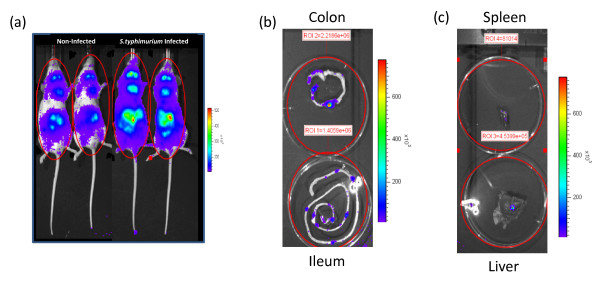
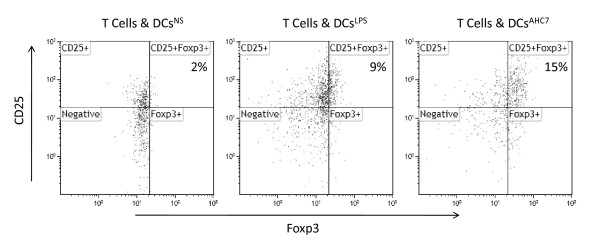
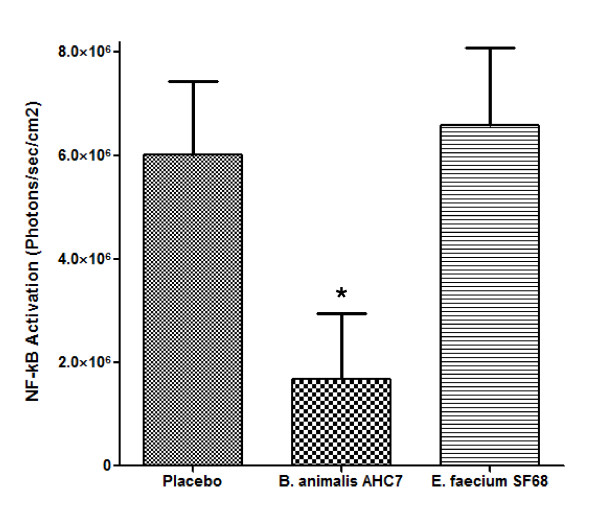
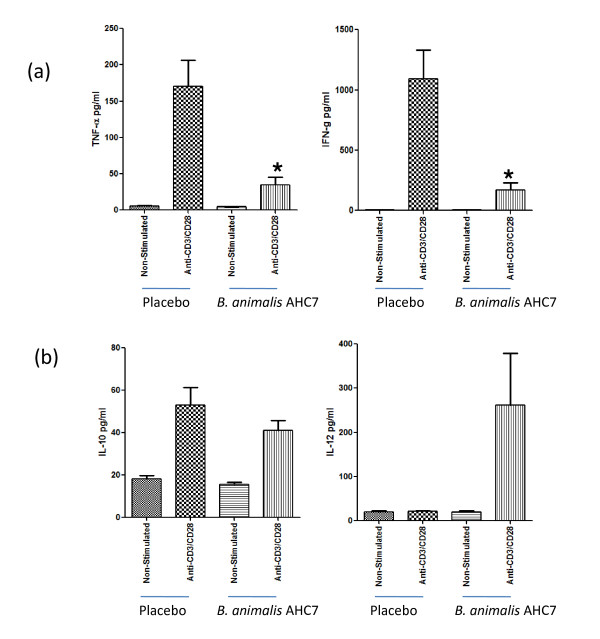
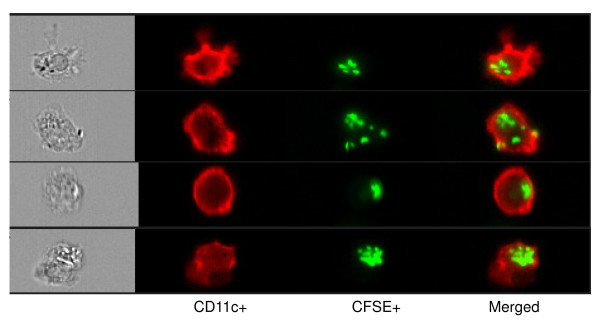
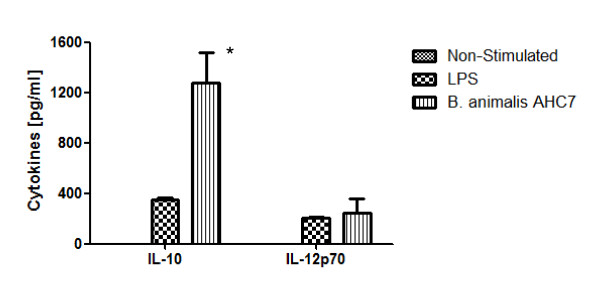
Following 4 hours of infection with Salmonella typhimurium, NF-κB activation was significantly elevated in vivo in placebo and Enterococcus faecium-fed animals while Bifidobacterium animalis AHC7 consumption significantly attenuated the NF-κB response. In vitro anti-CD3/CD28 stimulated Peyer's patch cells secreted significantly less TNF-α and IFN-γ following Bifidobacterium animalis AHC7 consumption. Stimulated cells released more IL-12p70 but this difference did not reach statistical significance. No alteration in mucosal IL-6, IL-10 or MCP-1 levels were observed. No statistically significant change in the cytokine profile of mesenteric lymph node cells was noted. In vitro, Bifidobacterium animalis AHC7 was bound by dendritic cells and induced secretion of both IL-10 and IL-12p70. In addition, co-culture of CD4+ T cells with Bifidobacterium animalis AHC7-stimulated dendritic cells resulted in a significant increase in CD25+Foxp3+ T cell numbers.
Bifidobacterium animalis AHC7 exerts an anti-inflammatory effect via the attenuation of pro-inflammatory transcription factor activation in response to an infectious insult associated with modulation of pro-inflammatory cytokine production within the mucosa. The cellular mechanism underpinning Bifidobacterium animalis AHC7 mediated attenuation of NF-κB activation may include recognition of the bacterium by dendritic cells and induction of CD25+Foxp3+ T cells.
双歧杆菌和乳杆菌是胃肠道早期和重要的定植菌,通常被认为是正常、健康微生物群的一部分。据信,微生物群中的特定菌株可以影响宿主的免疫反应,并可能在预防感染和异常炎症活动方面发挥作用。双歧杆菌 AHC7 是一种已被证明可在小鼠中保护免受鼠伤寒沙门氏菌感染并有助于缓解犬急性特发性腹泻的菌株。本研究旨在探讨双歧杆菌 AHC7 保护作用的潜在分子和细胞机制。
在感染鼠伤寒沙门氏菌 4 小时后,安慰剂和屎肠球菌喂养的动物体内 NF-κB 激活明显升高,而双歧杆菌 AHC7 消耗显著减弱 NF-κB 反应。体外抗 CD3/CD28 刺激派氏结细胞消耗双歧杆菌 AHC7 后分泌的 TNF-α 和 IFN-γ 明显减少。刺激细胞释放更多的 IL-12p70,但这一差异没有达到统计学意义。未观察到黏膜 IL-6、IL-10 或 MCP-1 水平的改变。肠系膜淋巴结细胞的细胞因子谱也没有明显的统计学变化。在体外,双歧杆菌 AHC7 被树突状细胞结合,并诱导 IL-10 和 IL-12p70 的分泌。此外,CD4+T 细胞与双歧杆菌 AHC7 刺激的树突状细胞共培养导致 CD25+Foxp3+T 细胞数量显著增加。
双歧杆菌 AHC7 通过减轻与感染相关的促炎转录因子激活来发挥抗炎作用,同时调节黏膜内促炎细胞因子的产生。双歧杆菌 AHC7 介导的 NF-κB 激活衰减的细胞机制可能包括树突状细胞对细菌的识别和诱导 CD25+Foxp3+T 细胞。