Unité de Recherche sur les Maladies Infectieuses Tropicales et Emergentes, CNRS-IRD UMR 6236, IFR 48, Université de la Méditerranée, Marseille, France.
PLoS One. 2010 Dec 14;5(12):e15315. doi: 10.1371/journal.pone.0015315.
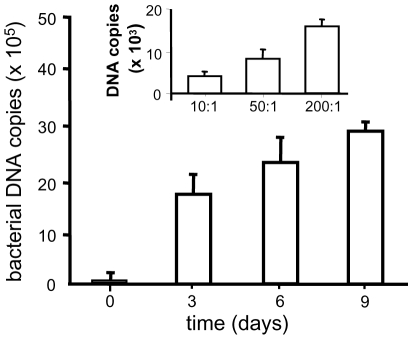
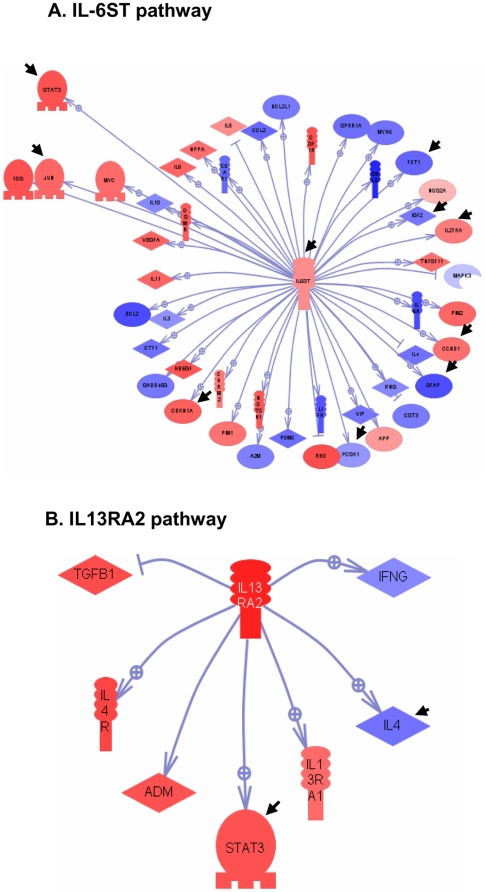
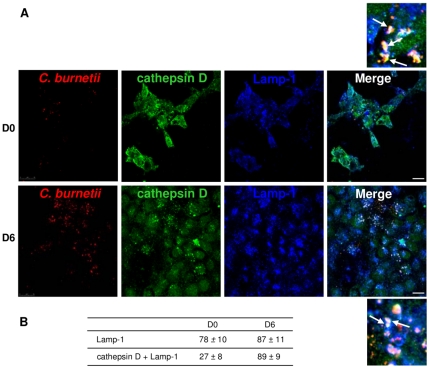
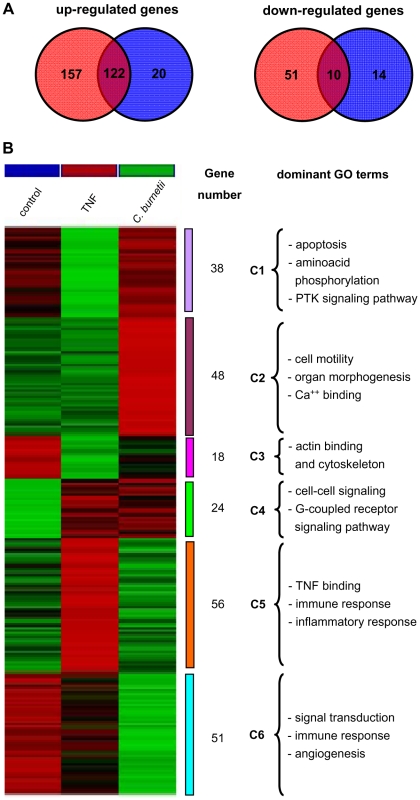
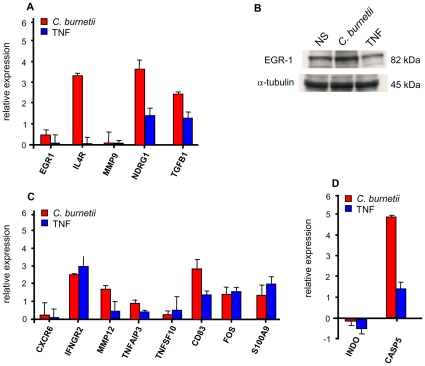
Q fever is a zoonosis caused by Coxiella burnetii, an obligate intracellular bacterium typically found in myeloid cells. The infection is a source of severe obstetrical complications in humans and cattle and can undergo chronic evolution in a minority of pregnant women. Because C. burnetii is found in the placentas of aborted fetuses, we investigated the possibility that it could infect trophoblasts. Here, we show that C. burnetii infected and replicated in BeWo trophoblasts within phagolysosomes. Using pangenomic microarrays, we found that C. burnetii induced a specific transcriptomic program. This program was associated with the modulation of inflammatory responses that were shared with inflammatory agonists, such as TNF, and more specific responses involving genes related to pregnancy development, including EGR-1 and NDGR1. In addition, C. burnetii stimulated gene networks organized around the IL-6 and IL-13 pathways, which both modulate STAT3. Taken together, these results revealed that trophoblasts represent a protective niche for C. burnetii. The activation program induced by C. burnetii in trophoblasts may allow bacterial replication but seems unable to interfere with the development of normal pregnancy. Such pathophysiologocal processes should require the activation of immune placental cells associated with trophoblasts.
Q 热是一种由柯克斯体引起的人畜共患病,柯克斯体是一种专性细胞内细菌,通常存在于髓样细胞中。这种感染是人类和牛的严重产科并发症的根源,在少数孕妇中可慢性演变。由于 C. burnetii 存在于流产胎儿的胎盘中,我们研究了它是否可能感染滋养层细胞。在这里,我们表明 C. burnetii 可以在 BeWo 滋养层细胞的吞噬溶酶体中感染和复制。使用泛基因组微阵列,我们发现 C. burnetii 诱导了特定的转录组程序。该程序与炎症反应的调节有关,与 TNF 等炎症激动剂共享,并且与与妊娠发育相关的基因(包括 EGR-1 和 NDGR1)有关的更特定的反应有关。此外,C. burnetii 刺激了围绕 IL-6 和 IL-13 途径组织的基因网络,这两种途径都调节 STAT3。综上所述,这些结果表明滋养层细胞代表了 C. burnetii 的保护性生态位。C. burnetii 在滋养层细胞中诱导的激活程序可能允许细菌复制,但似乎无法干扰正常妊娠的发展。这种病理生理过程可能需要与滋养层细胞相关的免疫胎盘细胞的激活。