MEPHI, IRD, APHM, Aix-Marseille University, 13005 Marseille, France.
Institue Hospitalo, Universitaire Mediterranée Infection, 13005 Marseille, France.
Int J Mol Sci. 2023 Jan 7;24(2):1209. doi: 10.3390/ijms24021209.
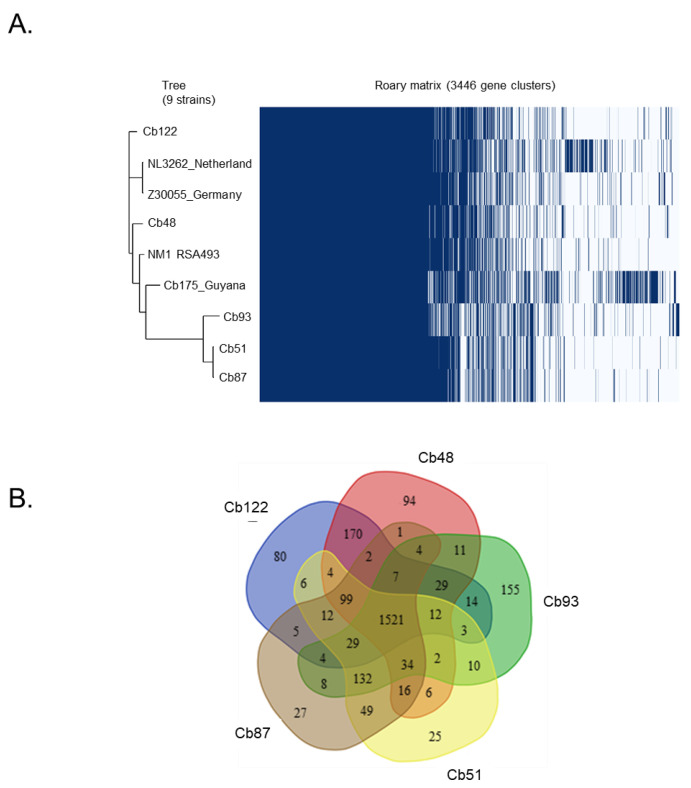
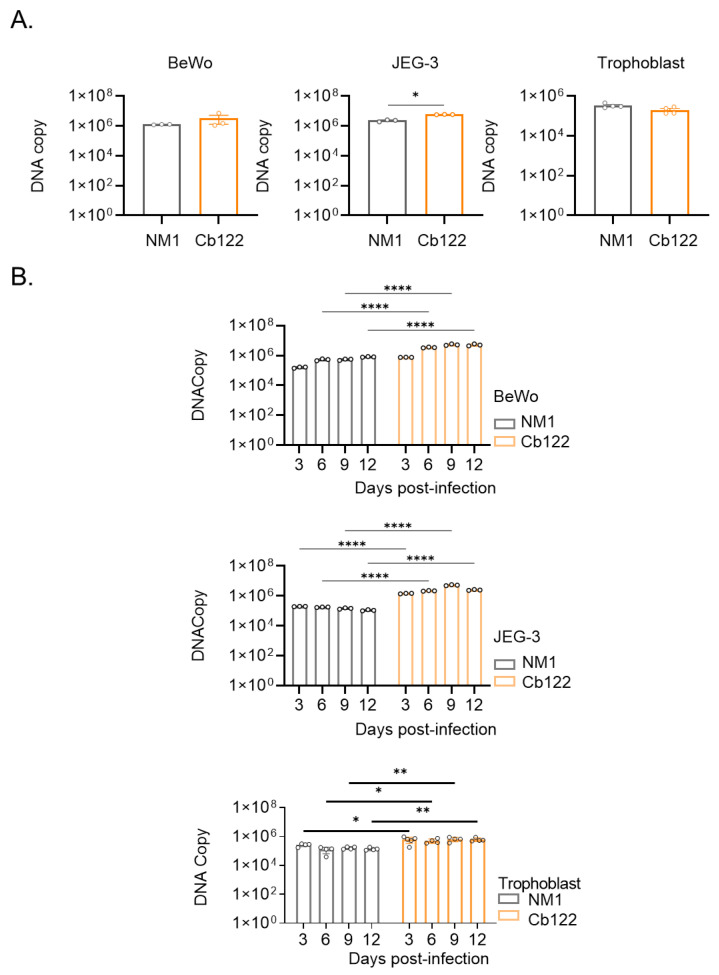
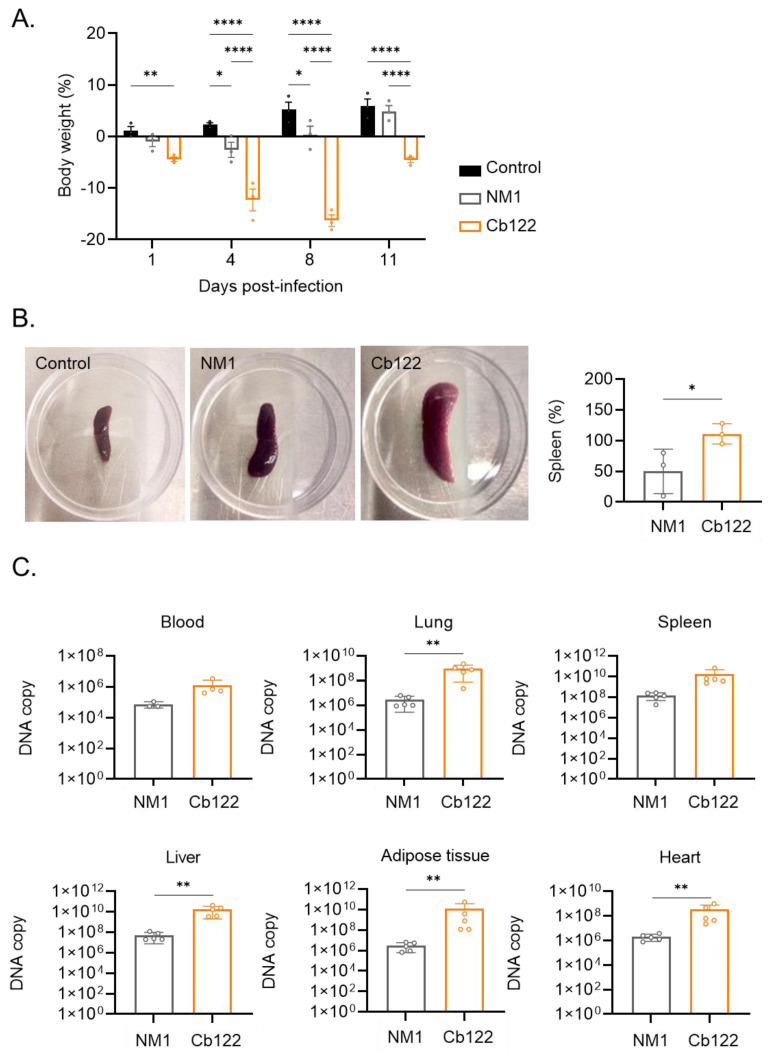
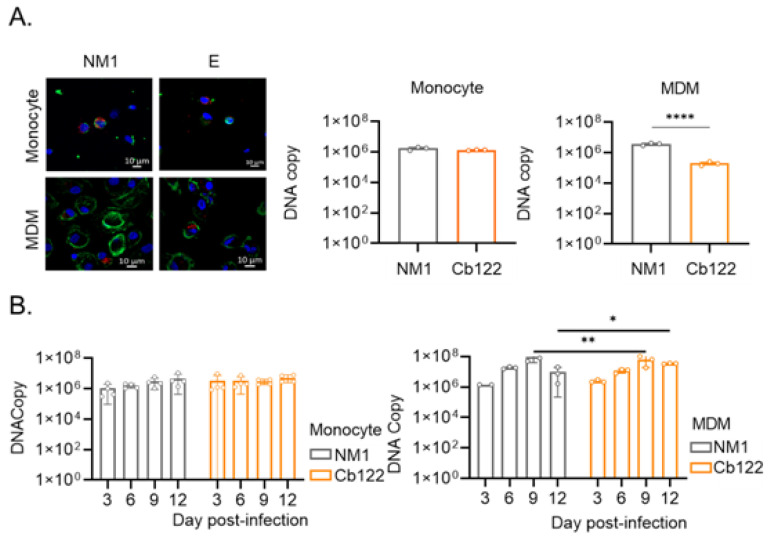
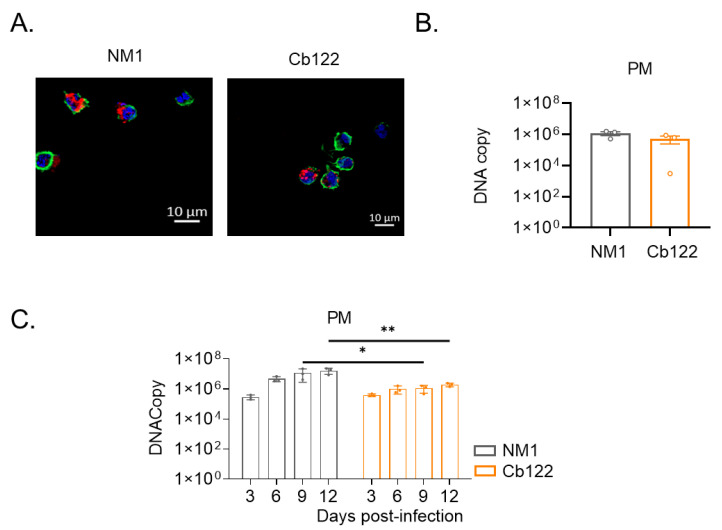
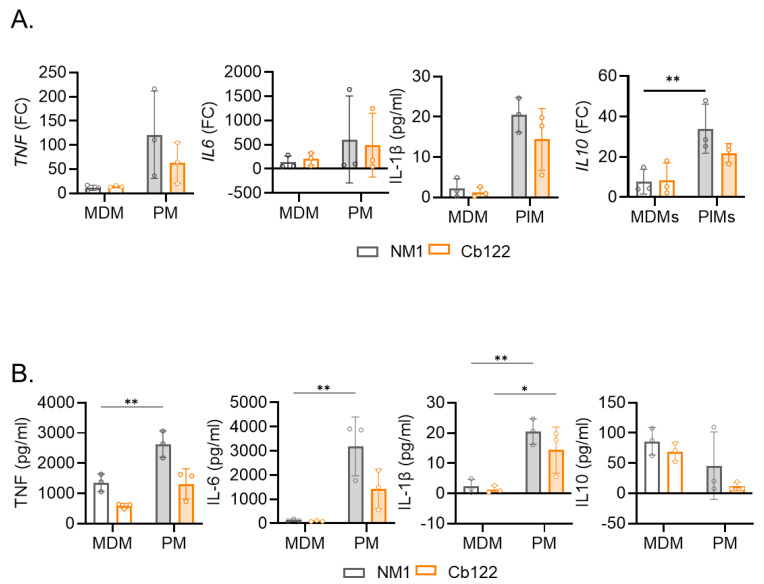
Infection by , the etiological agent of Q fever, poses the risk of causing severe obstetrical complications in pregnant women. is known for its placental tropism based on animal models of infection. The Nine Mile strain has been mostly used to study pathogenicity but the contribution of human isolates to pathogenicity is poorly understood. In this study, we compared five isolates from human placentas with strains including Nine Mile (NM) as reference. Comparative genomic analysis revealed that the Cb122 isolate was distinct from other placental isolates and the NM strain with a set of unique genes involved in energy generation and a type 1 secretion system. The infection of Balb/C mice with the Cb122 isolate showed higher virulence than that of NM or other placental isolates. We evaluated the pathogenicity of the Cb122 isolate by in vitro and ex vivo experiments. As is known to infect and survive within macrophages, we isolated monocytes and placental macrophages from healthy donors and infected them with the Cb122 isolate and the reference strain. We showed that bacteria from the Cb122 isolate were less internalized by monocyte-derived macrophages (MDM) than NM bacteria but the reference strain and the Cb122 isolate were similarly internalized by placental macrophages. The Cb122 isolate and the reference strain survived similarly in the two macrophage types. While the Cb122 isolate and the NM strain stimulated a poorly inflammatory program in MDM, they elicited an inflammatory program in placenta macrophages. We also reported that the Cb122 isolate and NM strain were internalized by trophoblastic cell lines and primary trophoblasts without specific replicative profiles. Placental explants were then infected with the Cb122 isolate and the NM strain. The bacteria from the Cb122 isolate were enriched in the chorionic villous foetal side. It is likely that the Cb122 isolate exhibited increased virulence in the multicellular environment provided by explants. Taken together, these results showed that the placental isolate of exhibits a specific infectious profile but its pathogenic role is not as high as the host immune response in pregnant women.
感染贝氏柯克斯体(Q 热的病原体)会使孕妇面临严重产科并发症的风险。动物感染模型表明贝氏柯克斯体具有胎盘嗜性。九英里(Nine Mile)株常用于研究贝氏柯克斯体的致病性,但对人类分离株对致病性的贡献了解甚少。在这项研究中,我们比较了来自人类胎盘的五个贝氏柯克斯体分离株与包括九英里株(NM)在内的五种贝氏柯克斯体菌株。比较基因组分析显示,Cb122 分离株与其他胎盘分离株和 NM 参考菌株不同,具有一组独特的与能量生成和 I 型分泌系统相关的基因。用 Cb122 分离株感染 Balb/C 小鼠显示出比 NM 或其他胎盘分离株更高的毒力。我们通过体外和离体实验评估了 Cb122 分离株的致病性。由于已知贝氏柯克斯体能够感染并在巨噬细胞内存活,我们从健康供体中分离单核细胞和胎盘巨噬细胞,并用 Cb122 分离株和参考菌株感染它们。我们表明,单核细胞衍生的巨噬细胞(MDM)中内化的 Cb122 分离株细菌比 NM 细菌少,但胎盘巨噬细胞中内化的参考株和 Cb122 分离株细菌相似。两种巨噬细胞类型中,Cb122 分离株和参考株的存活情况相似。虽然 Cb122 分离株和 NM 菌株在 MDM 中刺激了一个炎症反应不足的程序,但它们在胎盘巨噬细胞中引发了一个炎症反应程序。我们还报告说,Cb122 分离株和 NM 菌株被滋养层细胞系和原代滋养层细胞内化,而没有特定的复制谱。然后用 Cb122 分离株和 NM 株感染胎盘外植体。Cb122 分离株的细菌在绒毛膜胎儿侧的绒毛膜中富集。很可能 Cb122 分离株在外植体提供的多细胞环境中表现出更高的毒力。综上所述,这些结果表明胎盘分离株的贝氏柯克斯体具有特定的感染特征,但它的致病性不如孕妇的宿主免疫反应高。