Paul G. Allen School for Global Animal Health, Washington State University, Pullman, Washington, USA.
School of Molecular Biosciences, College of Veterinary Medicine, Washington State University, Pullman, Washington, USA.
mSphere. 2020 Jul 22;5(4):e00458-20. doi: 10.1128/mSphere.00458-20.
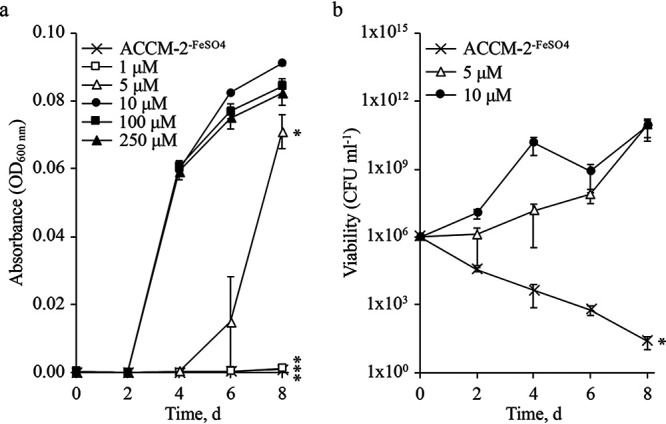
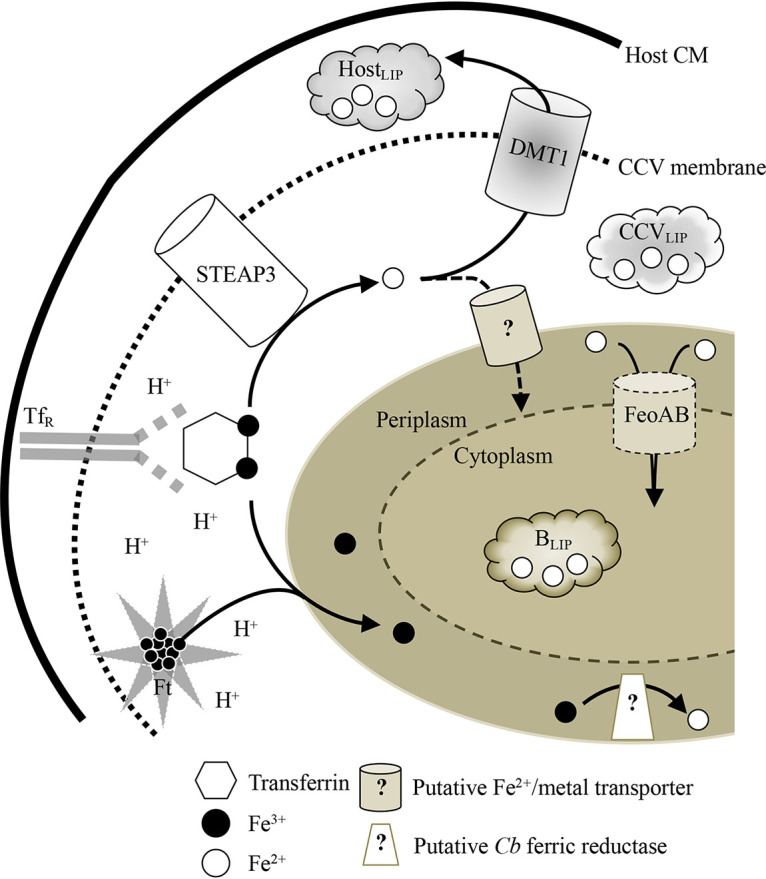
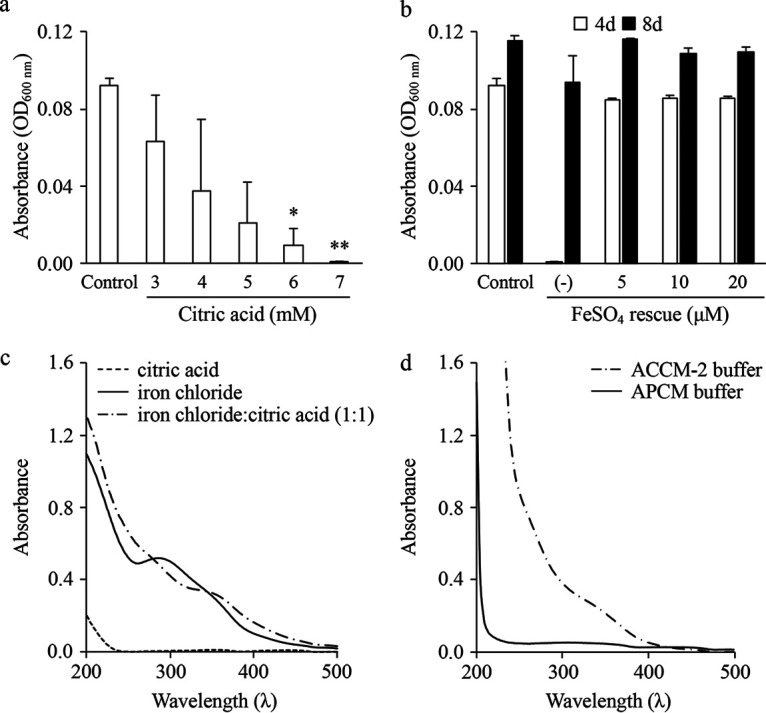
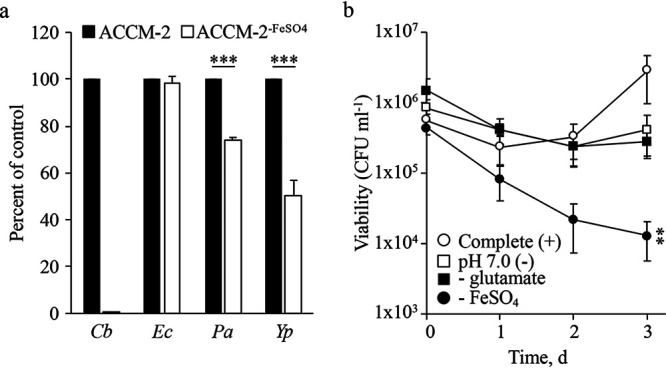
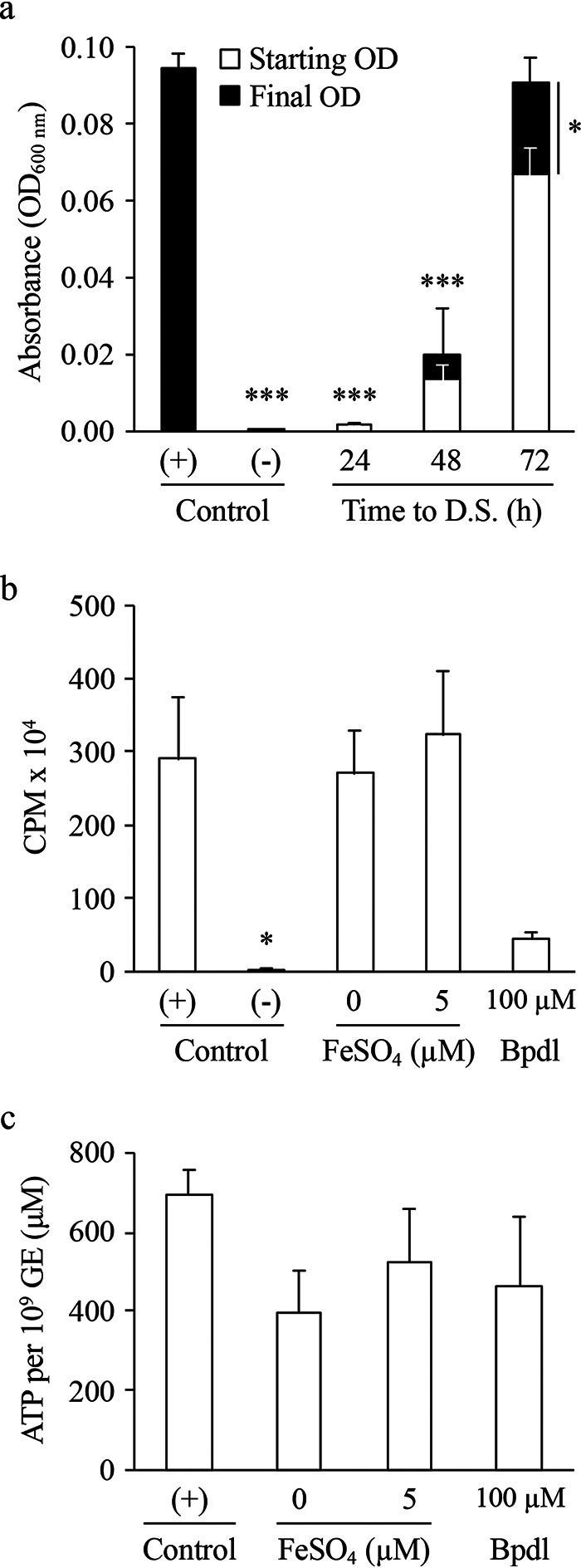
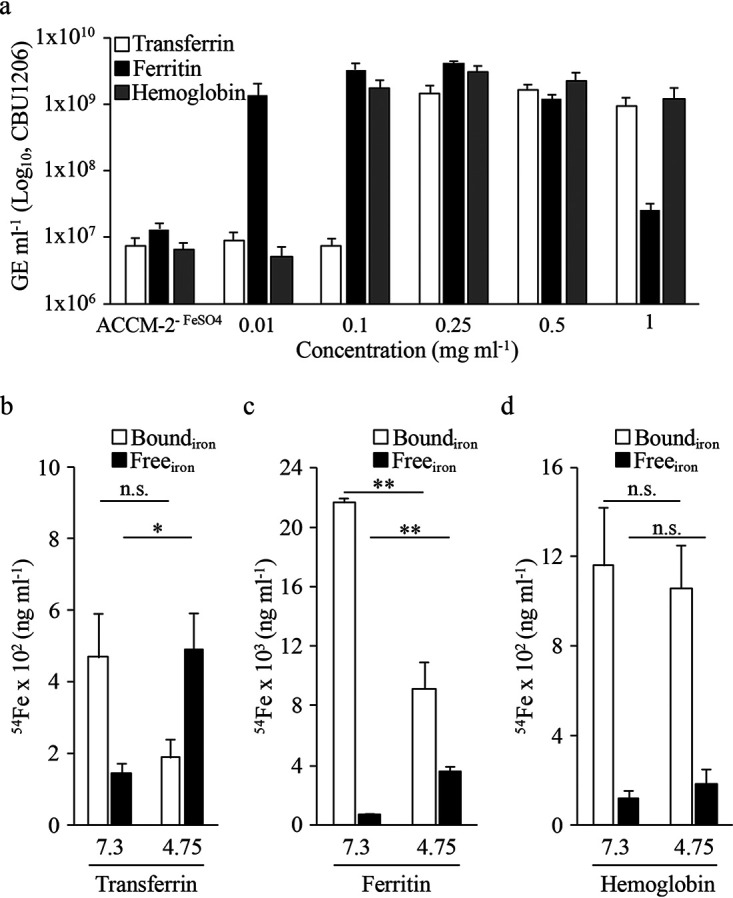
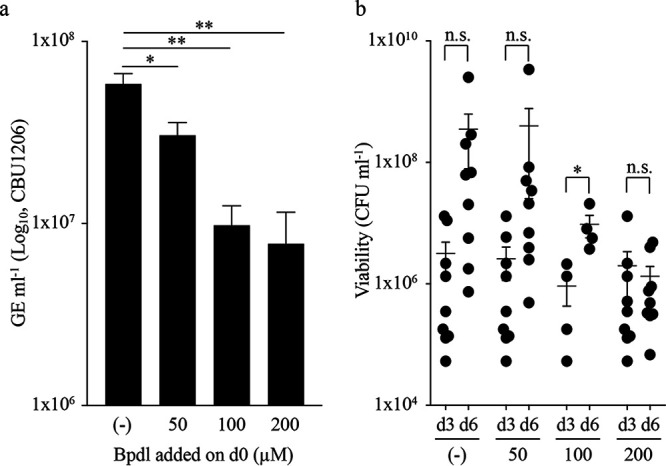
, the causative agent of Query (Q) fever in humans, is a highly infectious obligate intracellular bacterium. Following uptake into a host cell, replicates within a phagolysosome-derived compartment referred to as the -containing vacuole (CCV). During infection, exhibits tropism for tissues related to iron storage and recycling (e.g., the liver and splenic red pulp), suggesting that pathogen physiology is linked to host iron metabolism. Iron has been described to have a limited role in virulence regulation, despite evidence that infected host cells increase expression of transferrin receptors, thereby suggesting that active iron acquisition by the bacterium occurs upon infection. Through the use of host cell-free culture, was separated from the host cell in order to directly assess the role of different forms of iron in replication and viability, and therefore virulence. Results indicate that tolerates molecular iron over a broad concentration range (i.e., ∼0.001 to 1 mM) and undergoes gross loss of viability upon iron starvation. protein synthesis and energy metabolism, however, occur nearly uninhibited under iron concentrations not permissive to replication. Despite the apparent absence of genes related to acquisition of host-associated iron-containing proteins, replication is supported by hemoglobin, transferrin, and ferritin, likely due to release of iron from such proteins under acidic conditions. Moreover, chelation of host iron pools inhibited pathogen replication during infection of cultured cells. Host organisms restrict the availability of iron to invading pathogens in order to reduce pathogen replication. To counteract the host's response to infection, bacteria can rely on redundant mechanisms to obtain biologically diverse forms of iron during infection. appears specifically dependent on molecular iron for replication and viability and exhibits a response to iron akin to bacteria that colonize iron-rich environments. Physiological adaptation of to the unique acidic and degradative environment of the CCV is consistent with access of this pathogen to molecular iron.
人类 Q 热病原体是一种高度传染性的专性细胞内细菌。进入宿主细胞后,在称为含铁小泡(CCV)的吞噬体衍生隔间内复制。在感染过程中,该病原体表现出对与铁储存和回收相关的组织的嗜性(例如,肝脏和脾脏红髓),表明病原体生理学与宿主铁代谢有关。尽管有证据表明感染宿主细胞增加了转铁蛋白受体的表达,从而表明细菌在感染时主动获取活性铁,但铁在调节 毒力方面的作用有限。通过使用无宿主细胞培养,将 与宿主细胞分离,以便直接评估不同形式的铁在 复制和活力,从而在毒力中的作用。结果表明,在广泛的浓度范围内(即 0.001 至 1mM),耐受分子铁,并且在缺铁饥饿时会严重丧失活力。然而,在不允许复制的铁浓度下, 蛋白质合成和能量代谢几乎不受抑制。尽管明显缺乏与获取宿主相关含铁蛋白相关的基因,但血红蛋白、转铁蛋白和铁蛋白支持 复制,可能是由于这些蛋白在酸性条件下释放铁。此外,螯合宿主铁池会抑制感染培养细胞期间病原体的复制。宿主生物为了减少病原体复制,会限制入侵病原体获得铁的能力。为了对抗宿主对感染的反应,细菌可以依靠冗余机制在感染过程中获得生物多样性的铁形式。似乎特别依赖分子铁进行复制和存活,并表现出对铁的反应类似于定殖于富含铁环境的细菌。对 CCV 独特的酸性和降解环境的生理适应与这种病原体对分子铁的获取一致。