Departament de Bioquímica i Biologia Molecular, Universitat de Barcelona, Barcelona, Spain.
Cancer Manag Res. 2010 Jan 22;2:27-38. doi: 10.2147/cmar.s7101.
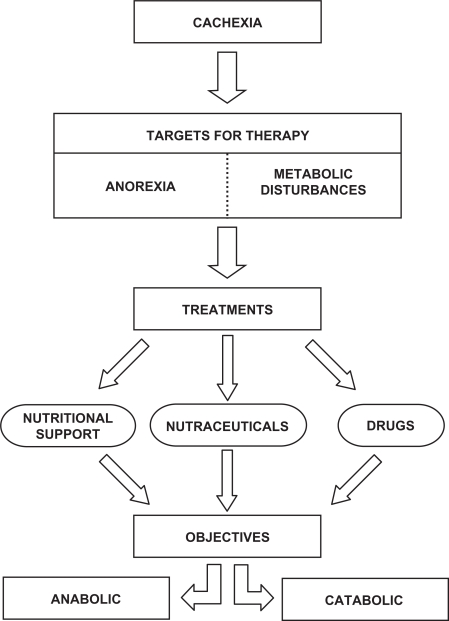
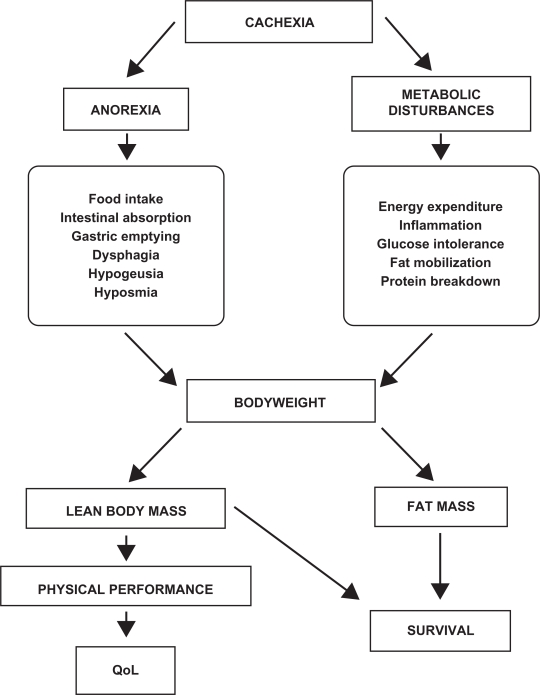
According to a recent consensus, cachexia is a complex metabolic syndrome associated with underlying illness and characterized by loss of muscle with or without loss of fat mass. The prominent clinical feature of cachexia is weight loss. Cachexia occurs in the majority of cancer patients before death and it is responsible for the deaths of 22% of cancer patients. Although bodyweight is the most important endpoint of any cachexia treatment, body composition, physical performance and quality of life should be monitored. From the results presented here, one can speculate that a single therapy may not be completely successful in the treatment of cachexia. From this point of view, treatments involving different combinations are more likely to be successful. The objectives of any therapeutic combination are two-fold: an anticatabolic aim directed towards both fat and muscle catabolism and an anabolic objective leading to the synthesis of macromolecules such as contractile proteins.
根据最近的共识,恶病质是一种与潜在疾病相关的复杂代谢综合征,其特征是肌肉减少,伴或不伴脂肪量减少。恶病质的突出临床特征是体重减轻。恶病质在大多数癌症患者死亡前发生,占癌症患者死亡人数的 22%。尽管体重是任何恶病质治疗的最重要终点,但应监测身体成分、身体机能和生活质量。从这里呈现的结果来看,人们可以推测单一疗法可能不完全成功地治疗恶病质。从这一观点出发,涉及不同组合的治疗更有可能成功。任何联合治疗的目标有两个:针对脂肪和肌肉分解的抗分解代谢目标,以及导致收缩蛋白等大分子合成的合成代谢目标。