Division of Experimental Medicine, University of California, San Francisco, CA 94110, USA.
Clin Infect Dis. 2011 Feb 1;52(3):409-17. doi: 10.1093/cid/ciq112. Epub 2010 Dec 28.
the immune reconstitution inflammatory syndromes (IRIS) are a spectrum of inflammatory conditions associated with opportunistic infections and occurring in approximately16% of human immunodeficiency type 1 (HIV-1)-infected patients given antiretroviral therapy. It has been proposed that these conditions are linked by a dysregulated immune system that is prone to exaggerated responses. However, immunologic studies have been limited by the availability of longitudinal samples from patients with IRIS and appropriate matched control subjects. Cytomegalovirus (CMV) immune recovery uveitis (IRU) is an IRIS occurring in up to 38% of patients with CMV retinitis. Although the pathologic immune responses occur in the eye, immune dysregulation that allows for development of pathologic responses is presumably caused by faulty systemic immune cell reconstitution.
we examined CMV-specific T cell responses, regulatory T (T(reg)) cell function and polyclonal T cell responses, including IL-17 production, in 25 patients with CMV IRU and 49 immunorestored control subjects with CMV retinitis who did not develop IRU.
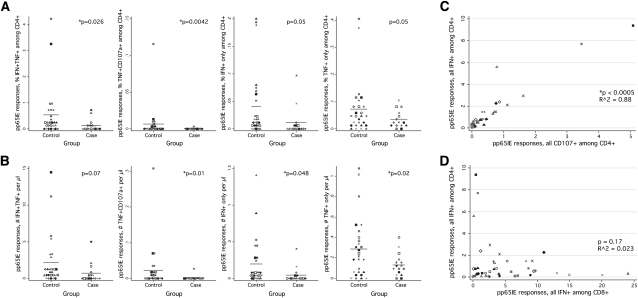
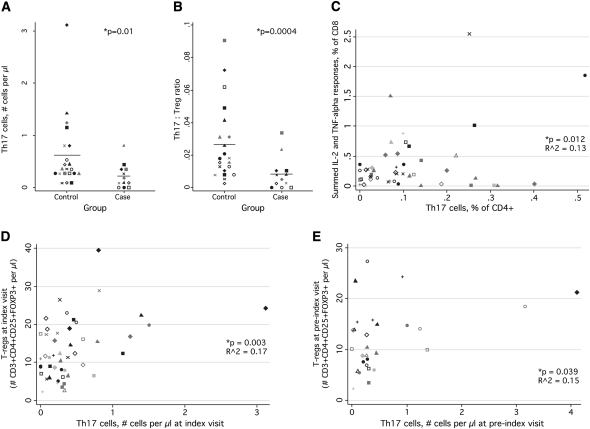
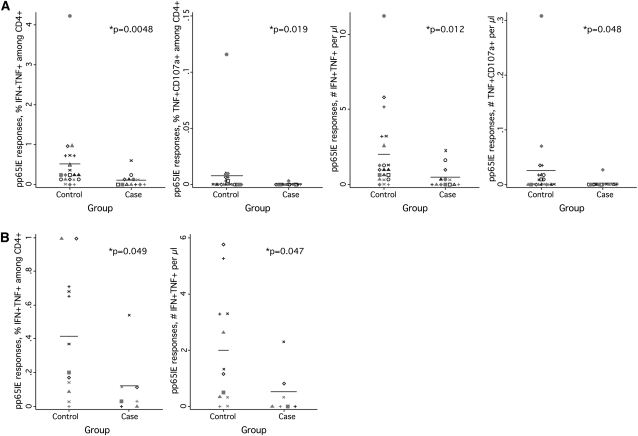
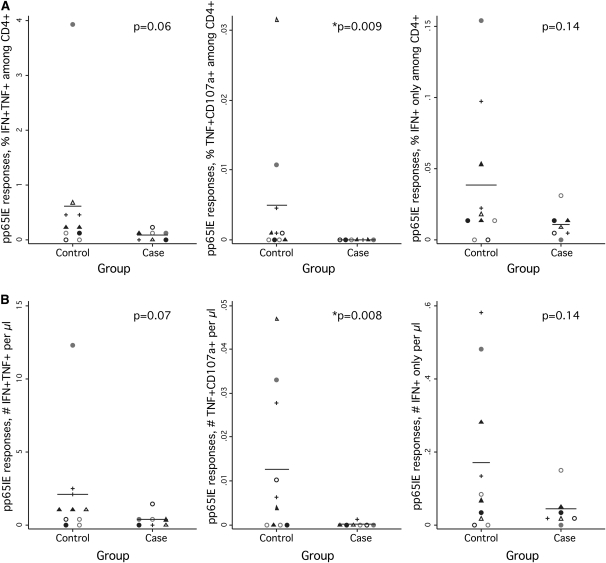
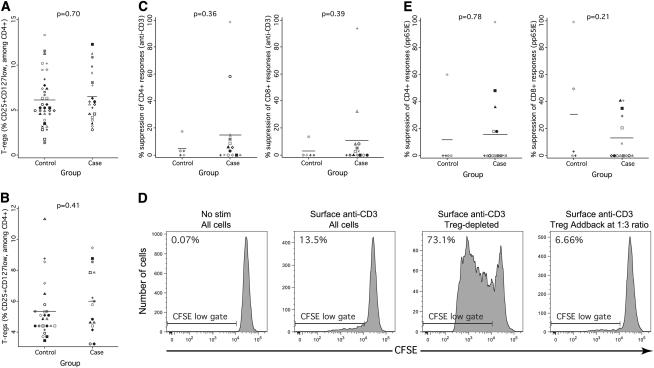
patients with CMV IRU had poor CMV-specific CD4(+) T cell responses, as compared with control subjects, whereas CD8(+) T cell responses were comparable. Patients with CMV IRU were characterized by smaller numbers of circulating Th17 cells. Deficiency in anti-CMV responses was not associated with differences in T(reg) cell function.
the T(reg) cell compartment is intact in patients with CMV IRU, and these patients do not develop exaggerated systemic CMV-specific or polyclonal immune responses. Cases are instead characterized by more profound depletion of Th17 cells and poor antiviral immune responses. CMV IRU may be most likely to develop in persons experiencing the greatest degree of immune dysfunction before initiating highly active antiretroviral therapy.
免疫重建炎症综合征(IRIS)是一组与机会性感染相关的炎症性疾病,约 16%的人类免疫缺陷病毒 1 型(HIV-1)感染患者接受抗逆转录病毒治疗后会发生。据推测,这些情况与免疫系统失调有关,免疫系统容易发生过度反应。然而,免疫研究受到 IRIS 患者和适当匹配对照的纵向样本可用性的限制。巨细胞病毒(CMV)免疫恢复性葡萄膜炎(IRU)是一种发生于高达 38%CMV 视网膜炎患者的 IRIS。尽管眼部发生病理性免疫反应,但允许发生病理性反应的免疫失调可能是由系统免疫细胞重建失败引起的。
我们检测了 25 例 CMV IRU 患者和 49 例未发生 IRU 的 CMV 视网膜炎免疫恢复对照患者的 CMV 特异性 T 细胞反应、调节性 T(Treg)细胞功能和多克隆 T 细胞反应,包括 IL-17 产生。
与对照患者相比,CMV IRU 患者的 CMV 特异性 CD4+T 细胞反应较差,而 CD8+T 细胞反应相当。CMV IRU 患者的循环 Th17 细胞数量较少。抗 CMV 反应的缺陷与 Treg 细胞功能的差异无关。
CMV IRU 患者的 Treg 细胞区室完整,这些患者不会发生过度的全身性 CMV 特异性或多克隆免疫反应。相反,这些患者的 Th17 细胞耗竭更为严重,抗病毒免疫反应较差。CMV IRU 最有可能发生在开始高效抗逆转录病毒治疗前免疫功能障碍最严重的人群中。