Division of Endocrinology, Department of Medicine, Mayo Clinic, Rochester, MN, USA.
Transplantation. 2011 Mar 27;91(6):615-23. doi: 10.1097/TP.0b013e3182094a33.
To determine biological mechanisms involved in posttransplantation diabetes mellitus caused by the immunosuppressant tacrolimus (FK506).
INS-1 cells and isolated rat islets were incubated with vehicle or FK506 and harvested at 24-hr intervals. Cells were assessed for viability, apoptosis, proliferation, cell insulin secretion, and content. Gene expression studies by microarray analysis, quantitative polymerase chain reaction, and motifADE analysis of the microarray data identified potential FK506-mediated pathways and regulatory motifs. Mitochondrial functions, including cell respiration, mitochondrial content, and bioenergetics were assessed.
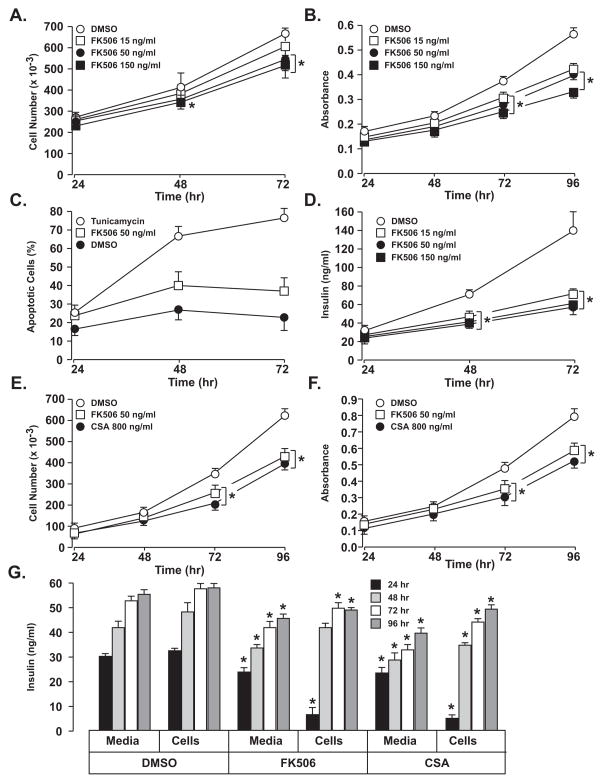
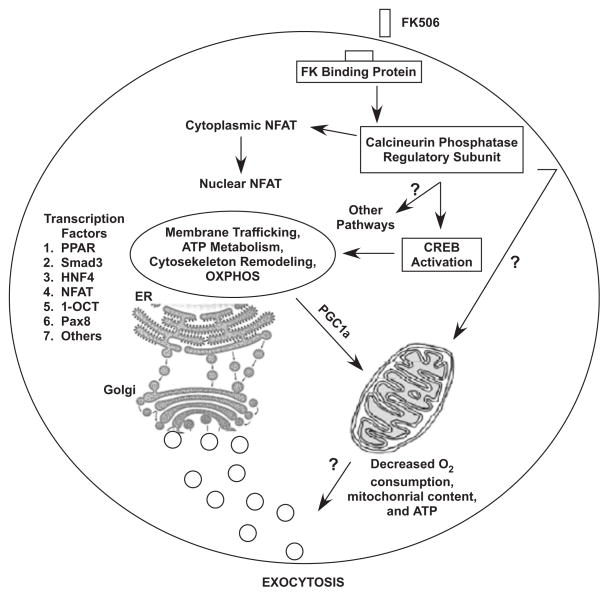
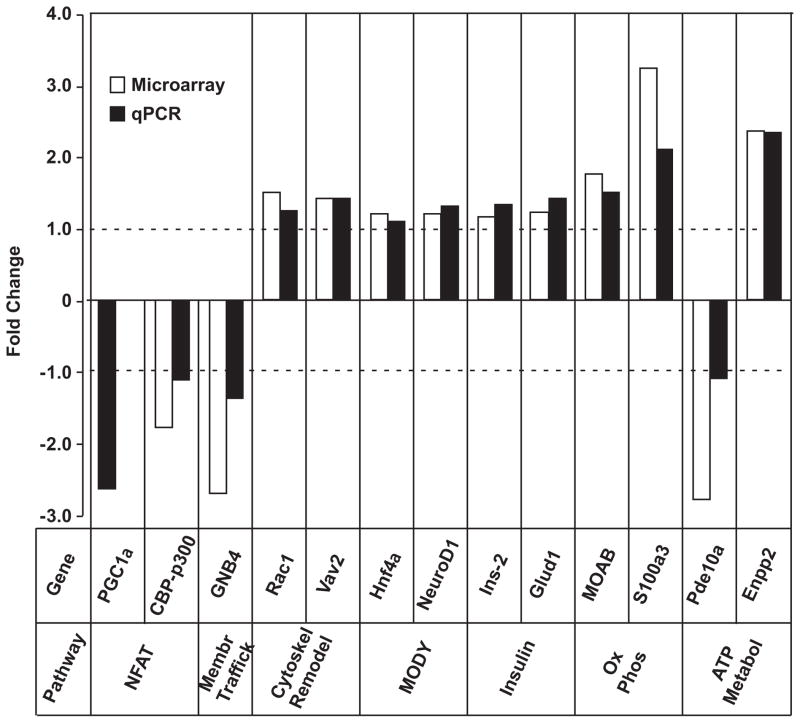
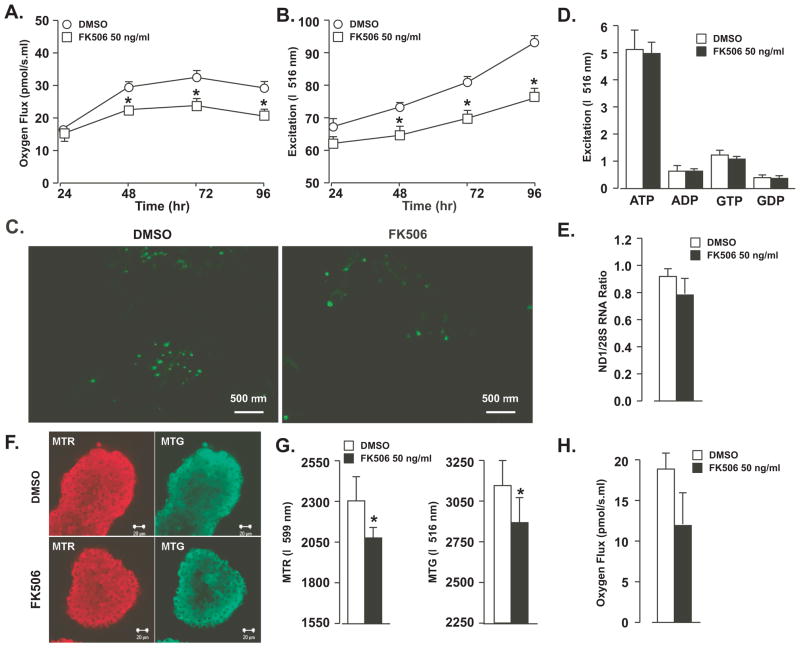
Cell replication, viability, insulin secretion, oxygen consumption, and mitochondrial content were decreased (P<0.05) 1.2-, 1.27-, 1.77-, 1.32-, and 1.43-fold, respectively, after 48-hr FK506 treatment. Differences increased with time. FK506 (50 ng/mL) and cyclosporine A (800 ng/mL) had comparable effects. FK506 significantly decreased mitochondrial content and mitochondrial bioenergetics and showed a trend toward decreased oxygen consumption in isolated islets. Cell apoptosis and proliferation, mitochondrial DNA copy number, and ATP:ADP ratios were not significantly affected. Pathway analysis of microarray data showed FK506 modification of pathways involving ATP metabolism, membrane trafficking, and cytoskeleton remodeling. PGC1-α mRNA was down-regulated by FK506. MotifADE identified nuclear factor of activated T-cells, an important mediator of β-cell survival and function, as a potential factor mediating both up- and down-regulation of gene expression.
At pharmacologically relevant concentrations, FK506 decreases insulin secretion and reduces mitochondrial density and function without changing apoptosis rates, suggesting that posttransplantation diabetes induced by FK506 may be mediated by its effects on mitochondrial function.
确定免疫抑制剂他克莫司(FK506)引起移植后糖尿病的相关生物学机制。
用载体或 FK506 孵育 INS-1 细胞和分离的大鼠胰岛,在 24 小时的时间间隔内进行收获。评估细胞活力、凋亡、增殖、细胞胰岛素分泌和含量。通过微阵列分析、定量聚合酶链反应和微阵列数据的 motifADE 分析进行基因表达研究,确定潜在的 FK506 介导的途径和调节基序。评估线粒体功能,包括细胞呼吸、线粒体含量和生物能量。
经过 48 小时 FK506 处理后,细胞复制、活力、胰岛素分泌、耗氧量和线粒体含量分别下降(P<0.05)1.2、1.27、1.77、1.32 和 1.43 倍。差异随时间增加而增加。FK506(50ng/mL)和环孢菌素 A(800ng/mL)具有相似的作用。FK506 显著降低了线粒体含量和线粒体生物能量,并且在分离的胰岛中显示出耗氧量降低的趋势。细胞凋亡和增殖、线粒体 DNA 拷贝数和 ATP:ADP 比值没有明显变化。微阵列数据的途径分析表明,FK506 改变了涉及 ATP 代谢、膜转运和细胞骨架重塑的途径。PGC1-α mRNA 被 FK506 下调。 motifADE 确定激活 T 细胞的核因子(NFAT),作为一种重要的β细胞存活和功能的调节剂,作为一种潜在的调节基因表达上调和下调的因素。
在药理学相关浓度下,FK506 降低胰岛素分泌并减少线粒体密度和功能,而不改变凋亡率,这表明 FK506 引起的移植后糖尿病可能是由其对线粒体功能的影响介导的。