Department of Medicine, Albert Einstein College of Medicine, New York, NY, USA.
Department of Advanced Biomedical Sciences, "Federico II" University of Naples, Naples, Italy.
Cell Commun Signal. 2017 Nov 13;15(1):47. doi: 10.1186/s12964-017-0203-0.
One of the most common side effects of the immunosuppressive drug tacrolimus (FK506) is the increased risk of new-onset diabetes mellitus. However, the molecular mechanisms underlying this association have not been fully clarified.
We studied the effects of the therapeutic dose of tacrolimus on mitochondrial fitness in beta-cells.
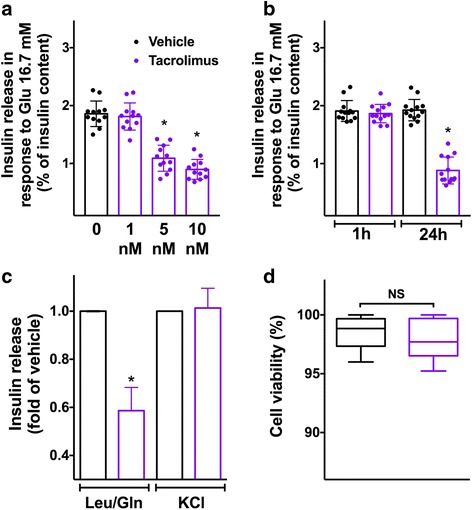
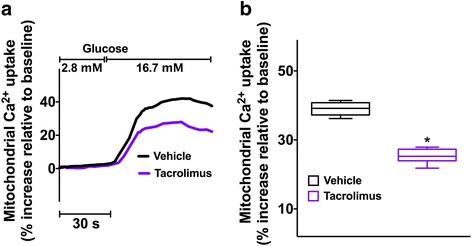
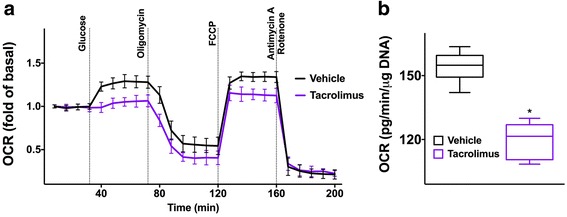
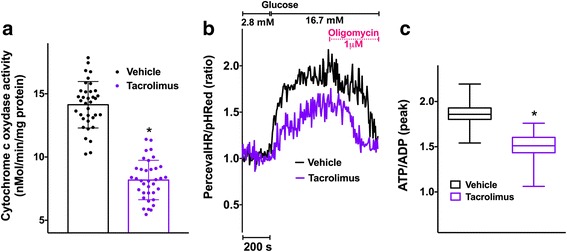
We demonstrate that tacrolimus impairs glucose-stimulated insulin secretion (GSIS) in beta-cells through a previously unidentified mechanism. Indeed, tacrolimus causes a decrease in mitochondrial Ca uptake, accompanied by altered mitochondrial respiration and reduced ATP production, eventually leading to impaired GSIS.
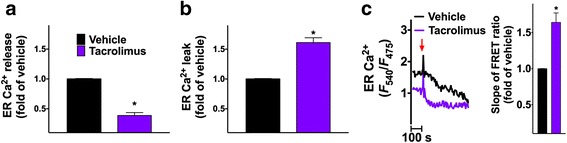
Our observations individuate a new fundamental mechanism responsible for the augmented incidence of diabetes following tacrolimus treatment. Indeed, this drug alters Ca fluxes in mitochondria, thereby compromising metabolism-secretion coupling in beta-cells.
免疫抑制剂他克莫司(FK506)最常见的副作用之一是新发糖尿病的风险增加。然而,这种关联的分子机制尚未完全阐明。
我们研究了治疗剂量的他克莫司对β细胞中线粒体适应性的影响。
我们证明他克莫司通过一种以前未被识别的机制损害β细胞中的葡萄糖刺激胰岛素分泌(GSIS)。事实上,他克莫司导致线粒体摄取 Ca 减少,伴随着线粒体呼吸改变和 ATP 产生减少,最终导致 GSIS 受损。
我们的观察结果确定了一个新的基本机制,负责他克莫司治疗后糖尿病发病率的增加。事实上,这种药物改变了线粒体中的 Ca 流,从而损害了β细胞中的代谢-分泌偶联。