Bitencourt Claudia S, Pereira Priscilla At, Ramos Simone G, Sampaio Suely V, Arantes Eliane C, Aronoff David M, Faccioli Lúcia H
Departamento de Análises Clínicas, Toxicológicas e Bromatológicas, Faculdade de Ciências Farmacêuticas de Ribeirão Preto, Universidade de São Paulo, Ribeirão Preto, SP, 14040-903, Brazil.
Fibrogenesis Tissue Repair. 2011 Jan 13;4(1):3. doi: 10.1186/1755-1536-4-3.
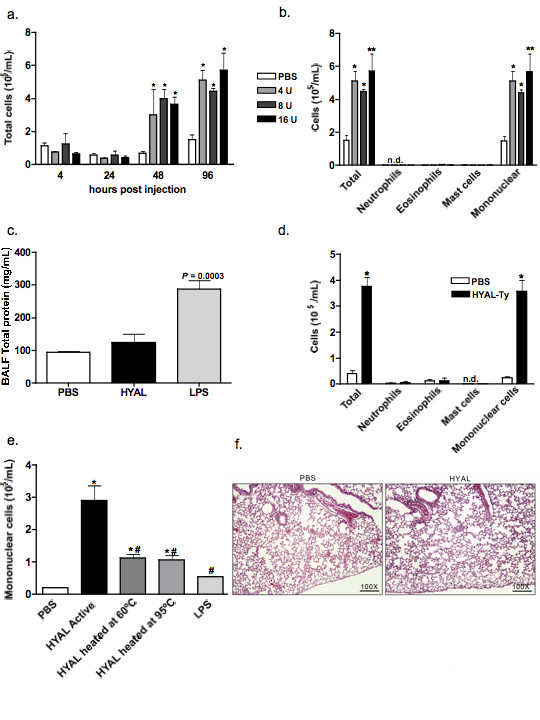
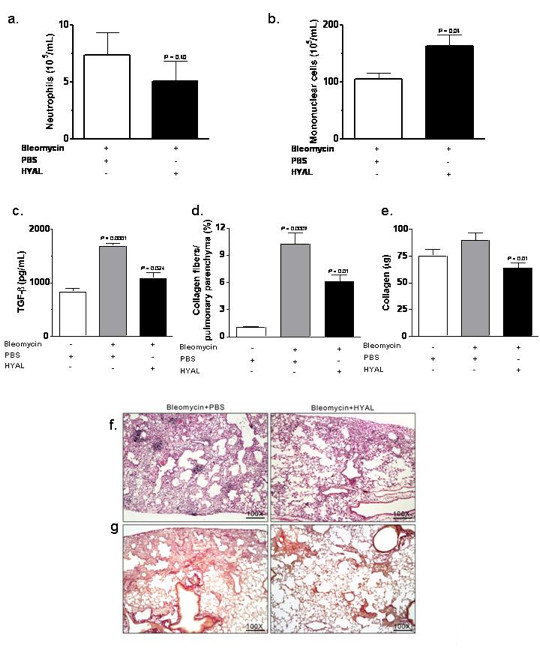
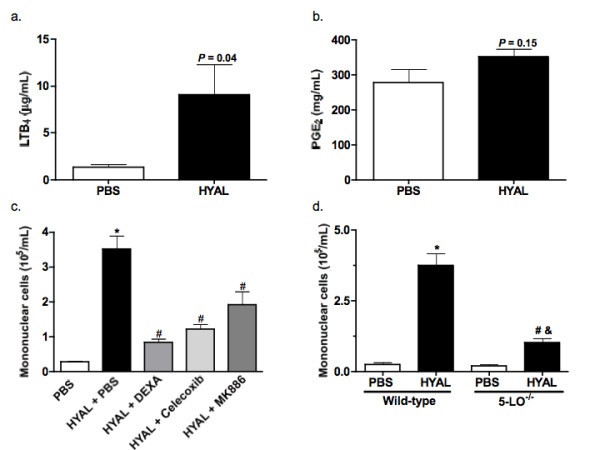
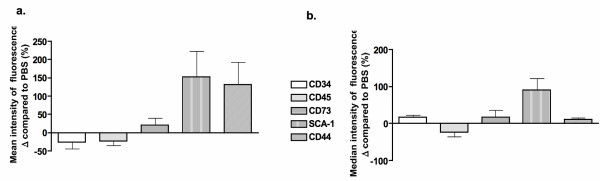
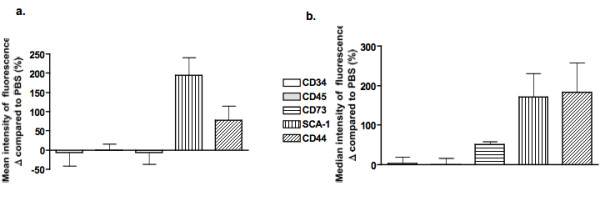
Hyaluronidases (HYALs) comprise a group of enzymes that degrade hyaluronic acid (HA). In this report, we reveal that a single intranasal inoculation of HYAL induces an increase in mononuclear cells within the bronchoalveolar space demonstrating a mesenchymal-like phenotype, expressing stem cell antigen-1 (SCA-1), CD44 and CD73 but not CD34, CD45, CD3, CD4, CD8 or CD19. This influx of mesenchymal stem cell (MSC)-like cells was dependent on leukotriene production within the lung parenchyma. These findings prompted experiments demonstrating that HYAL treatment potently blocked bleomycin-induced lung injury and fibrosis while decreasing transforming growth factor (TGF)-β production and collagen deposition. These data suggest that HYAL is a novel and promising tool to use autologous MSC-like cells in the treatment of pulmonary fibrosis.
透明质酸酶(HYALs)是一组能够降解透明质酸(HA)的酶。在本报告中,我们发现单次鼻内接种HYAL可导致支气管肺泡腔内单核细胞增多,这些单核细胞呈现间充质样表型,表达干细胞抗原-1(SCA-1)、CD44和CD73,但不表达CD34、CD45、CD3、CD4、CD8或CD19。这种间充质干细胞(MSC)样细胞的流入依赖于肺实质内白三烯的产生。这些发现促使我们进行实验,结果表明HYAL治疗可有效阻断博来霉素诱导的肺损伤和纤维化,同时减少转化生长因子(TGF)-β的产生和胶原蛋白沉积。这些数据表明,HYAL是一种新型且有前景的工具,可用于利用自体MSC样细胞治疗肺纤维化。