Department of Ophthalmology and Vision Science, Eye and ENT Hospital, Shanghai Medical College, Fudan University, Shanghai, China.
The Eye Hospital, School of Ophthalmology and Optometry, Wenzhou Medical University, Wenzhou, Zhejiang, China.
Int J Med Sci. 2021 Feb 4;18(7):1554-1565. doi: 10.7150/ijms.52846. eCollection 2021.
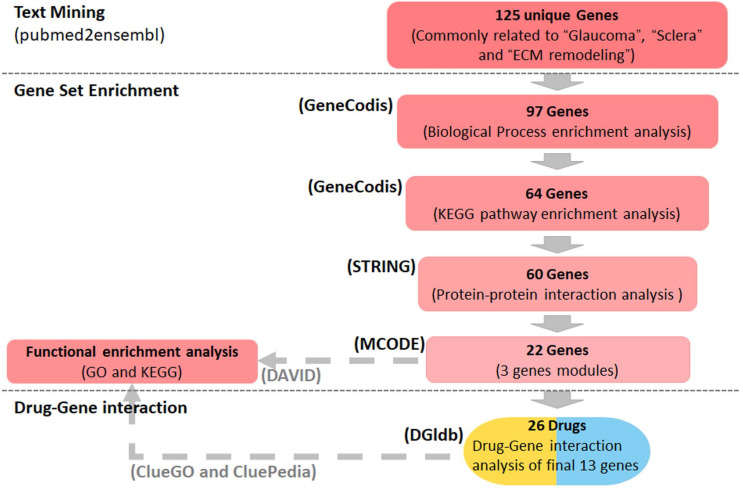
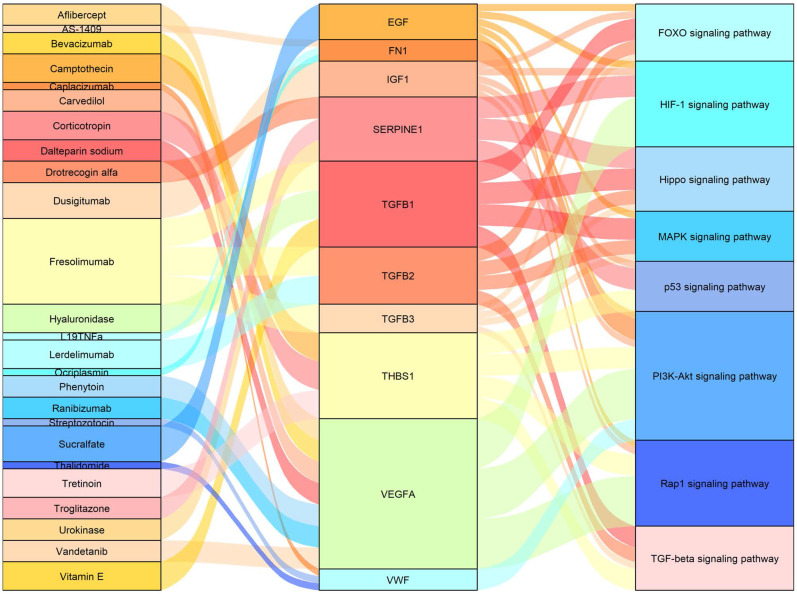
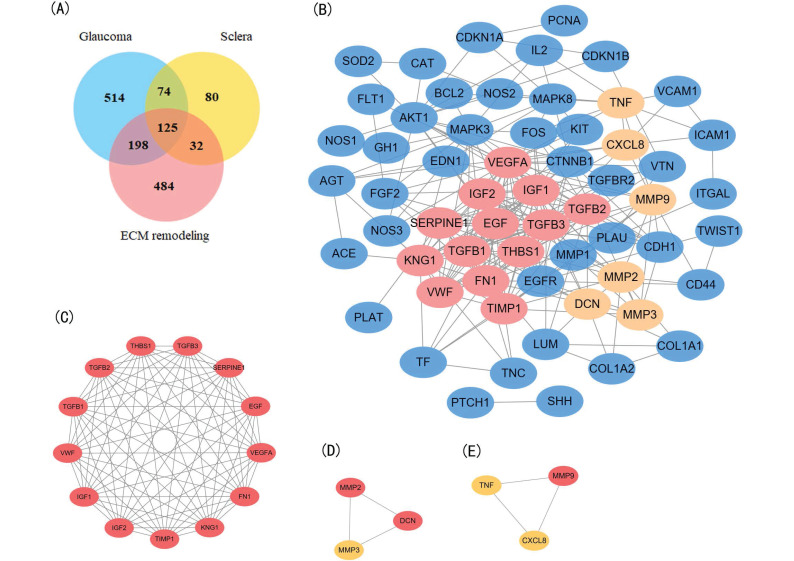
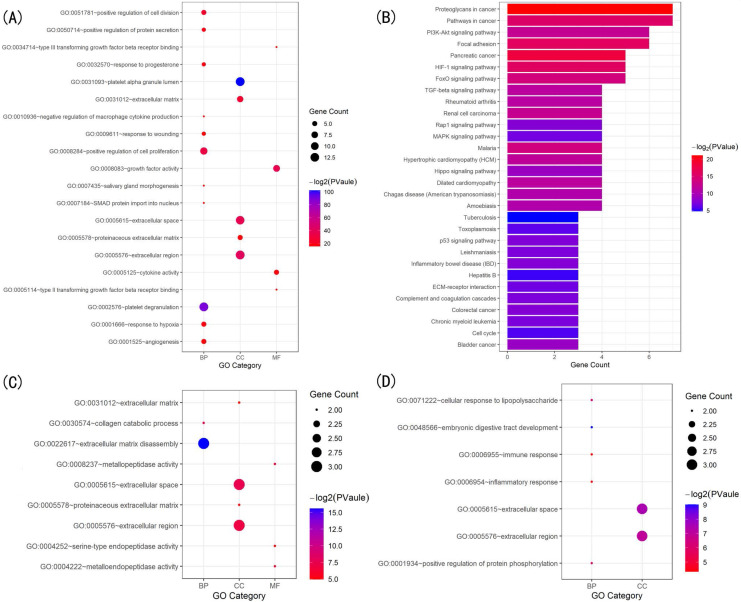
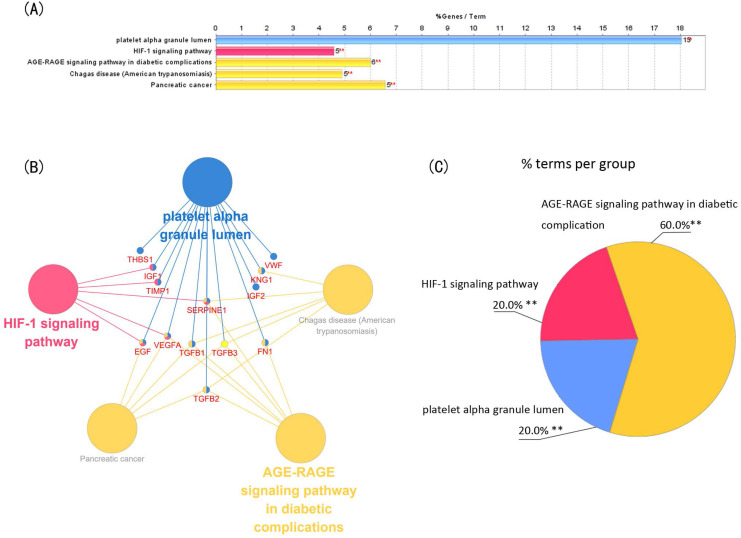
Glaucoma is a leading cause of irreversible blindness. Remodeling of the scleral extracellular matrix (ECM) plays an important role in the development of glaucoma. The aim of this study was to identify the key genes and pathways for the ECM remodeling of sclera in glaucoma by bioinformatics analysis and to explore potential therapeutic agents for glaucoma management. Genes associated with glaucoma, sclera and ECM remodeling were detected using the text mining tool pubmed2ensembl, and assigned Gene Ontology (GO) biological process terms and Kyoto Encyclopedia of Genes and Genomes (KEGG) pathways using the GeneCodis program. A protein-protein interaction (PPI) network was constructed by STRING and visualized in Cytoscape, module analysis was performed using the Molecular Complex Detection (MCODE) plugin, and GO and KEGG analyses of the gene modules were performed using the Database of Annotation, Visualization and Integrated Discovery (DAVID) platform. The genes that clustered in the significant module were selected as core genes, and functions and pathways of the core genes were visualized using ClueGO and CluePedia. Lastly, the drug-gene interaction database was used to explore drug-gene interactions of the core genes to find drug candidates for glaucoma. We identified 125 genes common to "Glaucoma", "Sclera", and "ECM remodeling" by text mining. Gene functional enrichment analysis yielded 30 enriched GO terms and 20 associated KEGG pathways. A PPI network that included 60 nodes with 249 edges was constructed, and three gene modules were obtained using the MCODE. We selected 13 genes that clustered in module 1 as core candidate genes that were associated mainly with ECM degradation and cell proliferation and division. The HIF-1 signaling pathway, FOXO signaling pathway, PI3K-Akt signaling pathway and TGFB signaling pathway were found to be enriched. We found that 11 of the 13 selected genes could be targeted by 26 existing drugs. The results showed that , , , , , , , , , , , , and were potential key genes involved to scleral ECM remodeling. Furthermore, 26 drugs were identified as potential therapeutic agents for glaucoma treatment and management.
青光眼是导致不可逆性失明的主要原因之一。巩膜细胞外基质(ECM)的重塑在青光眼的发展中起着重要作用。本研究旨在通过生物信息学分析鉴定青光眼巩膜 ECM 重塑的关键基因和途径,并探索潜在的青光眼治疗药物。使用文本挖掘工具 pubmed2ensembl 检测与青光眼、巩膜和 ECM 重塑相关的基因,并使用 GeneCodis 程序分配基因本体论(GO)生物过程术语和京都基因与基因组百科全书(KEGG)途径。通过 STRING 构建蛋白质-蛋白质相互作用(PPI)网络,并在 Cytoscape 中可视化,使用 Molecular Complex Detection(MCODE)插件进行模块分析,使用数据库的注释、可视化和综合发现(DAVID)平台对基因模块进行 GO 和 KEGG 分析。选择聚类在显著模块中的基因作为核心基因,并使用 ClueGO 和 CluePedia 可视化核心基因的功能和途径。最后,使用药物-基因相互作用数据库探索核心基因的药物-基因相互作用,以找到治疗青光眼的候选药物。通过文本挖掘,我们确定了 125 个共同存在于“青光眼”、“巩膜”和“ECM 重塑”中的基因。基因功能富集分析得到 30 个富集的 GO 术语和 20 个相关的 KEGG 途径。构建了一个包含 60 个节点和 249 个边的 PPI 网络,使用 MCODE 获得了三个基因模块。我们选择了聚类在模块 1 中的 13 个基因作为核心候选基因,这些基因主要与 ECM 降解和细胞增殖和分裂有关。发现 HIF-1 信号通路、FOXO 信号通路、PI3K-Akt 信号通路和 TGFB 信号通路富集。我们发现,在选定的 13 个基因中,有 11 个可以被 26 种现有药物靶向。结果表明,、、、、、、、、、、和可能是与巩膜 ECM 重塑相关的关键基因。此外,还确定了 26 种药物可能是治疗青光眼的潜在治疗药物。