Disciplina de Fisiologia da Nutrição, Departamento de Fisiologia, Universidade Federal de São Paulo, São Paulo, Brasil.
Lipids Health Dis. 2011 Jan 18;10:11. doi: 10.1186/1476-511X-10-11.
Adiponectin is the most abundant plasma protein synthesized for the most part in adipose tissue, and it is an insulin-sensitive hormone, playing a central role in glucose and lipid metabolism. In addition, it increases fatty acid oxidation in the muscle and potentiates insulin inhibition of hepatic gluconeogenesis. Two adiponectin receptors have been identified: AdipoR1 is the major receptor expressed in skeletal muscle, whereas AdipoR2 is mainly expressed in liver. Consumption of high levels of dietary fat is thought to be a major factor in the promotion of obesity and insulin resistance. Excessive levels of cortisol are characterized by the symptoms of abdominal obesity, hypertension, glucose intolerance or diabetes and dyslipidemia; of note, all of these features are shared by the condition of insulin resistance. Although it has been shown that glucocorticoids inhibit adiponectin expression in vitro and in vivo, little is known about the regulation of adiponectin receptors. The link between glucocorticoids and insulin resistance may involve the adiponectin receptors and adrenalectomy might play a role not only in regulate expression and secretion of adiponectin, as well regulate the respective receptors in several tissues.
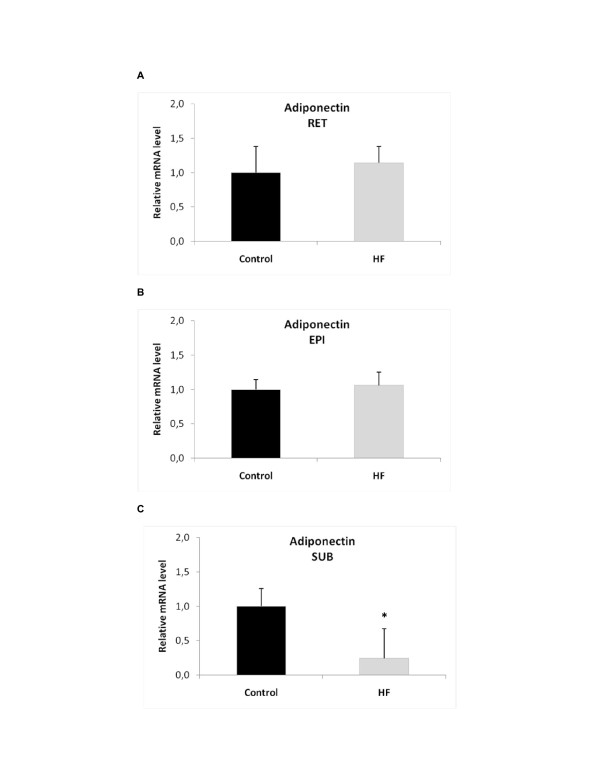
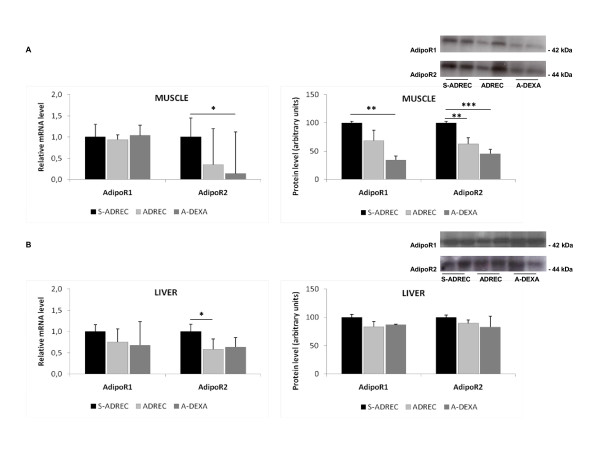
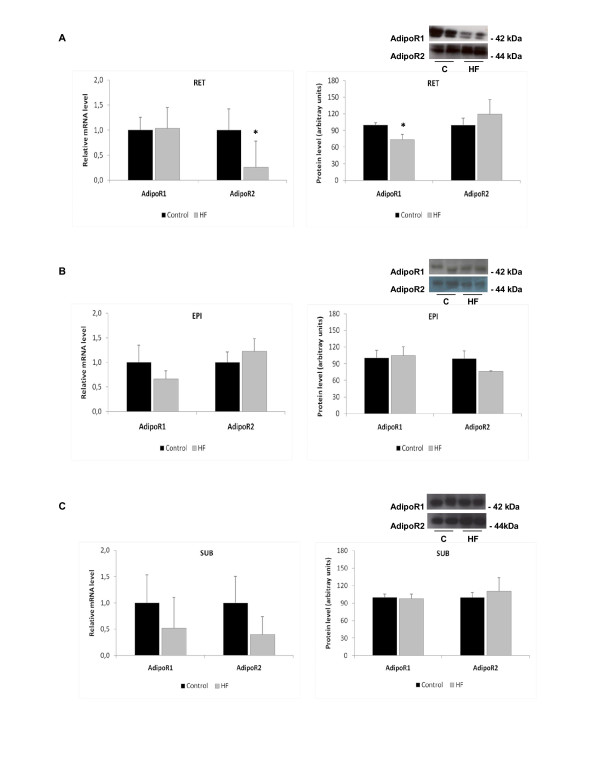
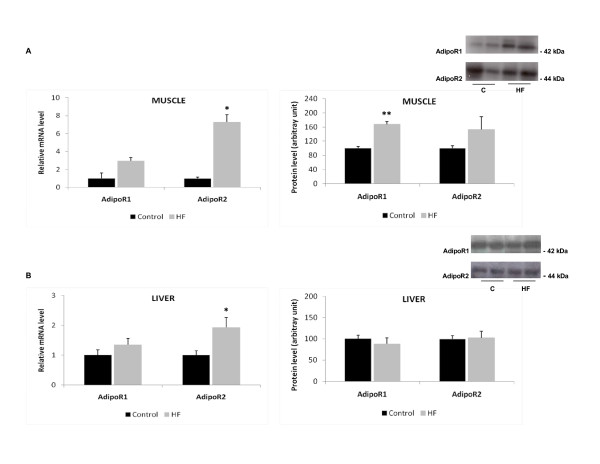
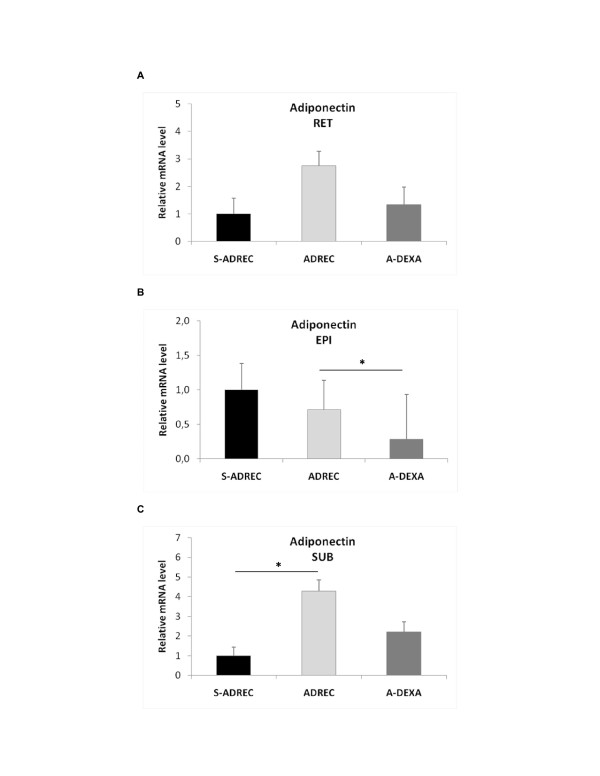
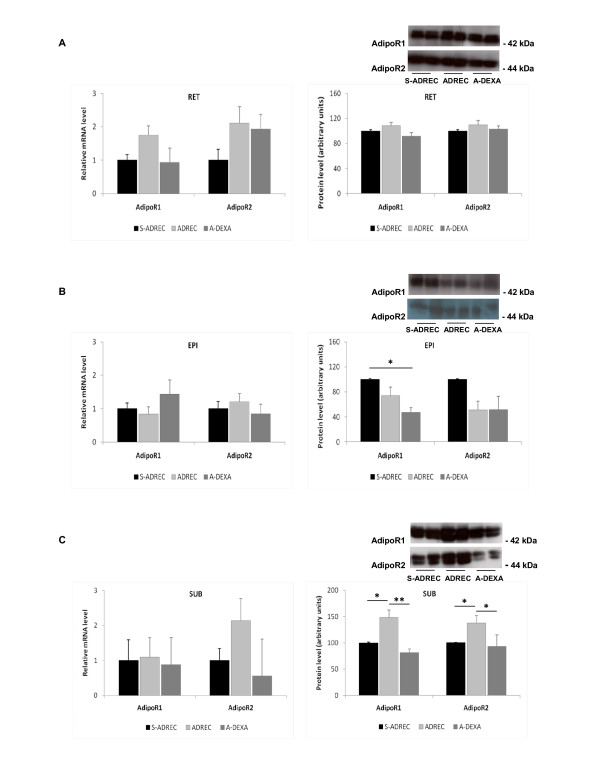
Feeding of a high-fat diet increased serum glucose levels and decreased adiponectin and adipoR2 mRNA expression in subcutaneous and retroperitoneal adipose tissues, respectively. Moreover, it increased both adipoR1 and adipoR2 mRNA levels in muscle and adipoR2 protein levels in liver. Adrenalectomy combined with the synthetic glucocorticoid dexamethasone treatment resulted in increased glucose and insulin levels, decreased serum adiponectin levels, reduced adiponectin mRNA in epididymal adipose tissue, reduction of adipoR2 mRNA by 7-fold in muscle and reduced adipoR1 and adipoR2 protein levels in muscle. Adrenalectomy alone increased adiponectin mRNA expression 3-fold in subcutaneous adipose tissue and reduced adipoR2 mRNA expression 2-fold in liver.
Hyperglycemia as a result of a high-fat diet is associated with an increase in the expression of the adiponectin receptors in muscle. An excess of glucocorticoids, rather than their absence, increase glucose and insulin and decrease adiponectin levels.
脂联素是在脂肪组织中合成的最丰富的血浆蛋白,它是一种胰岛素敏感激素,在葡萄糖和脂质代谢中发挥核心作用。此外,它增加肌肉中的脂肪酸氧化,并增强胰岛素对肝糖异生的抑制作用。已经鉴定出两种脂联素受体:AdipoR1 是主要在骨骼肌中表达的受体,而 AdipoR2 主要在肝脏中表达。人们认为,大量摄入膳食脂肪是促进肥胖和胰岛素抵抗的主要因素。皮质醇水平过高的特征是腹部肥胖、高血压、葡萄糖耐量或糖尿病和血脂异常;值得注意的是,所有这些特征都是胰岛素抵抗的共同特征。尽管已经表明糖皮质激素在体外和体内抑制脂联素的表达,但对于脂联素受体的调节知之甚少。糖皮质激素和胰岛素抵抗之间的联系可能涉及脂联素受体,而肾上腺切除术不仅可能在调节脂肪素的表达和分泌方面发挥作用,而且可能在调节几种组织中的相应受体方面发挥作用。
高脂饮食喂养增加了血清葡萄糖水平,并分别降低了皮下和腹膜后脂肪组织中的脂联素和 adipoR2 mRNA 表达。此外,它还增加了肌肉中的 adipoR1 和 adipoR2 mRNA 水平以及肝脏中的 adipoR2 蛋白水平。肾上腺切除术联合合成糖皮质激素地塞米松治疗导致血糖和胰岛素水平升高,血清脂联素水平降低,附睾脂肪组织中的脂联素 mRNA 减少,肌肉中的 adipoR2 mRNA 减少 7 倍,肌肉中的 adipoR1 和 adipoR2 蛋白水平降低。单独的肾上腺切除术使皮下脂肪组织中的脂联素 mRNA 表达增加 3 倍,肝脏中的 adipoR2 mRNA 表达减少 2 倍。
高脂饮食引起的高血糖与肌肉中脂联素受体表达的增加有关。糖皮质激素过多而不是缺乏会增加血糖和胰岛素并降低脂联素水平。