Department of Genetics, Harvard Medical School, Boston, MA 02115, USA.
Mol Syst Biol. 2011 Jan 18;7:461. doi: 10.1038/msb.2010.116.
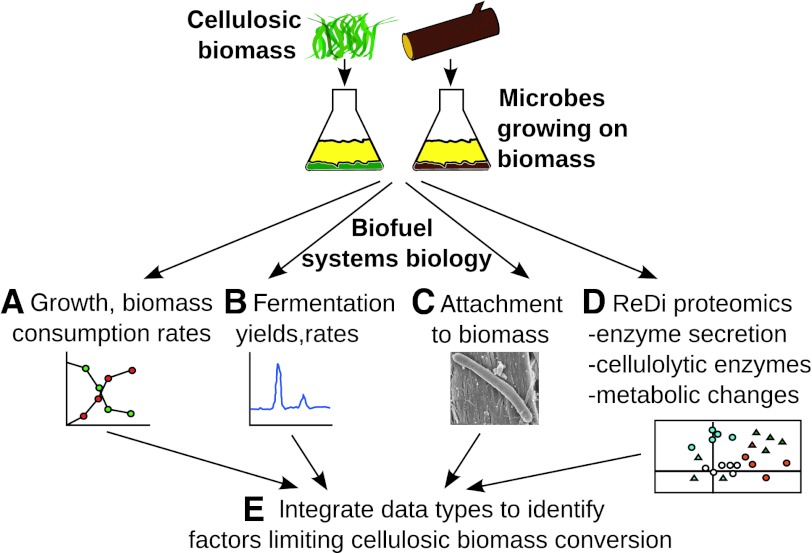
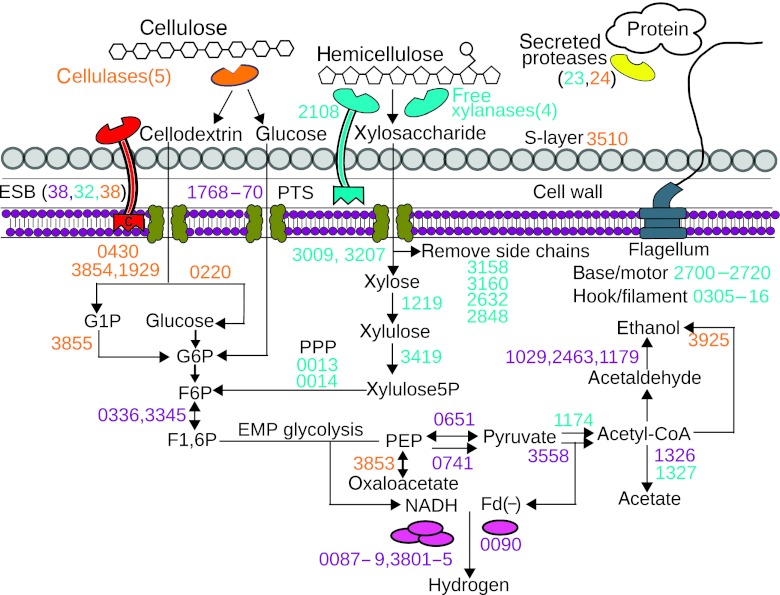
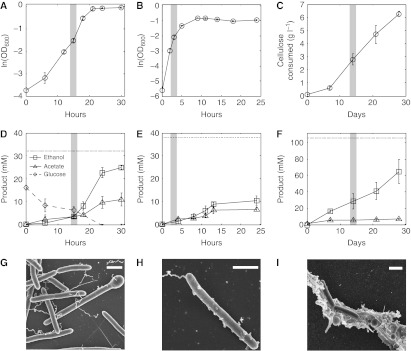
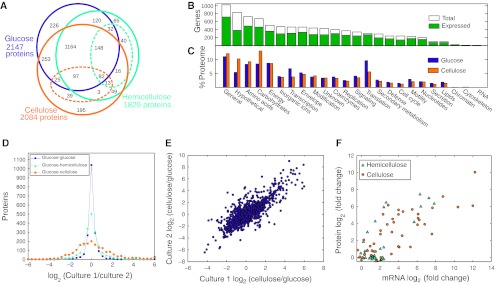
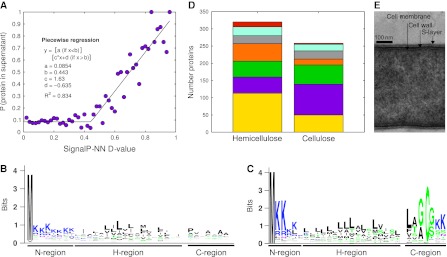
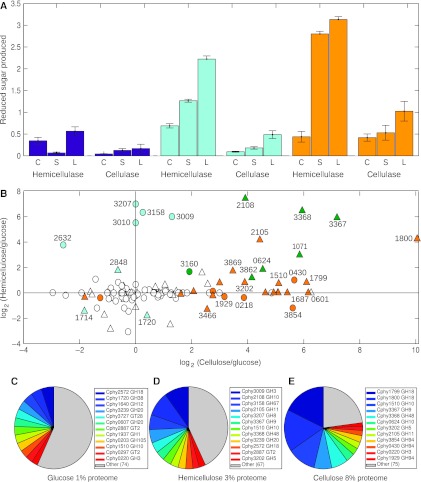
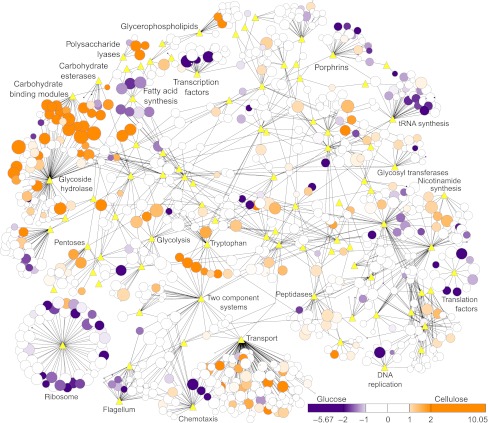
Fermentation of plant biomass by microbes like Clostridium phytofermentans recycles carbon globally and can make biofuels from inedible feedstocks. We analyzed C. phytofermentans fermenting cellulosic substrates by integrating quantitative mass spectrometry of more than 2500 proteins with measurements of growth, enzyme activities, fermentation products, and electron microscopy. Absolute protein concentrations were estimated using Absolute Protein EXpression (APEX); relative changes between treatments were quantified with chemical stable isotope labeling by reductive dimethylation (ReDi). We identified the different combinations of carbohydratases used to degrade cellulose and hemicellulose, many of which were secreted based on quantification of supernatant proteins, as well as the repertoires of glycolytic enzymes and alcohol dehydrogenases (ADHs) enabling ethanol production at near maximal yields. Growth on cellulose also resulted in diverse changes such as increased expression of tryptophan synthesis proteins and repression of proteins for fatty acid metabolism and cell motility. This study gives a systems-level understanding of how this microbe ferments biomass and provides a rational, empirical basis to identify engineering targets for industrial cellulosic fermentation.
微生物(如产朊假丝酵母)发酵植物生物质可实现全球碳循环,并能利用不可食用的原料生产生物燃料。我们通过整合超过 2500 种蛋白质的定量质谱分析与生长、酶活性、发酵产物和电子显微镜的测量,分析了产朊假丝酵母对纤维素类基质的发酵。我们使用绝对蛋白表达(APEX)估计了绝对蛋白浓度;通过还原二甲基化(ReDi)的化学稳定同位素标记来定量处理之间的相对变化。我们确定了用于降解纤维素和半纤维素的不同组合的碳水化合物酶,其中许多是基于上清液蛋白的定量而分泌的,以及使乙醇接近最大产量生产的糖酵解酶和醇脱氢酶(ADH)的组合。在纤维素上的生长也导致了多种变化,例如色氨酸合成蛋白的表达增加和脂肪酸代谢和细胞运动性蛋白的表达抑制。这项研究提供了对该微生物发酵生物质的系统水平理解,并为确定工业纤维素发酵的工程目标提供了合理的、经验性的基础。