Department of Gastroenterology and Hepatology, Erasmus MC-University Medical Center, Rotterdam, The Netherlands.
PLoS One. 2011 Jan 5;6(1):e15324. doi: 10.1371/journal.pone.0015324.
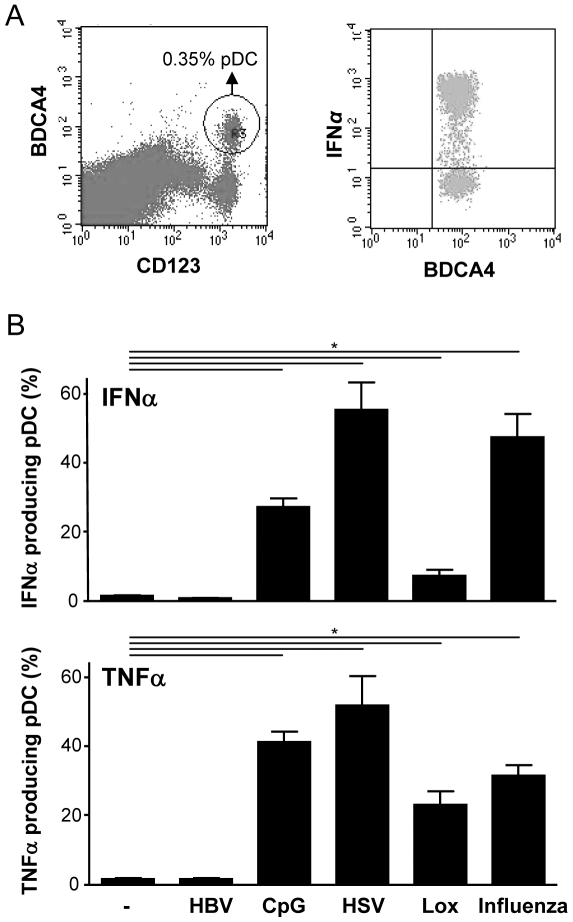
Chronic hepatitis B virus (HBV) infection is caused by inadequate anti-viral immunity. Activation of plasmacytoid dendritic cells (pDC) leading to IFNα production is important for effective anti-viral immunity. Hepatitis B virus (HBV) infection lacks IFNα induction in animal models and patients and chronic HBV patients display impaired IFNα production by pDC. Therefore, HBV and HBV-derived proteins were examined for their effect on human pDC in vitro. In addition, the in vitro findings were compared to the function of pDC derived from chronic HBV patients ex vivo. In contrast to other viruses, HBV did not activate pDC. Moreover, HBV and HBsAg abrogated CpG-A/TLR9-induced, but not Loxoribine/TLR7-induced, mTOR-mediated S6 phosphorylation, subsequent IRF7 phosphorylation and IFNα gene transcription. HBV/HBsAg also diminished upregulation of co-stimulatory molecules, production of TNFα, IP-10 and IL-6 and pDC-induced NK cell function, whereas TLR7-induced pDC function was hardly affected. In line, HBsAg preferentially bound to TLR9-triggered pDC demonstrating that once pDC are able to bind HBV/HBsAg, the virus exerts its immune regulatory effect. HBV not only directly interfered with pDC function, but also indirectly by interfering with monocyte-pDC interaction. Also HBeAg diminished pDC function to a certain extent, but via another unknown mechanism. Interestingly, patients with HBeAg-positive chronic hepatitis B displayed impaired CpG-induced IFNα production by pDC without significant alterations in Loxoribine-induced pDC function compared to HBeAg-negative patients and healthy controls. The lack of activation and the active inhibition of pDC by HBV may both contribute to HBV persistence. The finding that the interaction between pDC and HBV may change upon activation may aid in the identification of a scavenging receptor supporting immunosuppressive effects of HBV and also in the design of novel treatment strategies for chronic HBV.
慢性乙型肝炎病毒(HBV)感染是由抗病毒免疫不足引起的。浆细胞样树突状细胞(pDC)的激活导致 IFNα 的产生对于有效的抗病毒免疫很重要。HBV 感染在动物模型和患者中缺乏 IFNα 的诱导,慢性 HBV 患者的 pDC 产生 IFNα 的能力受损。因此,本研究在体外检查了 HBV 和 HBV 衍生蛋白对人 pDC 的作用。此外,还将体外研究结果与慢性 HBV 患者的 pDC 体外功能进行了比较。与其他病毒不同,HBV 不能激活 pDC。此外,HBV 和 HBsAg 阻断了 CpG-A/TLR9 诱导的,但不阻断 Loxoribine/TLR7 诱导的 mTOR 介导的 S6 磷酸化、随后的 IRF7 磷酸化和 IFNα 基因转录。HBV/HBsAg 还降低了共刺激分子的上调、TNFα、IP-10 和 IL-6 的产生以及 pDC 诱导的 NK 细胞功能,而 TLR7 诱导的 pDC 功能几乎不受影响。同样,HBsAg 优先结合 TLR9 触发的 pDC,表明一旦 pDC 能够结合 HBV/HBsAg,病毒就会发挥其免疫调节作用。HBV 不仅直接干扰 pDC 功能,还通过干扰单核细胞-pDC 相互作用间接干扰。此外,HBeAg 在一定程度上也降低了 pDC 的功能,但通过另一种未知的机制。有趣的是,与 HBeAg 阴性患者和健康对照相比,HBeAg 阳性慢性乙型肝炎患者的 pDC 在 CpG 诱导 IFNα 产生方面存在缺陷,而 Loxoribine 诱导的 pDC 功能没有明显改变。HBV 对 pDC 的缺乏激活和主动抑制可能都有助于 HBV 的持续存在。pDC 与 HBV 相互作用的改变可能有助于识别支持 HBV 免疫抑制作用的清除受体,并有助于设计慢性 HBV 的新型治疗策略。