MSA, ENT Academy Center, Cassino, Italy.
Acta Otorhinolaryngol Ital. 2010 Aug;30(4):175.
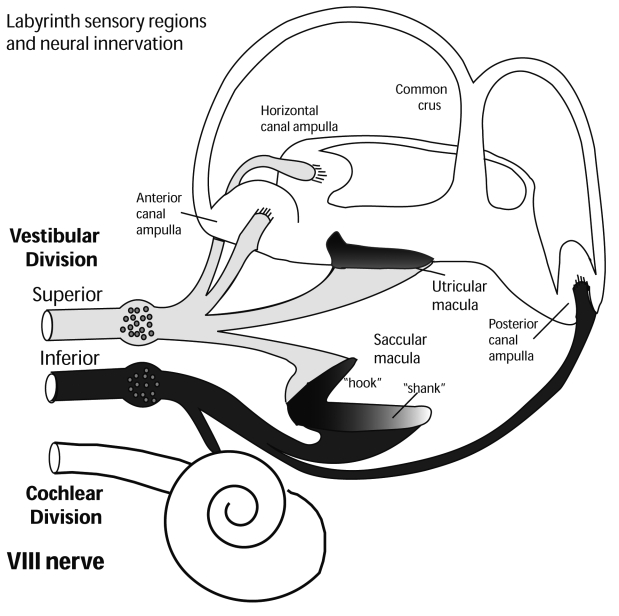
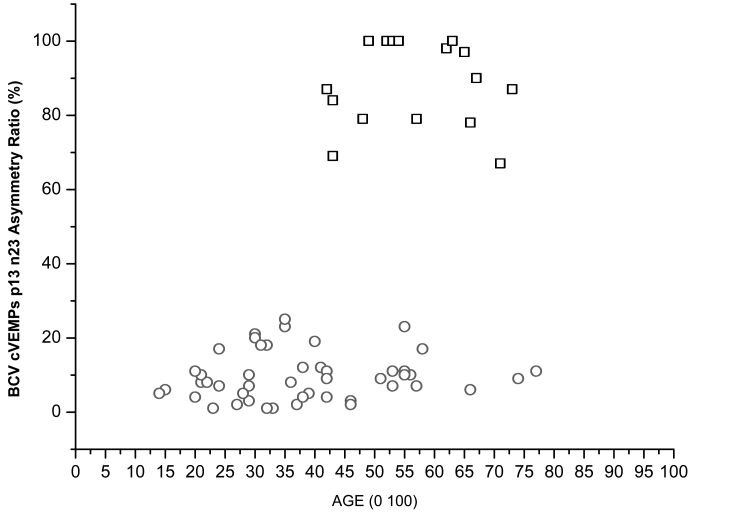
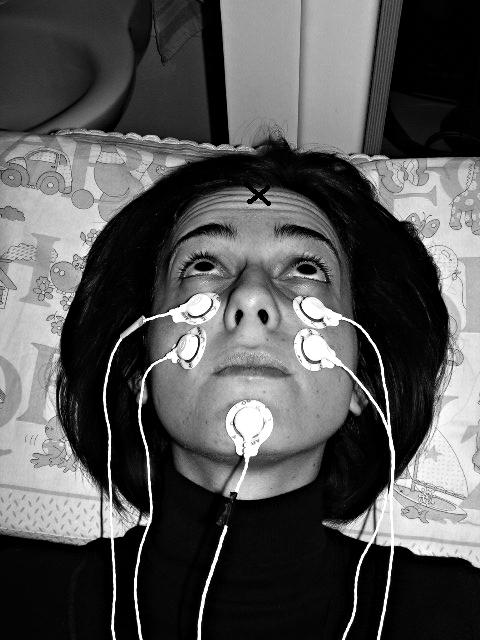
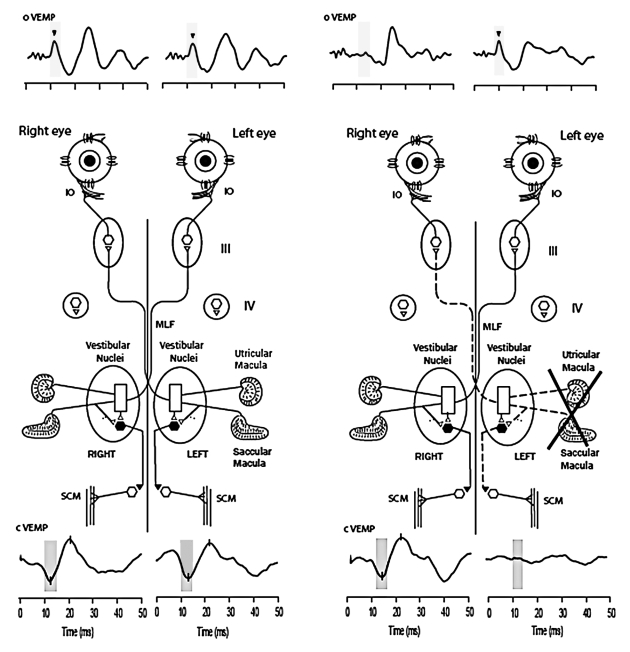
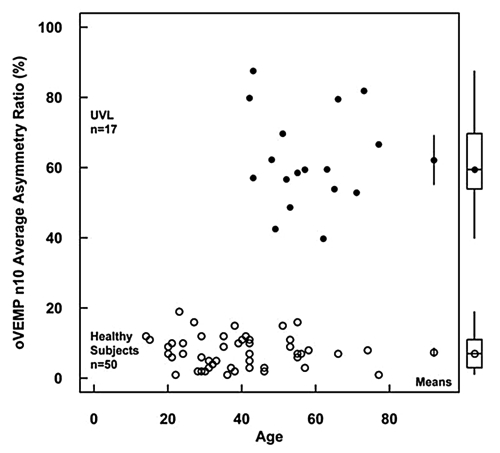
Recently, a new indicator of vestibular otolithic function has been reported: it is a series of negative-positive myogenic potentials recorded by surface electrodes on the skin beneath the eyes in response to bone-conducted vibration (BCV) delivered to the forehead at the hairline in the midline (Fz). The potential is called the ocular vestibular-evoked myogenic potential (oVEMP) and the first component of this (n10) is a small (approximately 8 microV), short latency (~ 10 ms), negative potential. In healthy subjects, who are looking up, the n10 responses to Fz bone-conducted vibration are symmetrical beneath the two eyes. In the present investigation, in 17 patients with unilateral surgical vestibular loss, marked asymmetries were observed between the n10 beneath the two eyes: n10 is small or absent beneath the eye on the side opposite the operated ear, confirming previous evidence that n10 is a crossed vestibulo-ocular response unlike p13 of bone-conducted vibration cervical VEMPs (cVEMPs) is a ipsilateral vestibular response and also it is absent in this type of subjects. These results, together with evidence from patients with superior vestibular neuritis allow us to conclude: the asymmetry of the n10 response to Fz bone-conducted vibration is an indicator of utricular macula/superior vestibular nerve dysfunction on the operated side in patients with unilateral vestibular loss.
最近,一种新的前庭耳石功能指标已经被报道:这是一系列通过皮肤表面电极记录到的负正肌源性电位,这些电极位于眼睛下方,对面部正中发际线处(Fz)的额骨进行骨传导振动(BCV)刺激时产生。该电位被称为眼前庭诱发肌源性电位(oVEMP),其中第一个成分(n10)是一个小(约 8μV)、短潜伏期(~10ms)的负电位。在健康受试者中,当他们向上看时,Fz 骨导振动引起的 n10 反应在两只眼睛下方是对称的。在本研究中,在 17 例单侧手术性前庭损失患者中,观察到两只眼睛下方的 n10 之间存在明显的不对称:在对侧手术耳的眼睛下方,n10 较小或不存在,这证实了先前的证据,即 n10 是一种交叉性前庭眼反应,与骨导振动颈肌源性诱发电位(cVEMPs)中的 p13 不同,后者是同侧前庭反应,在这种类型的受试者中也不存在。这些结果,加上来自上前庭神经炎患者的证据,使我们能够得出结论:Fz 骨导振动引起的 n10 反应的不对称是单侧前庭损失患者患侧耳囊/上前庭神经功能障碍的指标。