Biotechnology Center, Universidad Católica del Norte, Avenida Angamos 0610, Antofagasta, Chile. Biotecnor Ltda., Antofagasta, Chile.
Microb Biotechnol. 2009 Nov;2(6):613-24. doi: 10.1111/j.1751-7915.2009.00112.x. Epub 2009 May 27.
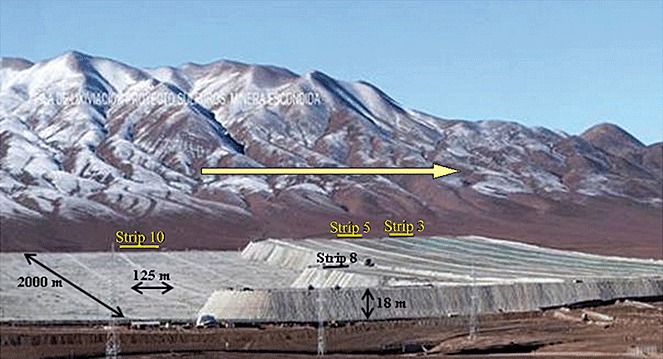
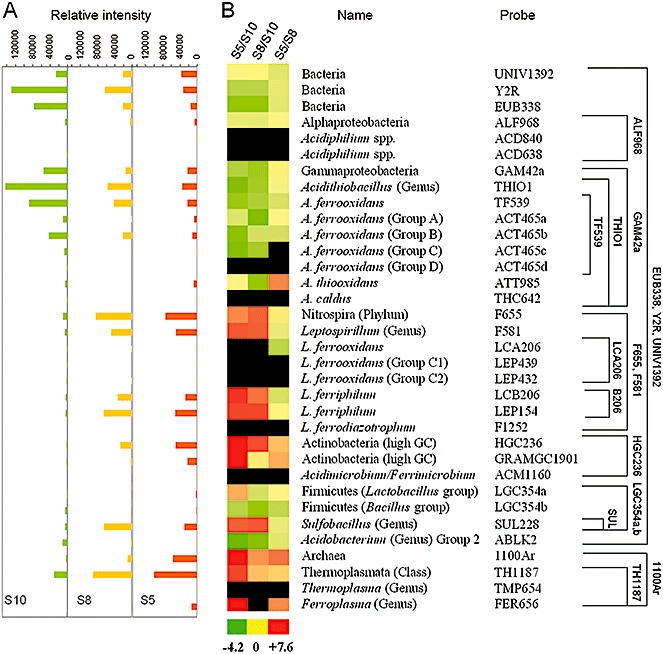
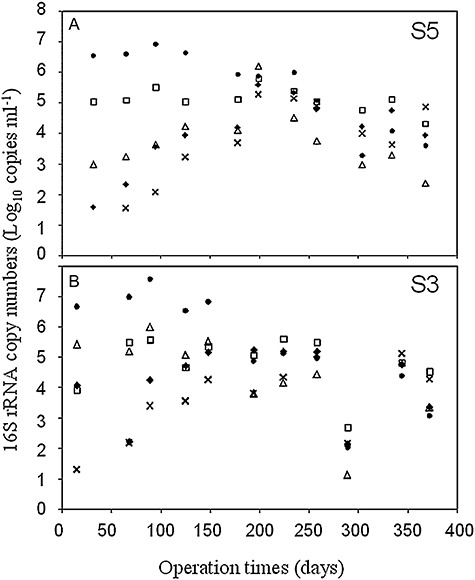
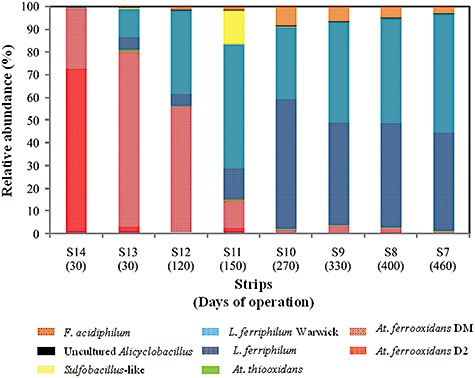
The bioleaching of metal sulfide has developed into a very important industrial process and understanding the microbial dynamic is key to advancing commercial bioleaching operations. Here we report the first quantitative description of the dynamic of active communities in an industrial bioleaching heap. Acidithiobacillus ferrooxidans was the most abundant during the first part of the leaching cycle, while the abundance of Leptospirillum ferriphilum and Ferroplasma acidiphilum increased with age of the heap. Acidithiobacillus thiooxidans kept constant throughout the leaching cycle, and Firmicutes group showed a low and a patchy distribution in the heap. The Acidiphilium-like bacteria reached their highest abundance corresponding to the amount of autotrophs. The active microorganisms in the leaching system were determined using two RNA-based sensitive techniques. In most cases, the 16S rRNA copy numbers of At. ferrooxidans, L. ferriphilum, At. thiooxidans and F. acidiphilum, was concomitant with the DNA copy numbers, whereas Acidiphilium-like bacteria and some Firmicutes members did not show a clear correlation between 16S rRNA accumulation and DNA copy numbers. However, the prokaryotic acidophile microarray (PAM) analysis showed active members of Alphaproteobacteria in all samples and of Sulfobacillus genus in older ones. Also, new active groups such as Actinobacteria and Acidobacterium genus were detected by PAM. The results suggest that changes during the leaching cycle in chemical and physical conditions, such as pH and Fe(3+)/Fe(2+) ion rate, are primary factors shaping the microbial dynamic in the heap.
生物浸出金属硫化物已发展成为一项非常重要的工业过程,而了解微生物动态是推进商业生物浸出作业的关键。在这里,我们报告了首例对工业生物浸出堆中活性群落动态的定量描述。在浸出周期的前半部分,嗜酸铁氧化菌(Acidithiobacillus ferrooxidans)最为丰富,而亚铁钩端螺旋菌(Leptospirillum ferriphilum)和嗜酸性铁氧化亚铁菌(Ferroplasma acidiphilum)的丰度随着堆龄的增加而增加。硫氧化嗜酸菌(Acidithiobacillus thiooxidans)在整个浸出周期内保持不变,厚壁菌门(Firmicutes)在堆中分布较少且不均匀。嗜酸菌(Acidiphilium-like bacteria)的丰度达到最高,与自养生物的数量相对应。使用两种基于 RNA 的敏感技术确定浸出系统中的活性微生物。在大多数情况下,At. ferrooxidans、L. ferriphilum、At. thiooxidans 和 F. acidiphilum 的 16S rRNA 拷贝数与 DNA 拷贝数一致,而嗜酸菌和一些厚壁菌门成员的 16S rRNA 积累与 DNA 拷贝数之间没有明显的相关性。然而,原核嗜酸菌微阵列(PAM)分析显示所有样品中均有α变形菌纲(Alphaproteobacteria)的活跃成员,且在较老的样品中还有硫杆菌属(Sulfobacillus)的活跃成员。此外,PAM 还检测到新的活跃群体,如放线菌和 Acidobacterium 属。结果表明,在浸出周期中,化学和物理条件(如 pH 和 Fe(3+)/Fe(2+)离子率)的变化是塑造堆中微生物动态的主要因素。